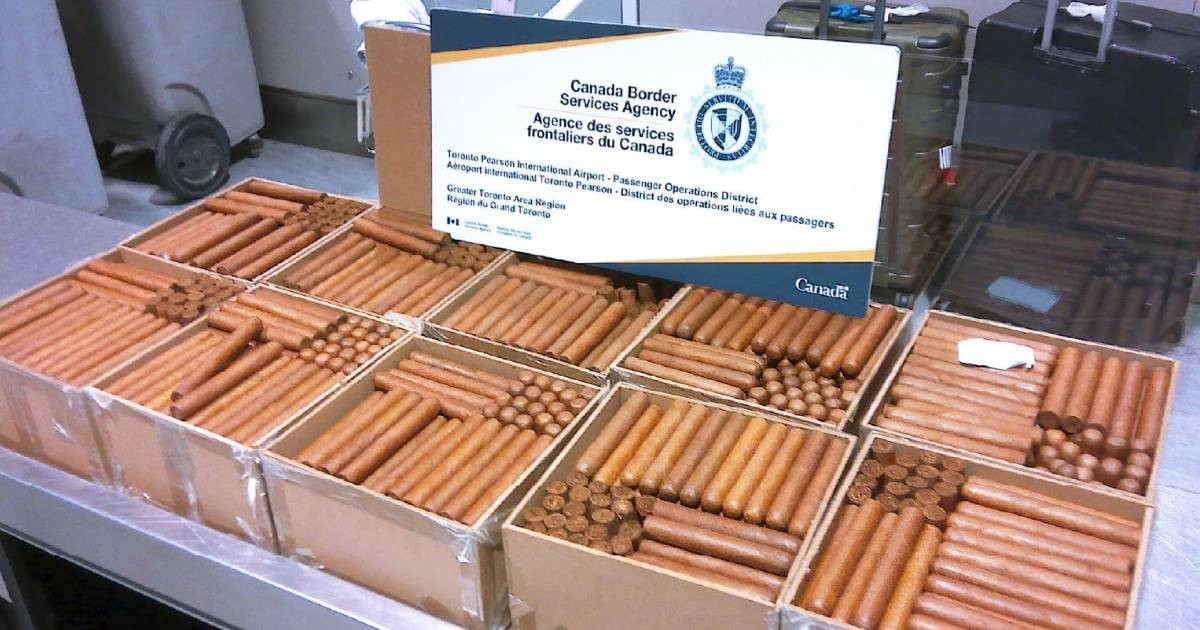
Canadian border authorities confiscated 1,385 undeclared Cuban cigars from a traveler arriving from Cuba at Toronto Pearson International Airport, marking the second significant seizure of the year at this terminal from passengers coming from the island.
The Canada Border Services Agency (CBSA) reported the seizure that occurred on August 13, although it did not specify the exact date of the flight or identify the traveler.
"CBSA agents in the metropolitan area of Toronto seized 1,385 undeclared cigars from a traveler arriving at YYZ airport from Cuba. The goods were seized without any conditions for release," the agency stated on Facebook.
The CBSA also did not report whether the traveler received an additional fine. Canadian authorities warn that failing to properly declare transported goods can result in financial penalties and other consequences during future border crossings.
Second large shipment from Cuba intercepted this year
On June 26, airport agents confiscated approximately 2,100 Cuban cigars that another passenger arriving from the island attempted to bring in without declaring.
On that occasion, Aggie, one of the detection dogs from the CBSA, intervened and located the shipment. The traveler was detained and the cigars were also confiscated, as reported on social media.
In both cases, Canadian authorities have intercepted nearly 3,500 Cuban cigars at Toronto Pearson in just a few months.
The quantities are well above what could be considered a typical purchase for personal consumption. The Canadian regulations allow certain travelers who meet the criteria for the personal exemption to bring in up to 50 cigars within their tobacco allowance after having been outside the country for at least 48 hours.
They also far exceed the amounts that can leave Cuba without commercial documentation.
Cuban customs regulations allow for the export of up to 20 loose cigars without the need to present an invoice. This number can be increased to 50 when they are transported in their original, sealed packaging with the official hologram. For larger quantities, proof of purchase from authorized establishments is required.
The difference is significant: the June shipment amounted to 42 times the Canadian limit of 50 cigars, while the most recently seized shipment was nearly 28 times that amount.
Thousands of cigars have been intercepted leaving Cuba
The seizures in Canada add to a series of attempts to smuggle large quantities of cigars from Cuba in 2026, within a context characterized by the high value that Cuban cigars reach in international markets.
In February, Cuban Customs detected an attempt to smuggle over 3,800 cigars destined for Panama. In March, more than 370 counterfeit boxes were seized, and a month later, nearly 2,000 units that were allegedly destined for the United States.
In July, another operation at Havana airport prevented the departure of more than 4,200 cigars on a flight to Panama.
Attempts to smuggle large quantities of cigars into other countries are not new either. In August 2023, the Argentine Customs seized more than 1,286 cigars from four passengers who arrived in Buenos Aires on flights from Cuba and Panama.
The controls at Toronto Pearson also include other undeclared transported products. The detection dogs of the CBSA have located this year sausage, salami, butter, and raw meats such as beef, chicken, duck, pigeon, and rabbit, among other goods.
A spokesperson for the agency explained to INsauga.com that authorities are reminding travelers of their obligation to declare the goods they are bringing with them upon entering Canada.
For travelers coming from Cuba, the two major seizures recorded this year serve as a particularly costly warning: failing to declare a shipment can not only result in fines and border issues but also in the permanent loss of thousands of cigars, whose value can be substantial in the international market.
Related videos:
Filed under: