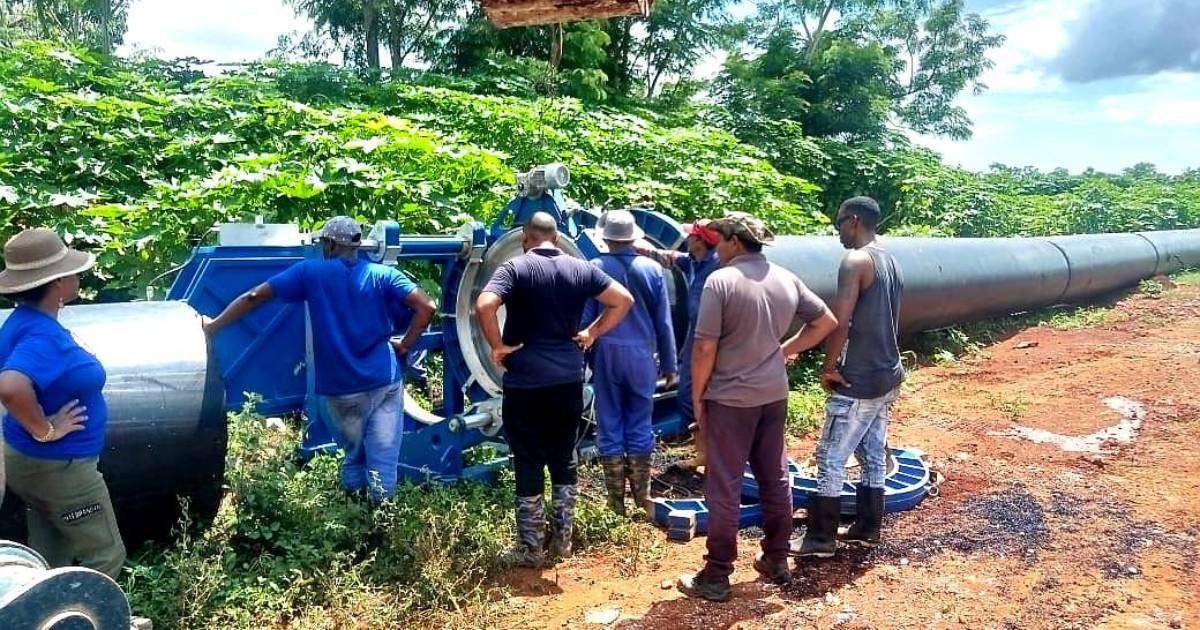
A malfunction in the 78-inch pipeline of the Cuenca Sur supply source has left six municipalities in Havana without water since Thursday, when the Empresa Aguas de La Habana declared an emergency shutdown of the main pipeline that supplies the Central System of the Cuban capital.
According to the official news report published this Friday on Facebook, the interruption is due to a "significant malfunction" in that pipeline, exacerbated by three leaks detected in the same supply source. The company did not provide a specific date for the restoration of the service.
The municipalities directly affected are Plaza de la Revolución, Diez de Octubre, Cerro, Centro Habana, Habana Vieja, and part of Boyeros, which impacts hundreds of thousands of residents in the heart of the capital.
The technical teams are working nonstop in three critical locations: Manresa, Espina de Pescado, and Wells 9 and 12. The company stated that the "primary goal is to resolve the breakdown and leaks as quickly as possible."
While the brigades work without a defined deadline, Aguas de La Habana urged the public for "understanding and patience" and to stay informed through their official social media channels.
The breakage is not an isolated incident. The same 78-inch pipeline in Cuenca Sur was intervened multiple times during 2025 and required a multi-million dollar investment in September of that year to replace a section with two parallel pipes.
Last week, another break in a 1,000 mm pipe of the Gato System left residents of Los Camilos, Regla Low Zone, and Casa Blanca without water supply, with additional impacts felt in Regla, Havana del Este, San Miguel del Padrón, Guanabacoa, and Diez de Octubre.
The accumulated deterioration of the capital's water infrastructure is structural, as the main pipelines have been in continuous operation for 60 to 70 years without adequate replacement. According to various estimates, between 40% and 70% of the water pumped is lost due to leaks before it reaches homes.
Insufficient pressure in cracked pipes also allows wastewater to be sucked into the drinking water supply, a health risk that residents have reported in stark terms.
"Sewage flows through our pipes", wrote an affected individual in the Facebook group Victims of Havana Waters.
87% of the pumping system relies on electricity, making each blackout a direct hit to the supply. The number of Habaneros without regular access to water rose from 200,000 in April to over 500,000 in July, according to data from Aguas de La Habana itself.
In the absence of structural solutions, the informal market has driven prices up: a 55-gallon tank can cost up to 2,500 pesos and a full water truck has reached 60,000 pesos in areas with the greatest shortages, according to various testimonies.
Related videos:
Filed under: