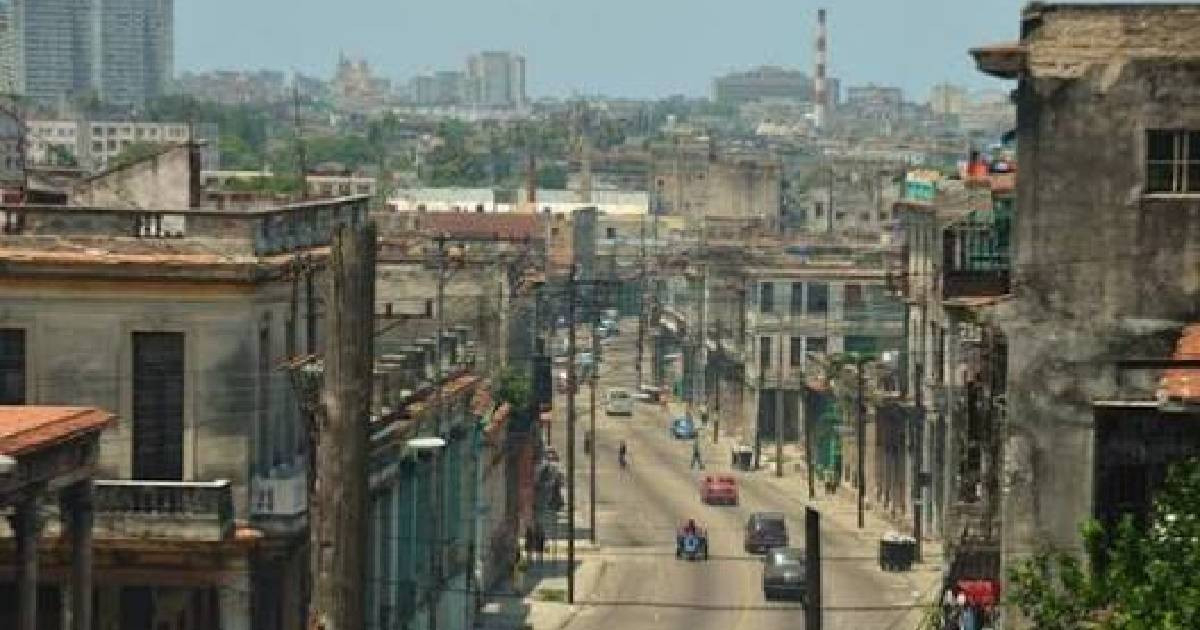
The journalist Ibis Frade Brito reported this Saturday that the Havana neighborhood of Luyanó woke up without water, electricity, landline, or mobile phone service, and no television signal, while no authority provided any explanations.
In a post on Facebook, Frade recounted that when attempting to report the malfunction of his landline via SMS to 114, the state-run and only Telecommunications Company of Cuba S.A. (Etecsa) responded that the number had already been reported.
The journalist explained that the report had been issued in April and that the company itself had declared it resolved.
"There is no electricity, no water, no fixed or mobile phone service, and no TV signal. There is also no one to explain what is happening," wrote Frade, who also stated that he tried to reach out to the Government of Havana, Etecsa, the Presidency of Cuba, and the Electric Union, but received no response.
The situation also affected her son, who asked to watch cartoons but couldn’t do so due to the lack of electricity and TV signal. "Mommy, I want to watch the cartoons..." the journalist recounted.
Comments posted by other residents indicate that issues with landline telephone service have persisted for months in various areas of Luyanó.
A neighbor stated that her line has been reported since March and that at the Etecsa office in Aldabó, she was told not to report it again because "there is no cable" to fix the issue.
Another resident stated that he has been without a landline for seven months and questioned the company's customer service system, explaining that each new report is registered as a separate incident, rendering the previous one void.
A Cuban who emigrated in 2025 stated that her two phone lines had been reported since January 2024 and that she never got a dial tone again.
One of the comments attributed the loss of telephone service to a lack of fuel backup for the power plants. This explanation comes amid complaints from residents regarding the simultaneous interruption of electricity, water, and television signal supply.
The published testimonies indicate that the issues with services are not limited to a one-time phone outage, and that some problems persist for months.
On Thursday, the company Aguas de La Habana reported that a breakdown in a main pipeline left Diez de Octubre, which includes Luyanó, as well as Regla, Guanabacoa, San Miguel del Padrón, and Havana del Este without water.
This is compounded by the significant generation deficits reported daily by the Electric Union, leaving numerous localities experiencing power outages that sometimes exceed 24 hours.
Luyanó has a history of protests for these same reasons. In June, residents took to the streets to demand water and electricity after more than 30 hours without power.
In July, a protest on Calzada de Luyanó ended with at least 24 arrests. In April, residents on Tamarindo Street held pot-banging protests for hours due to power outages.
Etecsa itself acknowledged in June that its backup batteries only last a few hours during power outages and that nearly 47.5% of mobile base stations are out of service during electrical cuts.
However, a few days ago, the state telecommunications monopoly posted a message on social media asking its customers if they had a landline to invite them to subscribe to the electronic bill, which triggered a wave of mockery and complaints from Cubans who have been without service for years but continue to receive charges.
Related videos:
Filed under: