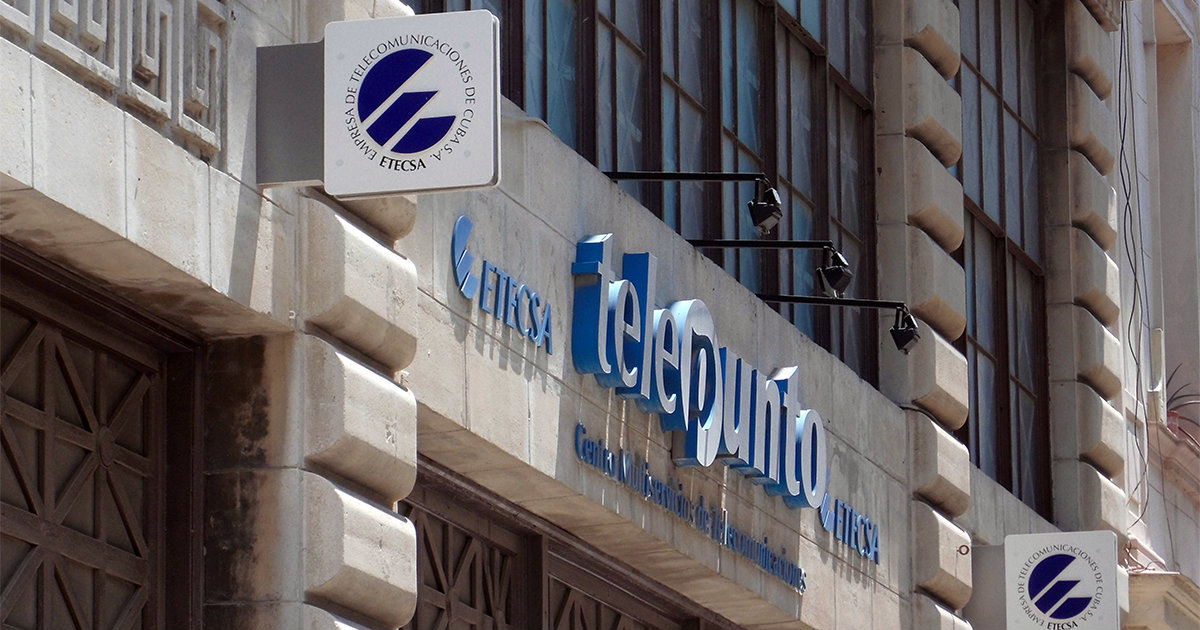
ETECSA assumed responsibility this Friday for the false earthquake alert that reached mobile phones in several areas of Cuba last Tuesday and acknowledged that the message originated from a “technical-human error” made by specialists of the company while conducting tests on the telecommunications network.
The Telecommunications Company of Cuba (ETECSA) explained on Friday that it launched an investigation immediately after the incident, and the results ultimately determined the origin of the false warning.
"The company acknowledged that the messages were sent out due to a technical-human error caused by our specialists who were conducting tests on the telecommunications network, without providing further details."
The admission confirms that the incident originated within the infrastructure managed by the state-owned company and was not related to the occurrence of a real earthquake or a malfunction of Google alerts.
ETECSA also assured that, after analyzing what happened, "measures were taken with those responsible" and actions are being implemented to prevent a similar incident from occurring again.
The company, however, did not specify what exactly the error was, or what tests their specialists were conducting, how a trial ended up as an alert received by users in various regions of the country, nor what measures were taken against those responsible.
Three days after the incident that alarmed millions of Cubans, and following Google's statement that it bore no responsibility, ETECSA ultimately acknowledged the impact of the false alarm and issued a public apology.
"We are aware of the concern and discomfort caused by the error, and we apologize to the community," he stated.
The false warning began to circulate on Tuesday afternoon when users from various parts of Cuba received on their phones an earthquake alert that triggered a massive alarm.
The Civil Defense reacted shortly afterward to clarify that the alert did not correspond to a real seismic event, while specialists from the National Center for Seismological Research (CENAIS) confirmed that no earthquake had been registered that would warrant such a warning.
The head of the National Seismological Service, Enrique Diego Arango Arias, made it clear from the outset that the alert did not originate from the Cuban seismological institutions and later called for the identification of those responsible.
The mystery surrounding the origin of the message deepened when Google denied that its Android Earthquake Alert System had detected an earthquake or sent the warning in Cuba.
"These claims are incorrect. The Android Earthquake Alert System did not detect any earthquakes nor sent alerts in Cuba," a Google spokesperson stated.
Additionally, this Thursday, Arango publicly demanded an explanation and warned about the danger of losing the public's trust in future real alerts.
"What happened then? Who is responsible and accountable for this 'error' that alarmed the population of the country with a false earthquake message?" questioned the specialist.
His warning was even more direct: "When the alarm is real, they won't believe you anymore."
Related videos:
Filed under: