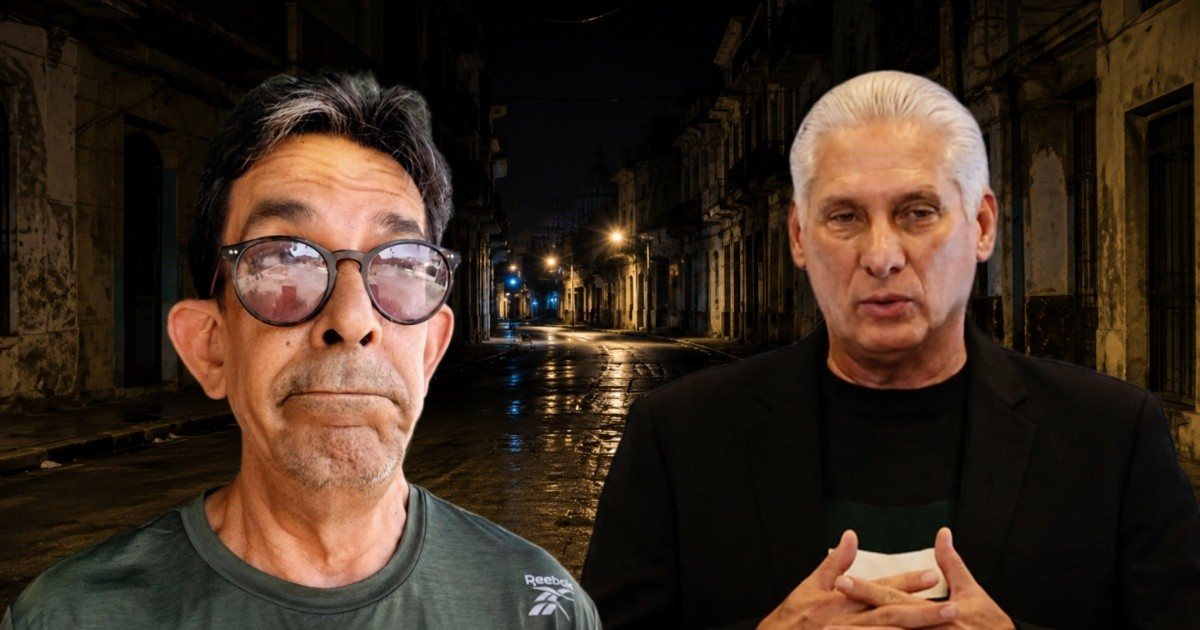
The Cuban comedian and commentator Ulises Toirac responded this Monday to the statements made by Miguel Díaz-Canel to the Brazilian newspaper Folha de S.Paulo, in which the leader denied that Cuba is implementing capitalist reforms, with a statement that challenges the ideological framework of the regime: "Economic measures are neither capitalist nor socialist: they are smart or stupid."
In that interview, Díaz-Canel stated, "There are no capitalist reforms," although he admitted that there are "concessions" to the private sector, presenting them as part of socialist construction rather than a shift in model.
Toirac rejected that ideological dichotomy and shifted the debate to the realm of practical efficacy, suggesting that the relevant question is not whether a measure is capitalist or socialist, but rather whether it works or not.
The commentator has been questioning the package of 176 economic measures approved by the government in June 2026, which includes private banking, private exchange houses, the removal of the limit of 100 workers for small and medium-sized enterprises, and greater openness to foreign investment.
When the regime announced that package, Toirac described it as "purely capitalist" and warned that it was arriving "late and begrudgingly," adding that "today it won't work either."
In June, he also encapsulated his skepticism with a colloquial phrase: “They changed the namá collar”, indicating that the change was superficial rather than substantial, and warned that the reforms could ultimately benefit members of the Communist Party and military personnel more than the general populace.
For this reason, he demanded that those sectors be prohibited from participating in the new private businesses enabled by the measures.
This Monday, in addition to the response to Díaz-Canel, Toirac also criticized the price caps imposed by the government, describing the official campaign against "exorbitant prices" as a "witch hunt" and ineffective, arguing that such restrictions push products into the black market and worsen inflation.
Toirac's stance is not isolated. Economist Pedro Monreal warned in August 2026 that the 176 measures "only managed to demonstrate" their limitations, adding to the criticism of the structural inadequacy of the reforms.
Díaz-Canel himself acknowledged in July that price controls had led to the disappearance of products and a shift towards illegal activities, and admitted to a "fear of the growth of private capital", revealing the internal tension within the government regarding its own reforms.
As of August 22, the regime reported that 134 out of the 176 measures already had legal backing, equivalent to 76.1% of the package, although shortages and the economic crisis continue to be the daily reality for Cubans.
While the government insists that its reforms aim to "defend and advance the construction of socialism," Toirac argues that the ideological debate is a distraction: what matters is whether the measures actually solve or worsen the problems faced by the population.
Related videos:
Filed under: