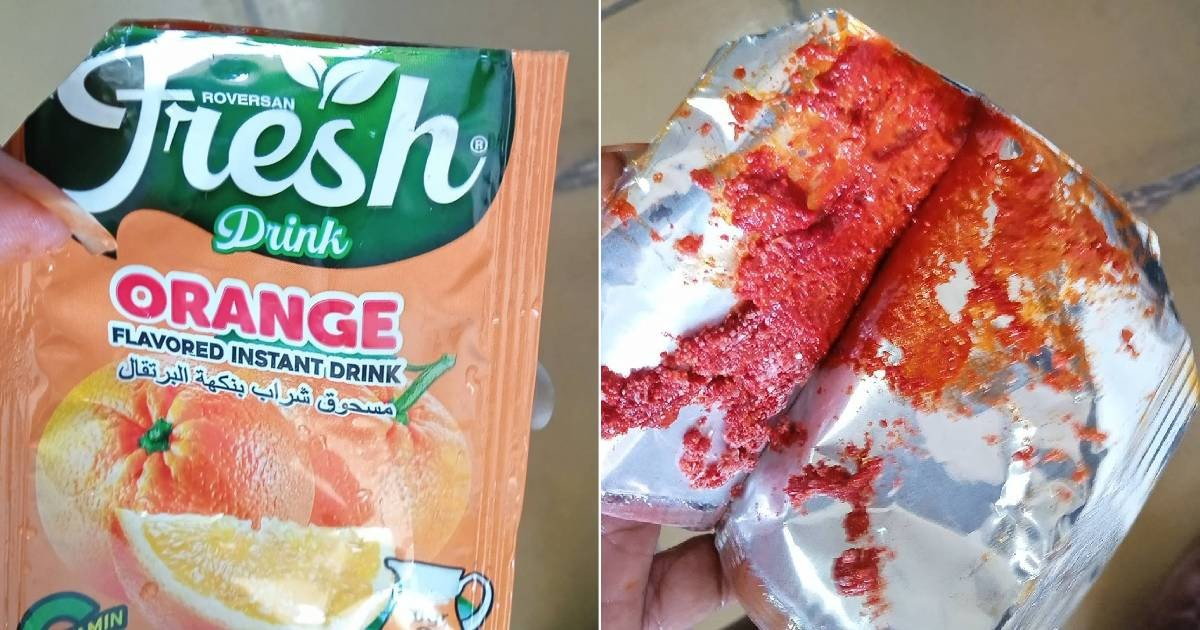
Less than a week before the start of the 2026-2027 school year, set for September 1, Cuban mothers are reporting on social media that not even a packet of powdered drink can be ensured in good condition for a decent snack for their children.
Indignation focused on the Facebook group “Madres Cubanas Luchadoras 2”, where an image of a package from the brand Roversan Fresh —orange-flavored drink powder— circulated as a symbol of the precarious state of school nutrition in Cuba.
"What are the children going to take for their snack if there isn't even bread with oil?" asked one of the mothers, Kenia Palacio, in the group, summarizing the desperation of thousands of families who cannot find affordable options as they prepare for the return to school.
The question is not rhetorical. According to data from the PMA published this month, 48.5% of Cuban students aged six to eleven do not receive any meals or snacks at school, a figure that reflects the collapse of a system that, on paper, should guarantee free food to students.
The situation worsened following the Resolution 150/2026 of the Ministry of Finance and Prices, which removed the price caps on several basic imported foods.
As a result, oil reached 4,000 pesos and sausages rose to 1,200 pesos, turning even modest options like bread with oil or bread with sausage into luxury items.
A calculation shared on social media estimated that providing breakfast and snacks for a child can exceed 10,000 Cuban pesos per month, an amount that is unattainable for most families.
School snacks are not the only obstacle that Cuban mothers face as they prepare for the return to classes. Power outages lasting over 20 hours, water shortages, lack of uniforms, and scarcity of school supplies paint a picture that has led many to declare that they will not send their children to school if there are not minimal conditions.
"We will not send our children to school if there are no minimum conditions," they warned in recent posts.
The crisis is not new, but it has deepened at an accelerated pace. In June, the Minister of Food Industry acknowledged that more than 100,000 children were not receiving their daily milk, and the WFP had to activate an emergency project on July 1 in five eastern provinces to assist 12,677 children in 74 educational centers.
The official Cuban regulations establish that students in basic secondary education are to receive a liquid—soy yogurt or vitamin-enriched beverage—and a solid food item free of charge each day. In practice, this commitment has not been fulfilled for years: by 2018, less than 40% of secondary students were consuming the state-provided snack, and in 2024, there were extreme measures such as forcing students to bite into bread in the classroom to prevent them from reselling it.
For the upcoming course starting in a few days, the image of the little packet of orange powder has become the most eloquent symbol of deterioration: when even that is not enough, Cuban mothers wonder what future awaits their children in the classroom.
Related videos:
Filed under: