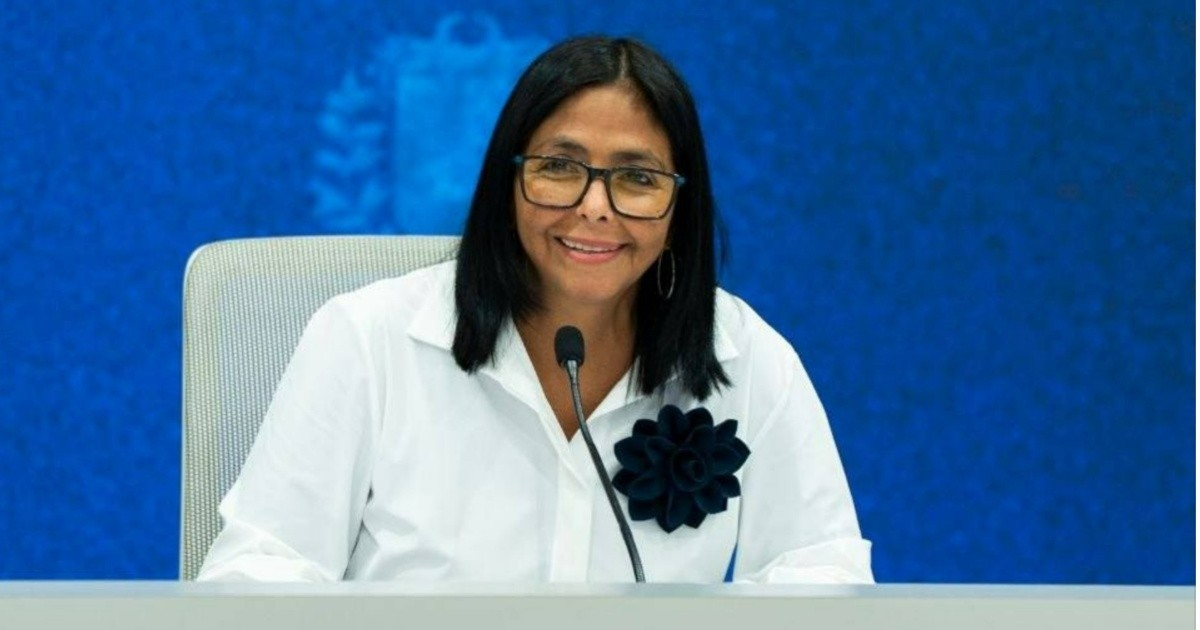
The interim president of Venezuela, Delcy Rodríguez, stated this Tuesday that 1,046 Venezuelans have regained their freedom since January 2026, when the Chavista regime began a process of releases following the capture of Nicolás Maduro by U.S. military forces, according to the agency EFE.
The announcement was made in a message to the nation to mark two months since the devastating earthquakes that struck Venezuela last June, and in this message, it was also specified that another 12,000 people have received procedural benefits.
"As a result of the Democratic Coexistence and Peace Program, to date 1,046 Venezuelans have been released, 12,000 individuals have received procedural benefits, and we will continue to move forward responsibly," Rodríguez stated.
The releases began just a few days after January 3, when U.S. troops captured Maduro in Caracas. Since then, the Venezuelan government has announced successive waves of releases throughout the year, although the official figures have been systematically challenged by independent organizations.
Foro Penal, the main legal defense organization for political prisoners in the country, has consistently verified numbers lower than those proclaimed by the government. Of the 131 releases that the authorities announced in mid-August — related to the conclusion of the first cycle of dialogue between Chavismo and the opposition — the NGO was only able to confirm 81. The Democratic Unitary Platform (PUD), the largest opposition coalition, counted 105 from that same group.
Until last June, Foro Penal had verified the release of 894 political prisoners since January, a gap with the official figures that has persisted throughout the process. As of August 10, the organization still recorded 391 individuals in active political prisoner status.
In the institutional context, Rodríguez reiterated that his government is cooperating with the International Committee of the Red Cross to review the conditions of detention centers, an announcement that the Ministry of Foreign Affairs made the previous week under pressure from human rights organizations and families of detainees who have been demanding access for that organization to Venezuelan prisons for months.
The latest releases in August occurred in the context of the first round of dialogue between chavismo and the opposition, represented by former deputy Dinorah Figuera with the support of Washington. This negotiation process, based at La Carlota airbase in Caracas, concluded its first round on August 13 with agreements on the renewal of the Supreme Court of Justice and assistance for earthquake victims.
The Chavist-majority Parliament had also approved an amnesty law in February that benefited more than 8,000 people, although most were already under restricted freedom. In April, Rodríguez announced the conclusion of the implementation of that regulation.
Apart from the releases, the acting president promised to eliminate police checkpoints in the cities, which have repeatedly been identified as hotspots for extortion, and to strengthen patrolling with mechanisms that, in her words, are "respectful" of human rights.
The backdrop of the announcement is the earthquakes of June 24, with magnitudes of 7.2 and 7.5, which by this Monday had resulted in 6,509 confirmed deaths and have become the largest recent natural disaster in Venezuela.
Related videos:
Filed under: