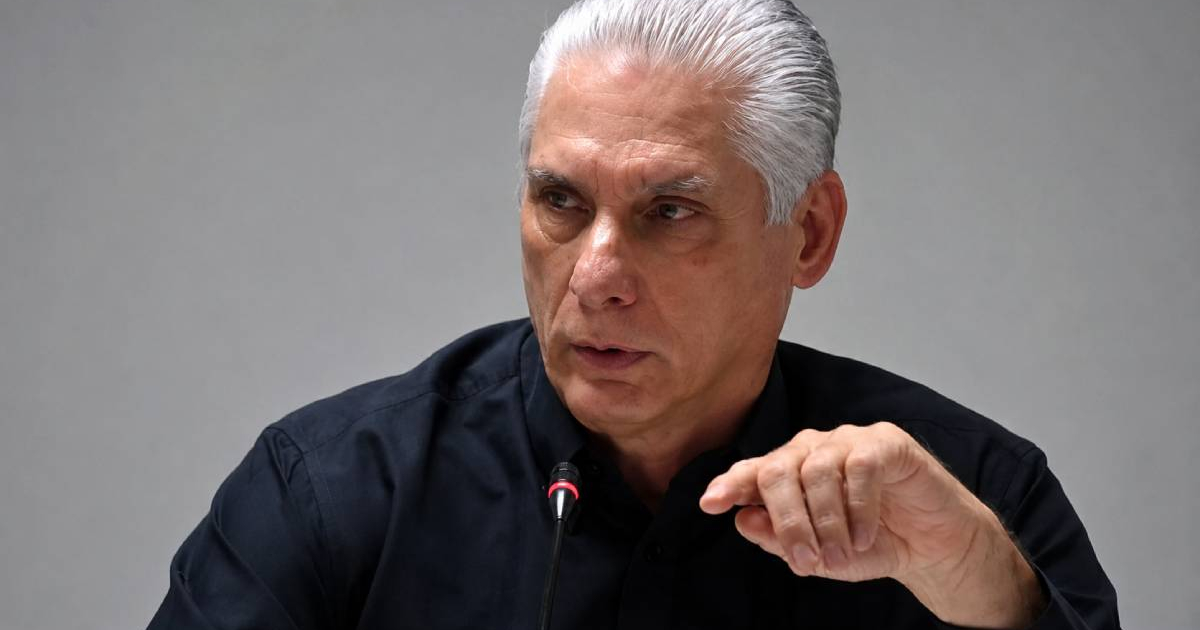
The Cuban government acknowledged that "prejudices and obstacles" against private entrepreneurs within state structures persist, a problem addressed during a meeting led this Tuesday by Miguel Díaz-Canel with representatives from the non-state sector.
The meeting highlighted the obstacles that private businesses in Cuba continue to face, while Díaz-Canel advocated for greater integration of these management forms into the economy and promised to maintain systematic contact with their representatives.
The Cuban Presidency reported that during the meeting, difficulties were noted at “intermediate levels of management,” attributed in some cases to a lack of knowledge about the 176 economic and social transformations approved by the Government.
The official text does not include the statements from the entrepreneurs who participated in the meeting, nor does it mention the private companies that were represented; it only indicates that entities from these sectors attended:
- Nutrition
- Agriculture
- Energy
- Transport
- Legal advice
- Others unspecified
What did Díaz-Canel say to the Cuban business owners?
The leader stated that the Cuban business system should be regarded as a single entity, consisting of both state enterprises and the new forms of non-state management. He emphasized that maintaining ongoing communication is essential to reach consensus on the country’s economic direction.
"If there is no systematic dialogue, we cannot know what we are thinking and how we are building consensus," he assured.
Some private entrepreneurs presented new projects and explained the measures taken to keep their businesses operational amid the crisis, including the shift in energy sources due to issues with the national electrical system.
Private sector representatives also demanded to be recognized as part of the Cuban business framework, a significant request after years of restrictions, regulatory changes, and official distrust towards private initiative.
Díaz-Canel, however, combined his call for dialogue with new warnings. He criticized what he termed "illegitimate profits" and pointed out that the private sector cannot become a space for tax evasion, speculation, corruption, hoarding, or price fixing that the government deems disconnected from reality.
He also questioned businesses that do not accept payments via bank transfer and announced that the authorities will maintain a "campaign" against that practice until, as he stated, it is eliminated.
The leader also called for greater participation of private companies in the production of food, goods, and services, as well as in strategic sectors such as energy. He even raised the need to measure how much these companies contribute to electricity generation, employment, and the country's income.
The meeting highlights the growing significance of the private sector in an economy characterized by scarcity, low production, and difficulties faced by state-owned enterprises, while entrepreneurs continue to demand fewer obstacles to develop their businesses.
Related videos:
Filed under: