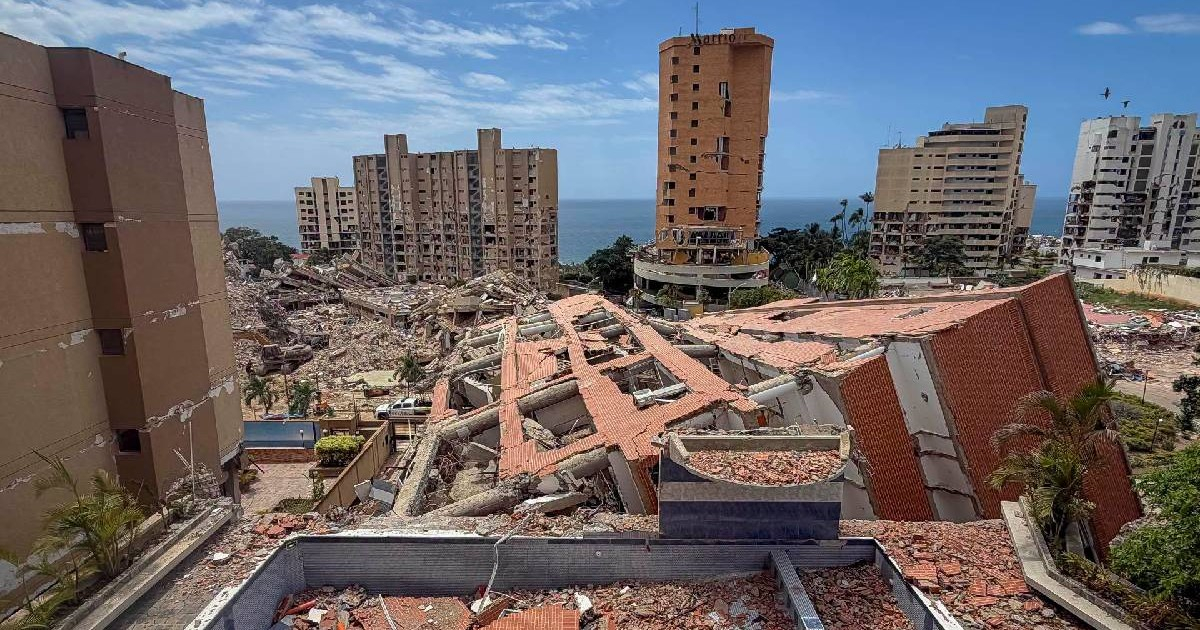
Two months after the devastating earthquakes that struck Venezuela on June 24, the official death toll from the disaster has reached 6,509 fatalities, according to the weekly report released by Jorge Rodríguez, president of the National Assembly.
The report also states that 6,462 people were rescued alive and 226,696 treated in hospitals since the double earthquake occurred, which is considered the largest natural disaster recorded in Venezuela in over a century.
The death toll has steadily risen from the 920 reported two days after the earthquakes. In the past week, the official count added 71 more victims to the 6,438 reported in the bulletin on August 17.
The earthquakes—measuring 7.2 and 7.5 in magnitude, and occurring just 39 seconds apart—had their respective epicenters in the states of Yaracuy and La Guaira, primarily devastating the latter, with Caraballeda and Catia La Mar declared disaster zones, along with extensive areas of Caracas, Miranda, Carabobo, Aragua, and Falcón.
The United States Geological Survey (USGS) estimated from the very first day that there could be between 10,000 and 100,000 potential victims, and NASA calculated that around 59,000 buildings would have been destroyed.
In terms of housing, the bulletin dated August 24 indicates that 60,785 properties have been evaluated: 35,545 were declared habitable, 14,239 have usage restrictions, and 11,001 pose a high risk to their occupants.
As of now, only 335 new homes have been delivered to those affected, a figure that contrasts sharply with the extent of the structural damage recorded.
Regarding debris cleanup, the Venezuelan government reports having removed 600,790 tons, equivalent to 28.61% of the estimated total, which indicates that the majority of the removal work is still pending.
One of the most critical aspects of the crisis is that of the missing persons. The government of interim president Delcy Rodríguez stopped updating that figure in the early days following the earthquake, while the independent citizen initiative "Missing from the Earthquake in Venezuela" counted nearly 29,500 people with unknown whereabouts as of July 25, a gap that humanitarian organizations have pointed out as a serious omission.
The chavista regime activated the "Venezuela Renace Plan" as an official reconstruction program and announced talks with the United States and the International Monetary Fund to secure financing, although independent media and humanitarian organizations have deemed the government's response insufficient in light of the scale of the disaster.
The earthquakes of June 24 represent, according to the USGS, the greatest seismic disaster in Venezuela since 1900, and the country faced them amid a deep institutional crisis exacerbated by the capture of Nicolás Maduro in January of this year.
Related videos:
Filed under: