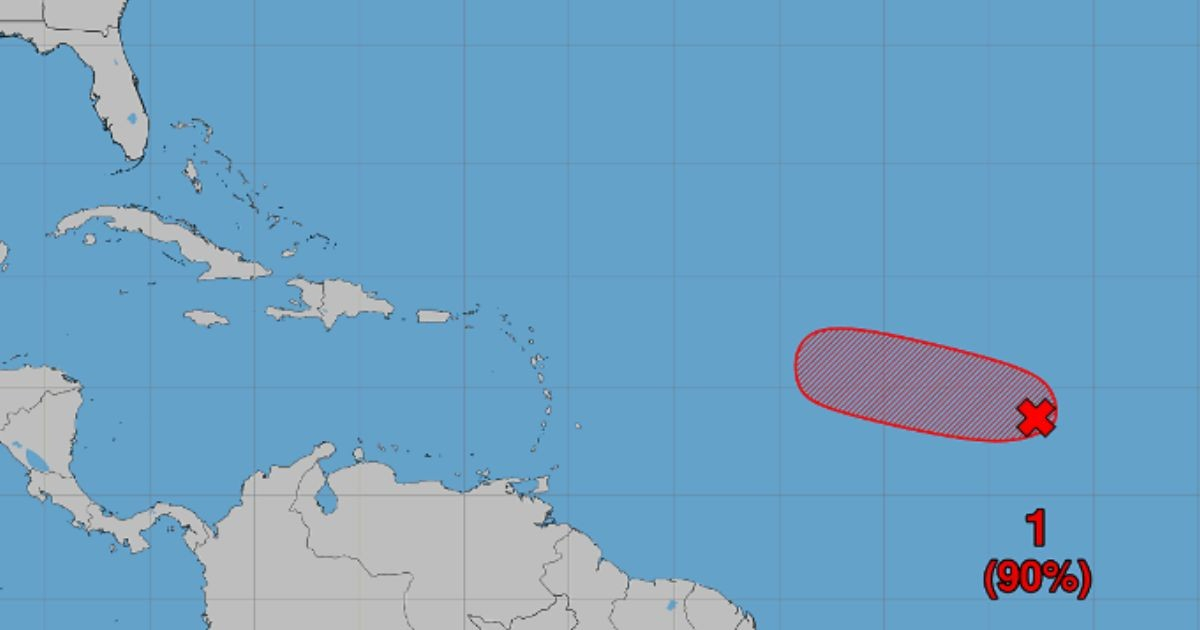
A low-pressure system moving through the tropical Atlantic increased this Thursday to a 90% chance of developing into a tropical cyclone and could result in a short-lived storm in the coming hours.
The National Hurricane Center (NHC) reported at 8:00 a.m. this Thursday that the system, identified as Invest AL96, is located approximately halfway between Africa and the Windward Islands and showed improved organization overnight.
The formation probability has increased to a 90% both over the next 48 hours and within the next seven days, so the NHC considers the possibility of development to be high.
"If current trends continue, warnings about a short-lived tropical storm could be issued later today," stated the U.S. agency.
However, the window for the system to strengthen would be limited. The NHC warned that starting Friday, hostile environmental conditions are expected that will likely end its chances of continuing to develop.
In a meteorological discussion issued also this Thursday, specialists noted that the rain and thunderstorms associated with the low-pressure area became better organized during the night.
In that report, the system was located several hundred miles west-southwest of the Cape Verde Islands. If it continues to develop, the NHC anticipates the possibility of starting to issue advisories on a tropical depression or tropical storm during the day.
Once it reaches tropical storm intensity, it would be named Dolly, the next name available on the official Atlantic list for 2026. Arthur, Bertha, and Cristobal are the three systems that have been named so far this season.
The NHC also predicts that the system will cause an increase in winds and waves in parts of the tropical Atlantic during the weekend, although so far it has not issued an impact track for Cuba.
The rapid increase in odds occurs after several days of changes in forecasts. Just on Wednesday, a Cuban meteorologist analyzed the low activity of a season that up to that point had only recorded three tropical storms and no hurricanes.
The specialist Elier Pila Fariñas explained that, although the waters of the Atlantic maintain favorable temperatures for development, factors such as dry air and high-level winds have hindered the organization of the systems.
Related videos:
Filed under: