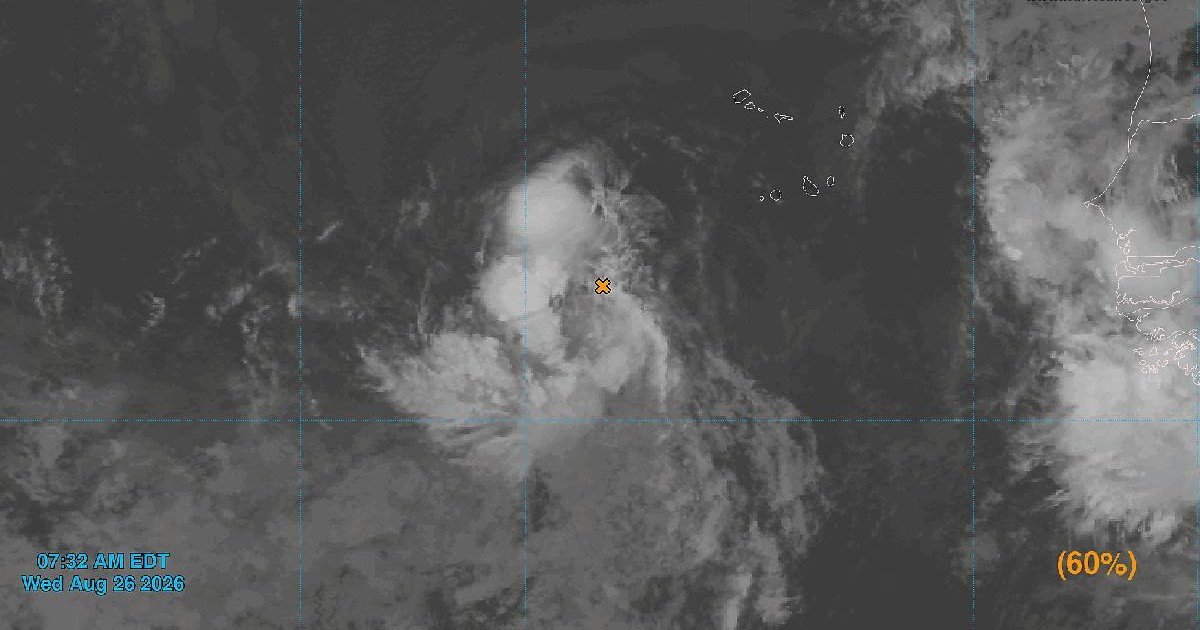
The National Hurricane Center (NHC) in Miami reduced the chances of development for the tropical system AL96, which is moving through the eastern Atlantic, from the 70% recorded the day before to 60% for both 48 hours and the next seven days, lowering its classification from "high" to "medium."
The system, an area of low pressure associated with a tropical wave, is located a few hundred miles southwest of the Cape Verde Islands, with disorganized rain and thunderstorms moving west and west-northwest across the eastern and central tropical Atlantic.
The NHC warned that environmental conditions are expected to be "less favorable" for the weekend, which "could end its chances of development," the main reason for the downgraded forecast.
Despite this outlook of deterioration, the agency does not rule out that the system may become more organized in the coming days: "The environmental conditions are somewhat favorable for development over the next few days, and a tropical depression could form within one or two days."
The NHC has not established any official path for the system toward Cuba, the Caribbean, or Florida. If AL96 were to reach the status of a named tropical storm, it would be given the name Dolly, the fourth on the Atlantic list for the 2026 season.
The probability of formation increased on Tuesday to 70%, raising expectations about a possible cyclone, but the bulletin released this Wednesday at 8:00 a.m. (Eastern Time) tempered that scenario.
The 2026 Atlantic season has been unusually quiet: only three named storms—Arthur, Bertha, and Cristóbal—have emerged to date, in a season that NOAA predicts will be below normal with a 75% probability, influenced by the El Niño phenomenon.
However, Cuba is statistically experiencing its highest risk period for tropical cyclones of the year. According to meteorologist Luis Enrique Ramos Guadalupe from the Meteorological Society of Cuba, "the second half of August marks the start of the period of greatest cyclone danger for Cuba and the rest of the Caribbean."
The Institute of Meteorology (INSMET) maintains a 40% probability for 2026 that at least one hurricane will impact the island and a 75% chance that a tropical storm will affect it, figures that are particularly relevant given that Cuba is still recovering from Hurricane Melissa, which made landfall in the eastern part of the country in October 2025 as a Category 3 hurricane, affecting more than 3.5 million Cubans and damaging over 116,000 homes.
The name Dolly has direct historical ties to the island: Hurricane Dolly in 2008 brought heavy rains to western Cuba—Isla de la Juventud, Pinar del Río, and Havana—before making landfall in Texas.
The climatic peak of the Atlantic season occurs around September 10, which means the period of greatest risk for the region is still ahead.
Related videos:
Filed under: