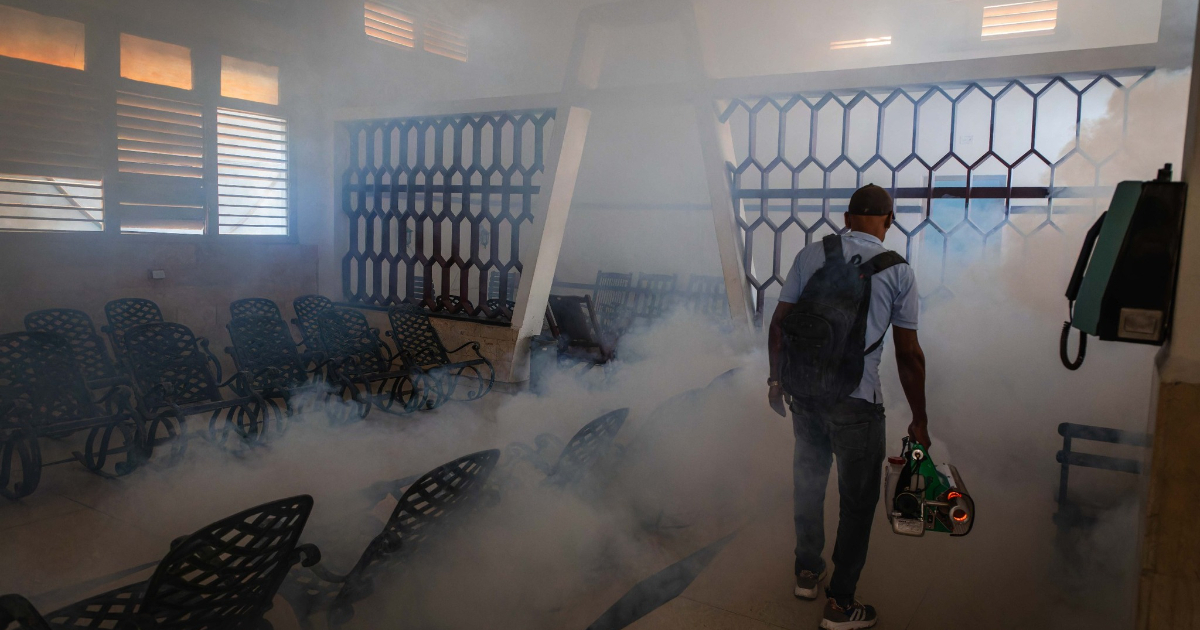
Sancti Spíritus has accumulated five consecutive weeks of increase in the incidence rate of suspicious dengue cases, with a greater impact in Trinidad and the main municipality, where an increase in Aedes aegypti breeding sites has also been recorded.
The information was published this Thursday by the official newspaper Escambray, which quoted Dr. Yurien Negrín Calvo, Deputy Director of Hygiene and Epidemiology at the Provincial Center for Hygiene, Epidemiology, and Microbiology (CPHEM).
According to the specialist, the increase corresponds to a predictable behavior for this time of year, but it has necessitated strengthening epidemiological surveillance throughout the province.
Negrín clarified that during the last week they had not admitted any patients with alarming signs, although he reminded that at other times some children have needed to be admitted to Intensive Care.
Among the warning signs, he mentioned severe abdominal pain or tenderness, persistent vomiting, diarrhea, bleeding from mucous membranes, a sudden drop in temperature, drowsiness, or agitation.
In the presence of symptoms that may indicate dengue, the official recommended seeking medical attention immediately, drinking plenty of fluids, and resting.
However, the increase is not limited to suspected cases of dengue.
According to Negrín, there is also a growing trend of nonspecific febrile syndromes, which has led to increased monitoring in the eight municipalities and health areas, especially in those traditionally regarded as higher risk.
The authorities assert, however, that Sancti Spíritus is currently not reporting any transmission of dengue or other arboviruses, although they acknowledge that there are “causes and conditions for the emergence of cases.”
On the other hand, the health system also keeps international travelers under close surveillance.
In the presence of signs or symptoms of any infectious disease, mandatory hospital isolation is required, along with immediate notification to the International Health Control Department of the province.
Targeted treatment is also carried out, mainly in areas deemed to be at high epidemiological risk.
Fumigation is concentrated in areas where there are breeding sites for the mosquito, febrile patients, or reactive IgM tests for dengue.
However, Negrín specified that these tasks are carried out “according to the availability of fuel and pesticides in each territory”, which makes it easy to assume that this activity is subject to instability.
Authorities also insisted on keeping the yards of homes and the surroundings of workplaces and educational centers clean and well-maintained, eliminating potential breeding grounds, and reinforcing what is known as self-focalization.
Sancti Spíritus faced a complex epidemiological situation due to arboviral diseases last year.
In December 2025, health authorities acknowledged two fatalities, one of whom was a child, associated with dengue and chikungunya, while the province had recorded over 1,000 individuals with suspicious symptoms.
In addition, the rise in suspected cases in Sancti Spíritus occurs within a context of enhanced surveillance for arboviral diseases in other provinces.
For example, at the end of July, Guantánamo ended a week with 23 suspected cases of dengue and with Imías and San Antonio del Sur at a level of “Epidemiological Alert”, the highest risk category within the Cuban health classification.
In Villa Clara, the municipality of Ranchuelo also faced a complex situation in July, with the simultaneous circulation of serotypes II and IV and 12 patients hospitalized, according to official figures released at that time.
The situation was referred to as one of the most concerning epidemiological hotspots at the moment.
Related videos:
Filed under: