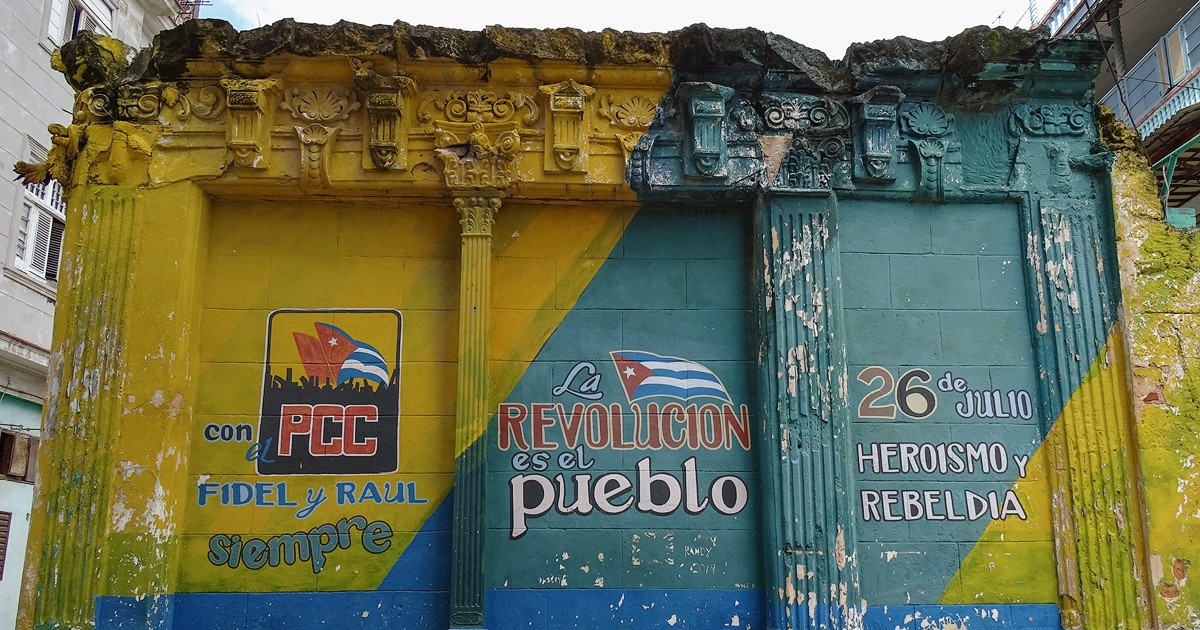
A new campaign by the Government of Havana that proposes to organize communities into "safe," "participatory," and "productive" neighborhoods has sparked a wave of criticism and mockery among Cubans, who are calling for much more basic priorities: water, electricity, food, transportation, and security.
The Government of Havana promoted this Wednesday the participatory-popular movement “My Neighborhood for the Homeland”, structured in three fronts: Safe Neighborhood, Participatory Neighborhood, and Productive Neighborhood.
According to the official explanation, Barrio Seguro aims to involve the population in tasks of "preparation for the defense of the Homeland," as well as in the security and protection of communities.
The so-called Participatory Neighborhood aims for citizens to engage in actions to transform their communities, while Productive Neighborhood proposes to develop productions and services at the local level to meet the needs of the residents themselves.
The presentation, however, provoked a reaction very different from what the institutional message suggested. A large portion of the comments turned the official publication into a forum for complaints about the everyday issues of the capital.
Water and electricity were among the most common complaints. An internet user summarized the contrast directly: "A safe, participative, and productive neighborhood starts with having water and electricity. Start with the part that is yours to handle."
Another user resorted to irony and asked: «Isn't the Neighborhood Lighting plan designed? If they guarantee this one, people will be able to participate in the others».
The occurrence found fertile ground in a city where blackouts continue to affect daily life. "A safe, participatory, and productive neighborhood, very nice, how interesting. But of course, without water," another person sarcastically remarked.
Another comment directly renamed the proposal: «Blackout neighborhoods it will be», before denouncing that they had been without water for over 20 days.
From Guanabacoa came a similarly direct response: "My neighborhood, safe, participatory, and productive, needs water to be brought to the center of Guanabacoa. Do you think that's possible?"
Other users questioned the gap between the program's objectives and the actual conditions in many communities.
An extensive reaction questioned how one can speak of a safe and productive neighborhood in the midst of problems related to food, water supply, electricity, transportation, diseases, high cost of living, and accumulating garbage.
"Participate in what?" and "Produce what at the neighborhood level?" asked the author of the comment, who accused the authorities of "idealizing reality."
There were also questions raised about the purpose of transferring responsibilities related to security to the residents.
A user recalled that combating crime, drugs, and other illegal activities is the responsibility of the institutions created for those purposes, and stated that the population is aging, exhausted, and has lost trust.
The neighborhoods need the PNR to work and to clean them up from so much insecurity, another person demanded.
One of the most compelling criticisms pointed directly at the use of slogans and campaigns amid the shortages: "Slogans do not feed us, they do not provide the vital water for life, they do not illuminate the endless nights of our children and the elderly, they do not supply medicines or efficient medical services."
The post also received openly sarcastic responses. One person simply asked, "And this meme?", while another wrote "Dream that it costs nothing", and a user joked that the future of neighborhoods would be divided between "collectors-hunters-fishers" and "farmers and potters."
The complaints included specific cases. Residents of La Lisa called for the restoration of water; neighbors in Centro Habana demanded a more equitable distribution of power outages; and from Alamar, a user asserted that he has been requesting an explanation from Aguas de La Habana about service issues in several buildings for three years without receiving a solution.
"Mi Barrio por la Patria" is not a new initiative. The program began to take shape in March as a new strategy for community organization, also structured around the Safe, Participatory, and Productive fronts.
Later, in May, the initiative was formally presented to officials and representatives of the People's Power, with the intention of expanding it to more than 12,000 constituencies across the country and strengthening community participation in tasks of vigilance, defense, and production.
The campaign also comes at a time when traditional neighborhood mobilization organizations have been showing signs of wear for some time.
In 2025, the Committees for the Defense of the Revolution themselves acknowledged a shortage of leaders and difficulties in attracting new members, especially among the youth.
Related videos:
Filed under: