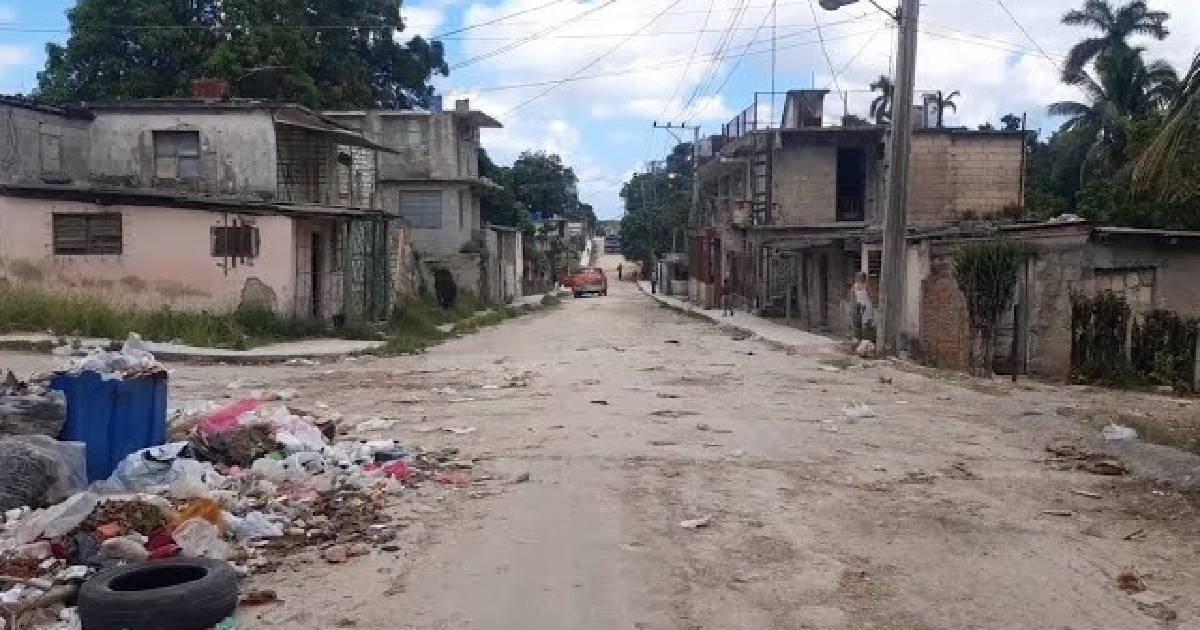
A neighborhood activist from Mantilla in Arroyo Naranjo captured on video the moment when inspectors and workers from the hydraulic system suddenly appeared in his community to restore the water supply through pipes—cut off for two years—just days after rumors circulated about a visit from Miguel Díaz-Canel to the area.
The video, shared by Martí Noticias on Facebook, was recorded by Osmany Poveda, who indignantly denounces what he sees as a display of the system's hypocrisy.
"We have been without water through the pipes for two years, and now, because they say Díaz-Canel is coming, inspectors and workers have appeared to solve the problem," he pointed out.
The images show workers manipulating the valves of the hydraulic system while Poveda narrates the situation.
The activist emphasizes that in Mantilla, there are children, the elderly, and vulnerable individuals who have endured this deficiency all this time: "Two years, it's unbelievable, where there are children, the elderly, and vulnerable people; it’s a tremendous lack of respect."
Poveda's conclusion summarizes the pattern she criticizes: "All problems get resolved in less than two days, of course, all because they say Díaz-Canel is coming."
Mantilla has a long history of protests due to a lack of water. In June 2026, residents reported seven consecutive days without supply, and on July 5, they blocked the Calzada de Managua in protest of more than two months without regular water, prompting authorities to respond by sending water trucks as a temporary measure.
The situation in the neighborhood is no exception: the water crisis in Havana has steadily worsened throughout 2026.
In April, around 200,000 residents of Havana were affected; in May, the National Institute of Hydraulic Resources confirmed 376,055 affected individuals; in July, specialists from Aguas de La Habana raised the number to over 500,000 people.
On August 21, a malfunction in the 78-inch pipeline of the Southern Basin left six municipalities in the capital without water: Plaza de la Revolución, Diez de Octubre, Cerro, Centro Habana, Habana Vieja, and part of Boyeros.
The context of the presidential visit adds another layer to the narrative. On Friday, Díaz-Canel inspected the water supply source at Paso Seco, in Boyeros, to review emergency work aimed at sustaining the pumping to the capital, and the Cuban Presidency acknowledged that the supply situation is "critical," urging to resolve the issues "as quickly as possible."
On that same day, the United States embassy in Cuba warned that the water distribution infrastructure on the island is “increasingly unstable” and advised its citizens to store the resource.
The pattern that Poveda denounces—emergency solutions activated by the imminence of an official visit, rather than by the real urgency of the population—illustrates a structural dynamic: 87% of Havana's water supply system depends on the electrical grid, and frequent blackouts paralyze the pumps, turning scarcity into a permanent crisis that only seems to matter when there are cameras or official visits involved.
Related videos:
Filed under: