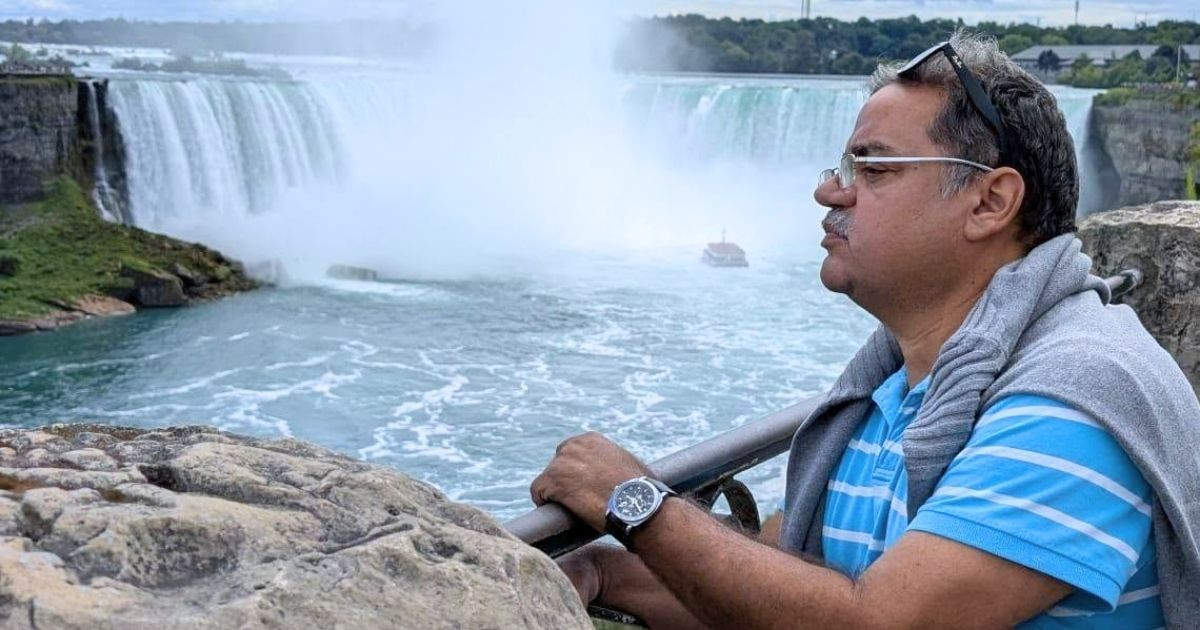
The film critic, journalist, and professor Joel del Río announced his definitive departure from the Faculty of Arts of Audiovisual Communication (FAMCA) at the Higher Institute of Art (ISA) in Cuba this Friday, where he taught for 16 years. He made the announcement through a post on his Facebook profile, brief yet filled with meaning.
"I have just said goodbye to Famca Isa. I won't be starting this course, and I believe I won't return in the near future. It was 16 years during which I felt, at times, like a good teacher. I got tired. We all have at least the right to be tired," Del Río wrote without providing further explanations about the reasons for his decision.
The post sparked an avalanche of reactions among alumni, colleagues, and figures from the Cuban cultural world, who expressed sorrow over the departure and acknowledged his teaching career.
A former student, Lisy Rojas Varela, summarized what many expressed: "You were the best, don't let anyone make you feel otherwise, but you weren't the best because you knew more (which you did) or because you never skipped a class (which you also did). You were the best because you never let extremism defeat you, because in your class we said whatever we wanted and the only responsibility we had was to show up having watched the movie."
Another commentator, the critic and documentary filmmaker Yasmani Castro Caballero, pointed to the institutional environment as a backdrop: "What a pity, but I completely understand you because it is very difficult to be in a place where creation is replaced by the manufacture of meaningless things."
A forum member was more direct in assessing what the departure of the professor signifies: "What a kind of column they've let fall in that collapsing school and system...". And the critic and professor Gustavo Arcos stated: "Well, you know, for some people it’s preferable to maintain the void, the meaninglessness, the mediocrity. Talent, dedication, knowledge don’t matter, much less all the energy and time we can devote to something."
María Luisa Brito Hernández, who identified herself as a member of the first graduating class of FAMCA and as a former faculty member, shared her own experience: "I also said goodbye as one does when parting with something dear... I was in that faculty for two years, and I also grew tired."
In the comments, actress and broadcaster Laritza Camacho suggested starting a podcast as a new teaching space. Del Río responded succinctly and with determination: "Laritza Camacho, visionary Aquarian... That's what I'm going for with the podcast." For her part, filmmaker Marilyn Solaya considered the breakup to be "a shame for the new generations," but said she understands the right to be tired of the professor.
The departure of Del Río does not occur in a vacuum. A Doctor of Arts and one of the most recognized film critics in Cuba, he has a documented history of friction with official institutions. In December 2020, he was sanctioned by the newspaper Juventud Rebelde —with which he collaborated— after criticizing the regime's television campaign against artists and activists of the San Isidro Movement. At that time, he publicly denounced that "a witch hunt was instated" and that the newspaper's director "didn't give a damn about 30 years of work at that paper."
In November 2023, Del Río was one of more than a hundred Cuban filmmakers who rejected the appointment of Alexis Triana as president of the Cuban Institute of Art and Cinematographic Industry (ICAIC).
His departure is part of a broader trend of fractures between Cuba's cultural institutions and educators and intellectuals. In January of this year, ISA professor Roberto Viña Martínez denounced his expulsion due to political dissent. Nationally, Cuba began the 2024-2025 school year with a deficit of thousands of teachers, reflecting the structural collapse of the education system under the dictatorship.
Another former student summarized the feelings of those who knew him in the classroom: "There is a generation from FAMCA that is currently grateful for having had such a good teacher; there will be another generation that will lament it, because I am sure that people will continue to talk about you even though you are no longer in the classroom."
Related videos:
Filed under: