The historian and Doctor of Historical Sciences Ivette García González published an analysis titled "The Cuban Crisis Worsens, but on Its Own Does Not Mobilize" on her Facebook profile on Thursday, in which she argues that the worsening situation on the island does not guarantee any political change by itself.
The former tenured professor at the University of Havana starts from a premise she deems historically proven: "It is not the crisis that brings about change. What the crisis most often produces by itself is frustration and spontaneous reactions driven by the instinct for survival of human beings."
To support this thesis, García González refers to global hunger data cited by the World Food Programme of UNHCR for 2020: in that year, hunger caused 20.5 million deaths —one in every seven— caused stunted growth in 58.9 million people and low birth weight in 49.5 million.
Far from using those figures as comfort, the scholar turns them into a warning: the situation in Sub-Saharan African countries is more dramatic than that of Cuba, and yet those nations have not disappeared. Extreme poverty, she insists, does not lead to political transformation on its own.
One of the most incisive arguments of the text is the naturalization of suffering. García González points out that the Cuban regime deliberately exploits the adaptive capacity of human beings: "Incredible as it may seem, the miserable state of life can also be naturalized [...]. It is a naturalization that the regime promotes, bets on, and even displays and names as 'creative resistance.' But it is false; people die both physically and spiritually."
The historian accurately describes the government's strategy: to manage scarcity in a calculated way, providing "breadcrumbs" of humanitarian aid, cutting but not completely eliminating access to the internet, and distributing hours of electricity to keep the population on the brink without causing a collapse. "If everyone disappears, who works? Who do they command? It's that macabre," she writes.
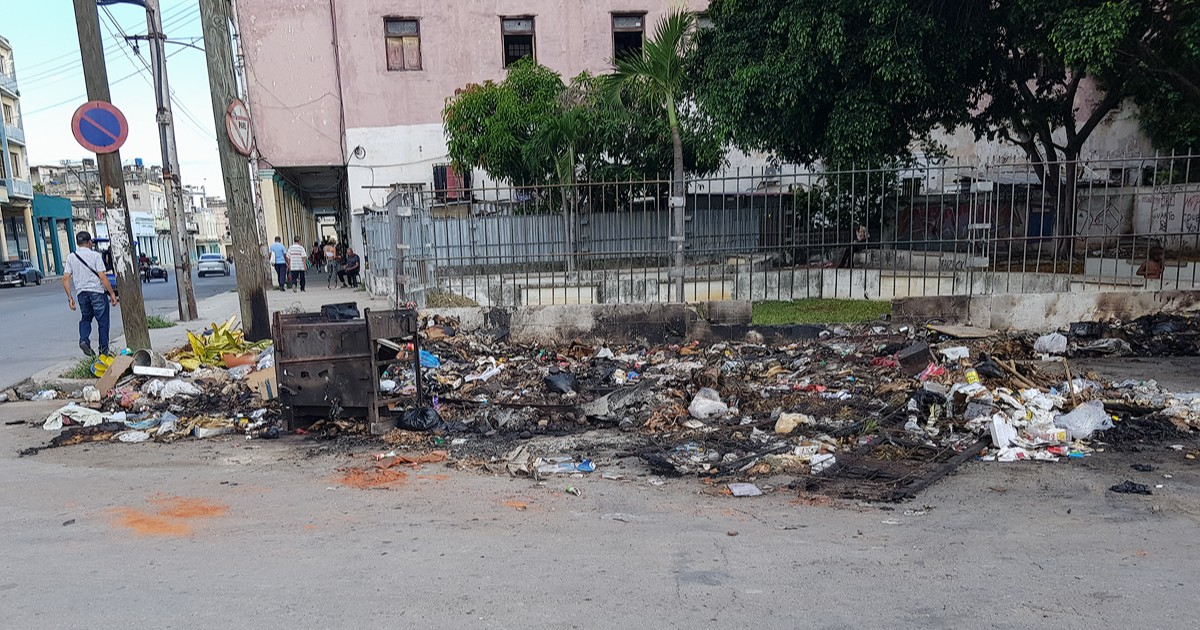
This situation is framed within an unprecedented material crisis. The Cuban economy has experienced a contraction of over 15% since 2020, with an estimated decline of 5% in 2025 and a worse projection for 2026. The electrical system has suffered several total blackouts so far this year, frequently experiencing daily deficits exceeding 2,000 MW. And Prisoners Defenders reported 1,327 political prisoners at the end of July, including minors.
García González also rejects the temptation to compare Cuba with the worst global scenarios: “Our comparison cannot be with the worst, but with our neighbors (only Haiti is worse, and not in everything) and at the very least with what we were before.” He recalls that in 1958, Cuba was ahead of most Latin American countries in key indicators, and yet it was swept away by the revolution that promised change and resulted in “a dictatorship worse than before.”
The scholar also rules out violence as a way out: "Violence as a method of struggle is dismissed globally, and our own history shows us that this path does not guarantee a transition from dictatorship to democracy."
The analysis from Thursday is the latest in a series of reflections that García González has published throughout 2026. In May, he argued that "neither Cuba is an exception, nor are dictatorships invincible" and proposed organizing a National Civic Movement based on non-violent struggle. On August 21, he concluded that "the time for reforms is over" and that Cuba needs a radical transformation, not new economic patches.
The text concludes with a question that the author herself leaves open—"So what is the way forward?"—which refers to her previous proposals for civic engagement. Before that, however, she presents her darkest diagnosis: "Although each day it seems to us that things cannot get any worse, each day we are worse off, and that trend will continue, because we remain under a totalitarian dictatorship that is only interested in citizen control, the preservation of power, and its international image."
Related videos:
Filed under: