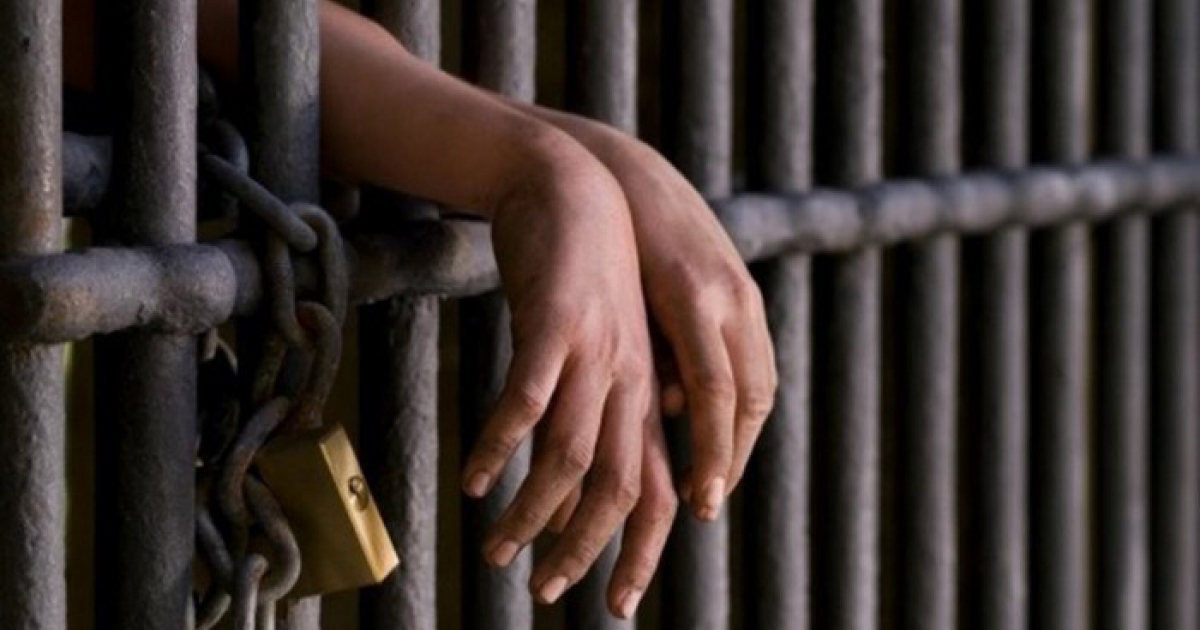
A political prisoner released two weeks ago revealed this Sunday the web of corruption, abuse, and delegated repression that operates in the penitentiary facilities of Granma province, in eastern Cuba.
According to the testimony of Fernando Bárzaga Mompié collected by Martí Noticias, military leaders have built a parallel control system in which selected inmates —known as "discipline monitors" or "promoters"— exercise real power over the rest of the prison population.
Fernando Michael Bárzaga Mompié, 44 years old, a member of Cuba Independiente y Democrática (CID), was released on August 16 in Manzanillo after serving five years of his sentence for participating in the protests of July 11, 2021. During that time, he went through four prisons in Granma, including Veguita #1 and La Demajagua.
According to their account, each monitor operates alongside a group of six to eight allies—referred to as a "picket"—which manages detachments and entire galleries. They are the ones who decide whether an inmate can go to the doctor, receive food, or make a phone call, and who impose the arbitrary enforcement of the prison regulations, a document that, according to Bárzaga, is deliberately hidden from the inmates.
"That prisoner is the one who distributes food, the one who decides whether you go to the doctor or not. They are the ones in control. Whatever happens is a confrontation from prisoner to prisoner. The police have taken all of that off their hands," stated the former inmate.
Physical repression against inconvenient inmates also falls upon these monitors, who act as enforcers on behalf of the garrison and State Security in exchange for impunity and privileges.
This pattern matches what was documented by Cubalex in August 2024, which identified the figure of the "disciplinary" inmate as a mechanism of systematic harassment against political prisoners, with a payment of 250 Cuban pesos.
Bárzaga's testimony further reveals an organized diversion of resources. Military personnel appropriate food, footwear, clothing, and packages that families provide for their incarcerated relatives, whether during searches or before they reach the inmates.
Using prison supplies, the officers produce goods for their own use, raise pigs and livestock, and assign inmates to rice cultivation without any compensation. The harvest does not improve the inmates' diet: it is sold privately.
Penitentiary benefits are also subject to market logic. Conjugal visits and the assignment to less severe regimes are negotiated to the highest bidder, according to the report.
When any inmate attempts to report these abuses, the system closes ranks. Bárzaga experienced this firsthand in La Demajagua: "Captain Francisco del Toro shamelessly stole a new cap that my aunt had brought me, and I reported him to the Military Prosecutor's Office. I followed their protocol, and what I received was a threat from the very prosecutor, who advised me to drop the process so that nothing worse would happen to me. She told me that she couldn't guarantee my safety there after I initiated a case based on my complaint."
The pattern described is part of a broader prison crisis. In its report for the first half of 2026, Cubalex documented 762 incidents against individuals deprived of liberty, including beatings and sexual assaults under the orders of State Security.
In April of this year, the organization Justicia 11J reported 775 political prisoners in Cuba, 338 of whom were sentenced for the protests of July 11, many of them imprisoned in the same province of Granma that Bárzaga describes.
Related videos:
Filed under: