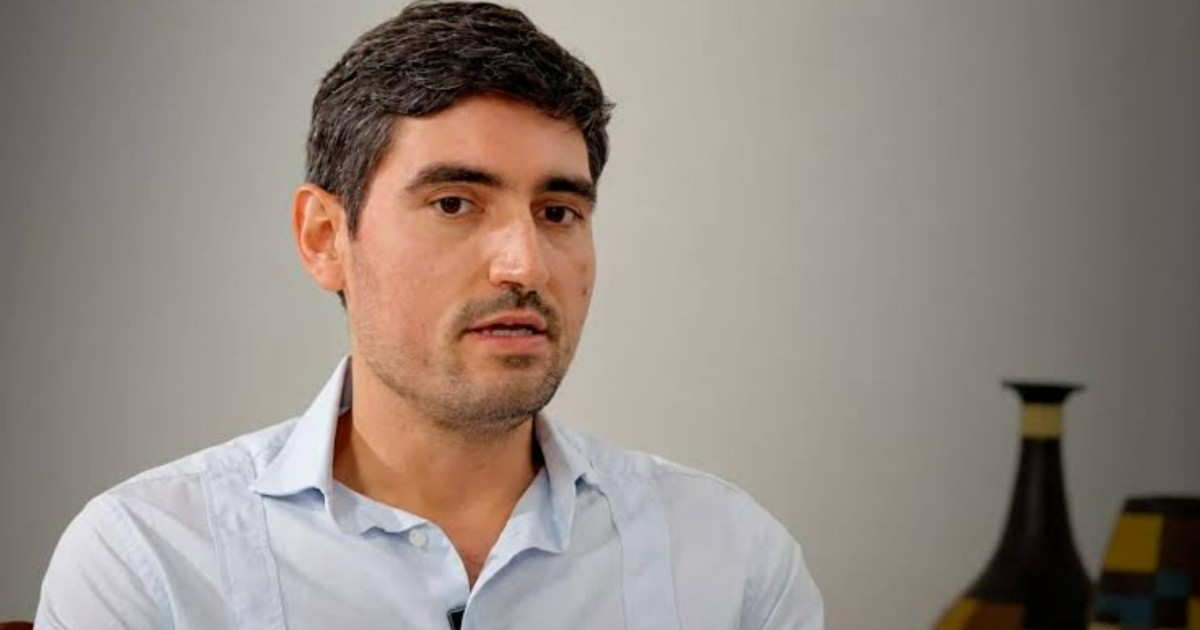
The Deputy Minister of Foreign Trade and Foreign Investment of Cuba, Carlos Luis Jorge Méndez, stated in an published this Sunday that the economic reforms announced by the regime in June will begin to become law this week and that they reinforce the notion of openness that the regime intends to convey.
Méndez, who spoke with the U.S. outlet in Havana, presented the measures as an unprecedented structural shift: "This reinforces the idea that Cuba is opening up. It's a real process, not a maneuver," stated the official.
The package approved in June includes 176 economic reforms grouped into 23 thematic axes. Méndez identified three changes that he considers the most significant among the group.
The first allows Cuban private companies to handle imports and exports directly, without the mandatory intermediation of a state agency, although there are some exceptions.
The second one removes the legal provision that required foreign investors to hire workers through state agencies, a restriction that for decades made investment in the island more expensive and complicated.
The third one expands the rights of foreigners to develop real estate in Cuban territory.
Méndez insisted that these transformations are not a temporary experiment like those that the regime itself dismantled in the past: "There are transformations we are implementing that change the behavior of the national economy so profoundly that they will be very difficult to reverse," he stated.
The official indicated that all reforms should be in effect before the end of 2026. As of July 30, the regime had approved 110 of the 121 measures scheduled for the first two months, equivalent to 90.9% of the planned program, according to data from the government itself.
The statements come at a time of maximum pressure from the United States. The Trump administration has imposed a de facto energy blockade that, according to estimates gathered in the dossier, reduced Cuban fuel imports by between 80% and 90%. Secretary of State Marco Rubio announced a new round of sanctions on August 20 and summarized Washington's strategy to Axios: "Every time they create a new mechanism to escape the knot, we close it."
In that context, Méndez confirmed that the bilateral discussions between Cuba and the United States are broken, although the regime remains open to dialogue: "We maintain our position and are willing to continue the dialogue," he said.
Skepticism about the durability of the reforms is significant. John Kavulich, president of the Cuba-U.S. Trade and Economic Council —an organization active since 1994— acknowledged that the amendments are on a "positive trajectory," but warned that without a fundamental constitutional reform, the measures could meet the same fate as those promoted during the rapprochement with the Obama administration, which the Cuban government itself reversed years later.
"The constitution of Cuba will need to be adjusted, and there isn't much time left to do so," noted Kavulich, as reported by USA Today. The U.S. government, for its part, described the reforms from June as merely a show when they were announced, a stance that Washington has not changed.
Related videos:
Filed under: