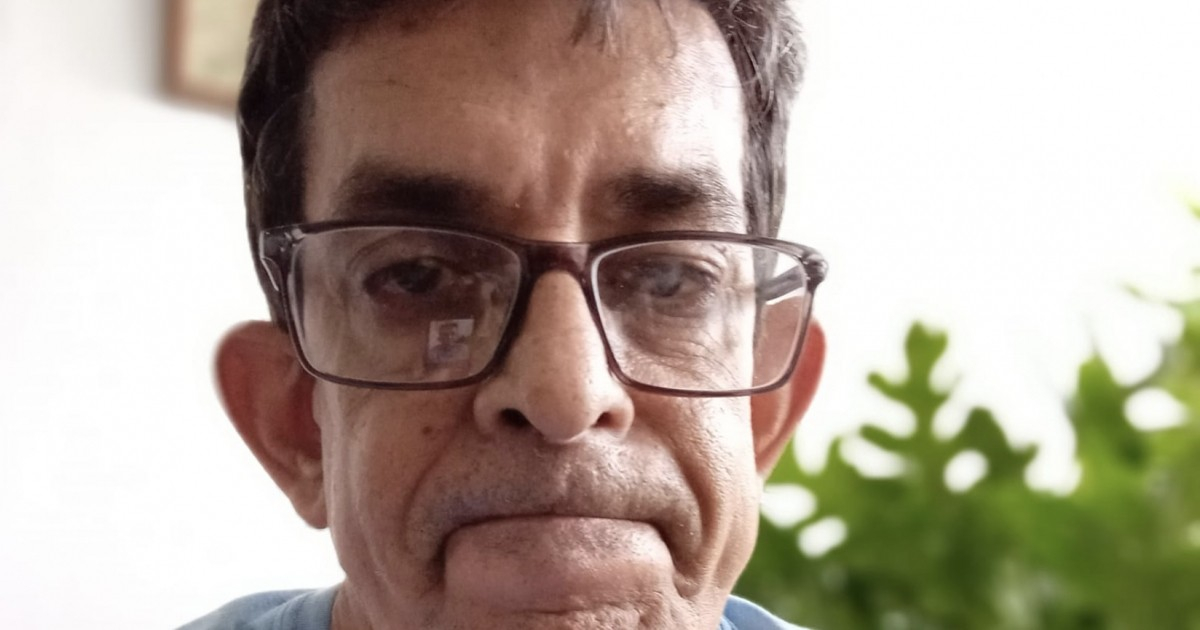
The Cuban comedian Ulises Toirac published an extensive analysis on Facebook regarding the energy crisis in Cuba, going beyond the usual critiques of power outages, as it highlights the systematic psychological harm they inflict on the population.
Toirac argues that the real issue is not just the duration of the outages -which in some circuits lasts 40 or 50 hours while neighboring areas receive electricity several times during that period- but two elements that make it qualitatively different: the lack of temporal stability and what he calls the "loop (cycle repeats continuously)" of broken promises.
Regarding the first, the artist draws a direct comparison to internationally recognized methods of torture: "One way to break the will of prisoners is to undermine their daily periodic stability: preventing them from receiving natural light to indicate the time of day and subverting meal times, exercise, etc."
According to him, power outages have the same effect even when people can see the sun, because electricity can come and go at any moment without any way to predict it.
The second element, the infinite loop, describes it as the accumulation of official lies that no longer generate hope but rather resignation: "The repeated lies that have led to worse conditions attest at least to a sustained attempt to deceive with promises, knowing they are empty," he wrote.
And he adds that "the sporadic statements of 'worse months are coming' is the only information that is taken as certain."
Ulises warns that the damage is especially severe at the generational extremes. The elderly, he says, feel betrayed after having devoted their lives to a society that today condemns them to pensions that "barely cover their most basic needs."
And regarding the youngest, he states: "The children who have been born and are growing up in this madness will simply never have a brain that functions normally or will struggle greatly to adapt to a less overwhelming reality."
The actor also denounces what he describes as a deliberate policy of disempowerment. He states that the government prohibited the importation of solar panels until it could ensure the "energy invulnerability" of certain privileged individuals, and only authorized their mass entry when widespread blackouts jeopardized the properties of those chosen few. "The disempowerment is intentional and malicious," he concludes.
In the comments section of the same post, Toirac added a phrase marked by irony directed at President Miguel Díaz-Canel: "How nice it is to be able to say 'Cuba hasn't collapsed,' right?"
The comment directly responds to the statements that Díaz-Canel made to the Brazilian newspaper Folha de S.Paulo, where the leader denied that the country was on the brink of collapse and attributed Cuban resilience to the "creativity" and "talent" of the people.
Days later, Díaz-Canel reiterated the message to deny the collapse in the context of the start of the school year.
Cuba recorded in August record electrical deficits of up to 2,411 MW, and has experienced seven total collapses so far this year.
It is not the first time Toirac has addressed the energy crisis with such intensity. In July, he described the situation with an image that went viral: "It's no longer the light at the end of the tunnel... it's that there is no tunnel".
Related videos:
Filed under: