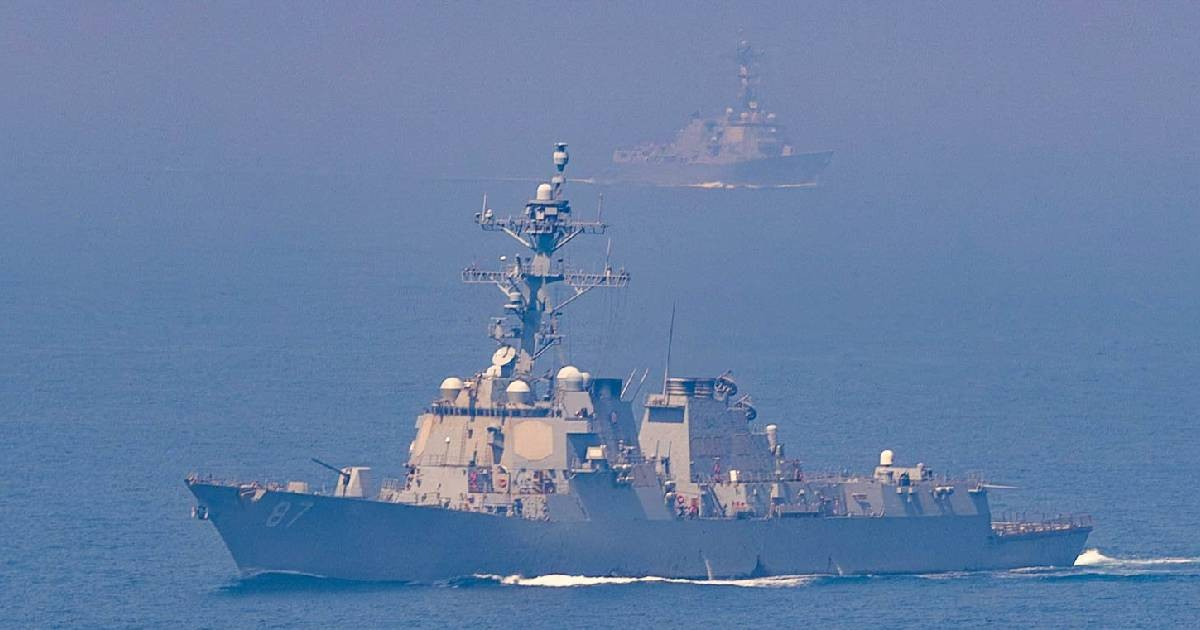
U.S. forces attacked this Sunday rocket launchers of Iran's Islamic Revolutionary Guard located on Larak Island in the Strait of Hormuz, marking Washington's first military action in the area in about a month.
According to U.S. official sources cited by Reuters and Euronews, the reason for the attack was the detection of IRGC forces preparing to launch rockets carrying sea mines toward international shipping routes in the strait. The U.S. destroyed two launchers on the island.
The Iranian agency Tasnim reported at least two dead and two injured as a result of the attack. The IRGC itself confirmed casualties—without specifying numbers—and promised retaliation, describing the operation as the work of the "American-Zionist enemy."
What makes the episode particularly significant is its immediate context: just three days prior, Admiral Brad Cooper, commander of the U.S. Central Command (CENTCOM), had announced that the Iranian sea mines had been removed from the shipping lanes of the Strait, declaring it a "major milestone" and stating that the lanes were "open and operational." The detection of new Iranian preparations to lay mines undermines that outlook and reignites tensions.
The attack on Sunday brings an end to a period of relative calm that followed the collapse of the 60-day truce signed between Washington and Tehran in Switzerland from June 17 to 19, 2026, which included commitments to reopen the strait and nuclear negotiations.
That agreement deteriorated rapidly. President Donald Trump declared it "terminated" on July 8 before NATO in Ankara, and Iran formally suspended the agreement accusing the U.S. of having killed 50 people in three weeks. The 60-day deadline of the memorandum expired on August 17 without any definitive agreement being reached, as reported by El País under the headline "The end of the conflict recedes."
The conflict between both powers began in the spring of 2026 with the first U.S. bombings on April 7. Since then, the U.S. has launched multiple waves of attacks against Iranian military targets, hitting more than 300 in less than a week during July, while Iran responded with drones and ballistic missiles against U.S. bases in the region.
The Strait of Hormuz, through which approximately 20% of the world's crude oil flows, has been the strategic epicenter of the confrontation. Iran reportedly laid about 8,000 naval mines in its waters; in May, CENTCOM reported having destroyed more than 90% of them.
Iran also launched ballistic missile attacks against U.S. bases in the region during the conflict, and in August threatened to extend its actions to targets in Europe if U.S. military pressure continued. With the promise of retaliation from the IRGC following this Sunday's attack, the risk of a new escalation in one of the world's most strategic maritime passages is once again on the table.
Related videos:
Filed under: