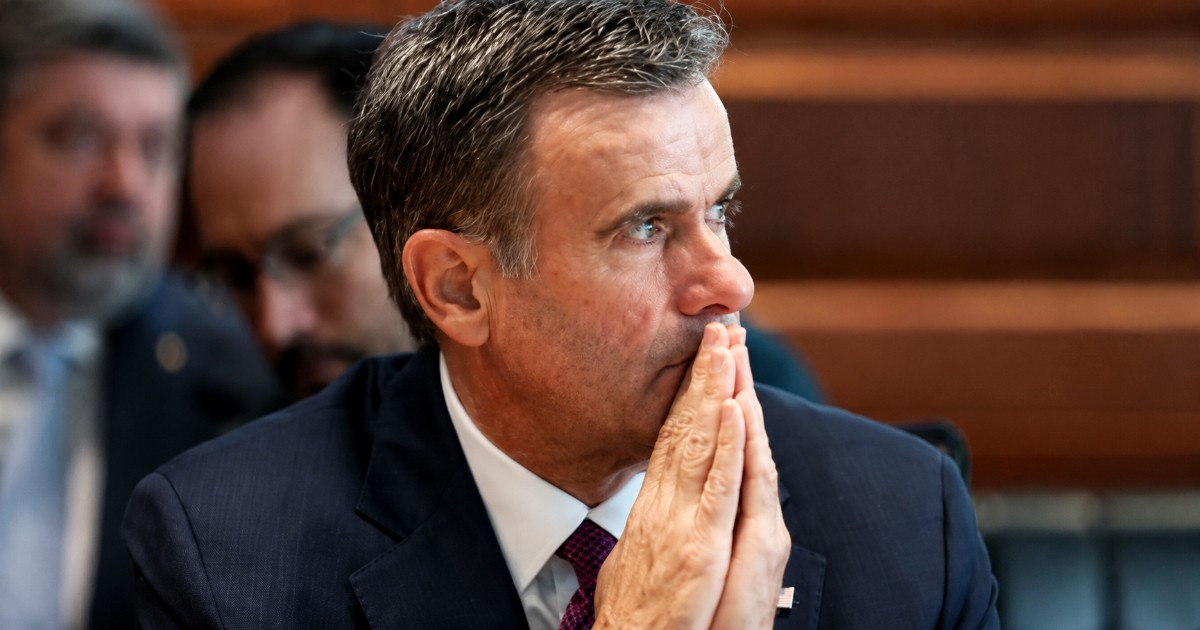
The Kremlin positively assessed this Wednesday the unexpected visit to Moscow by John Ratcliffe, the director of the Central Intelligence Agency (CIA), and confirmed that Vladimir Putin was informed "immediately" about the outcomes of the discussions held by the head of U.S. intelligence.
Contact between intelligence services is a positive thing, a positive process, declared Dmitri Peskov, the Russian presidential spokesman, during his daily conference call.
Peskov emphasized that this type of contact can be maintained even during periods of particular tension between the two countries. According to EFE, the Kremlin spokesman acknowledged that "these contacts continue, often even in the most complicated moments of our relations."
The spokesperson clarified that Putin did not meet personally with Ratcliffe during his stay in Moscow, but assured that the Russian leader received information about the outcome of the discussions.
When asked whether the visit could mark the beginning of a rapprochement between Moscow and Washington, Peskov avoided anticipating consequences and deemed it "premature" to make an assessment on the matter.
First visit by a CIA director since before the war
Ratcliffe traveled to Moscow on Tuesday in a visit that had not been publicly announced. This is the first trip by a CIA director to Russia since November 2021 and, therefore, the first since the start of the Russian invasion of Ukraine.
The previous visit was led by William Burns, then director of the agency, who traveled to the Russian capital months before the start of the war to convey Washington's warnings regarding Russia's military preparations.
The CIA has not publicly disclosed the content of the meetings held by Ratcliffe or the identity of his interlocutors. The visit also comes at a time of heightened tensions between the United States and Russia due to the war in Ukraine, incidents involving drones in the territory of NATO member countries, and Moscow's relationship with Iran.
What did Ratcliffe go to Moscow to negotiate?
The lack of official information regarding the agenda has led to speculation about the topics being discussed. The U.S. press has mentioned potential issues including Ukraine, tensions between Russia and NATO, and Iran.
CNN highlighted that the displacement occurred after Washington announced the initiation of an operation aimed at cutting off "all economic operations" of Iran, a country that has a close relationship with Russia.
Another possibility points to a negotiation to secure the release of the American Charles Zimmerman, a 58-year-old Navy veteran sentenced in January to five years in prison in Russia for possession and illegal trafficking of arms.
According to Russian Telegram channels cited by international media, that would have been one of the objectives of the trip. Russian media have also reported that Putin recently signed two secret decrees and speculate that one of them could be related to a possible pardon for Zimmerman or mass recruitment to strengthen the Kremlin’s war machinery.
So far, neither Washington nor Moscow have confirmed that the situation of the American was part of the discussions.
Contacts amid rising tensions between Washington and Moscow
The meeting between representatives of the intelligence services comes amid ongoing disagreements between the United States and Russia over Ukraine.
Washington is also closely monitoring the incidents involving Russian drones in NATO member countries, including Poland, Romania, and the Baltic states, as well as reports of a possible new Russian military mobilization, which the Kremlin has denied.
In the economic arena, the U.S. Senate approved at the beginning of August the “Lindsey O. Graham Law for Sanctions on Russia and Iran of 2026”, which includes stringent measures against Russia and tariffs of up to 100% on countries that continue to purchase Russian oil and gas. The initiative still needs to pass through the House of Representatives.
The Kremlin's confirmation now adds a new dimension to Ratcliffe's visit: despite the deterioration in bilateral relations, Washington and Moscow maintain direct channels open between their intelligence services. However, Russian authorities have refrained from interpreting these contacts as an immediate sign of political thaw.
Related videos:
Filed under: