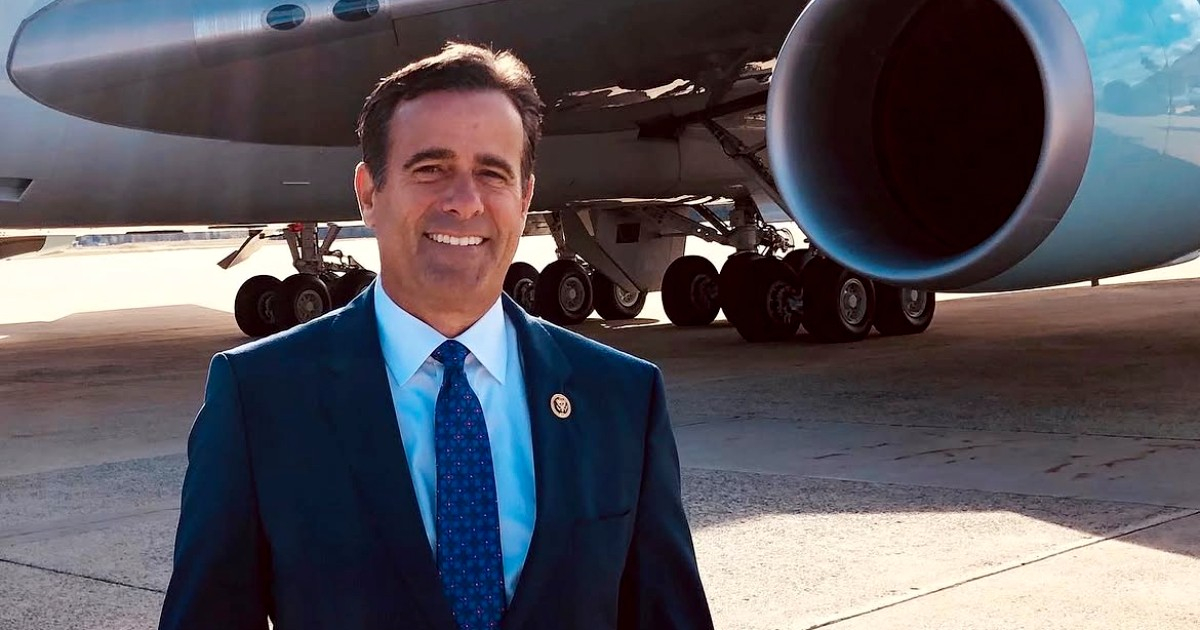
The mysterious trip to Moscow by the director of the Central Intelligence Agency (CIA), John Ratcliffe, took place while the United States was handling intelligence regarding Russia's initial preparations for a possible military mobilization and plans to test NATO's resolve, as revealed by The Wall Street Journal (WSJ).
The coincidence has raised questions about the true purpose of a visit that Washington kept under wraps and whose details have yet to be revealed. The U.S. newspaper does not claim that Ratcliffe traveled specifically for these plans, but analysts consulted believe that a direct warning to Moscow may have been among the reasons for the mission.
"It could be to say: we know what you are thinking of doing, and you better not do it," noted Beth Sanner, former Deputy Director of National Intelligence for mission integration, while analyzing for the WSJ the possible reasons for the displacement.
Sanner also pointed to other issues that may have been part of the conversations, including the situation in Iran and the Kremlin's support for Tehran amid increasing U.S. pressure.
A visit of just four hours and a secret agenda
U.S. officials confirmed to the WSJ that Ratcliffe traveled to Moscow on Tuesday, but the CIA declined to comment on both the trip and the content of his meetings.
The journey came to light after flight trackers detected a C-17 Globemaster military aircraft that had departed from Joint Base Andrews in Maryland, made a stop in Riga, Latvia, and subsequently landed at Vnúkovo Airport in Moscow.
Ratcliffe remained in the Russian capital for approximately four hours before leaving the country.
There is no confirmation that the CIA director met personally with the Russian president, Vladimir Putin. His formal counterpart in Moscow is Sergei Naryshkin, head of Russia's Foreign Intelligence Service, with whom Ratcliffe had already had a telephone conversation in March 2025.
The Kremlin later confirmed that the movement was related to contacts between the intelligence services of both countries. Its spokesperson, Dmitri Peskov, described these exchanges as "positive" on Wednesday and assured that Putin was informed "immediately" about the results of the consultations.
What does Washington know about Russia's plans?
One of the elements surrounding the trip is the information gathered by U.S. intelligence services regarding the Kremlin's military intentions.
According to the WSJ, the United States has detected initial preparations for a possible Russian military mobilization related to the war in Ukraine, as well as plans that may seek to test the resolve of the Atlantic Alliance.
The information aligns with the warnings issued from Kiev. The Ukrainian president, Volodimir Zelenski, recently stated that Ukraine estimates that Putin might attempt to recruit at least 300,000 new soldiers after the Russian parliamentary elections scheduled for September.
The Kremlin has denied speculation about a new mobilization.
The precedent of a warning that Putin ignored
The hypothesis that Ratcliffe may have carried a warning message gains particular relevance due to a precedent that occurred a few months before the Russian invasion of Ukraine.
In November 2021, then-CIA Director William Burns traveled to Moscow after U.S. intelligence detected Russian preparations for a large-scale invasion of Ukraine.
Burns conveyed a warning from Washington about the consequences of an offensive. Three months later, in February 2022, Putin ordered the invasion.
Ratcliffe's visit is the first publicly known visit by a CIA director to Moscow since that trip.
Ukraine, NATO, and Iran on the table
The trip takes place at a time of heightened tensions between Russia and NATO countries, while Washington increases its political and economic pressure on Moscow.
The U.S. Senate recently approved a bill that would impose tariffs of up to 100% on large buyers of Russian oil and gas if Moscow fails to reach a peace agreement, an initiative that still needs to be considered by the House of Representatives.
Iran appears as another potential component of the discussions. According to the analysis cited by the WSJ, Ratcliffe may have addressed Russia's support for Tehran amid the new U.S. pressure campaign against the Iranian regime.
For now, neither Washington nor Moscow has revealed what specific matters were discussed during the four hours that Ratcliffe spent in the Russian capital.
The information known to U.S. intelligence about possible military maneuvers by the Kremlin, however, adds a relevant piece to the puzzle regarding what prompted the CIA chief to make an extraordinary and discreet trip to Moscow.
Related videos:
Filed under: