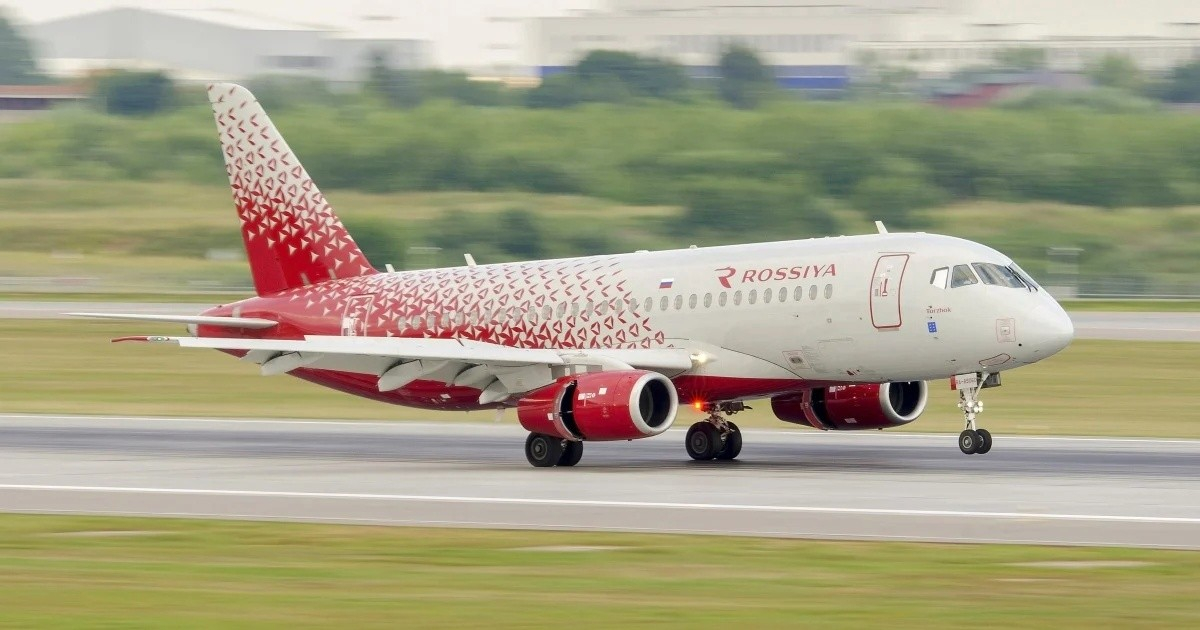
The Russian Transport Minister, Andrei Nikitin, stated that Moscow is willing to resume regular flights with Cuba, but made the resumption conditional on the island's ability to once again guarantee the supply of aviation kerosene.
In an interview with the agency RIA Novosti, granted on the eve of the Eastern Economic Forum in Vladivostok, Nikitin stated that both governments are in contact regarding the matter.
"We are interested in reinstating a stable air service between our countries and are in constant contact with our Cuban colleagues. However, to resume flight programs to their previous capacity, we must create absolutely stable and secure conditions for the airlines," he stated.
The Russian official made it clear what the main obstacle continues to be.
"As soon as the situation with aviation kerosene is completely normalized, we will be able to immediately proceed to fully restore the flight programs," he noted.
Nikitin did not provide a date for the resumption of regular operations.
Russian flights to Cuba have been suspended since February, when the aviation fuel shortage directly impacted the island's airport operations.
The airlines Rossiya and Nordwind suspended their regular flights on February 11, after it was announced that Cuba could not guarantee Jet A-1 fuel at its nine international airports, including those in Havana, Varadero, and Cayo Coco.
Aeroflot subsequently canceled its commercial flights starting February 24.
The crisis also necessitated the organization of special flights between February 13 and 22 to repatriate nearly 4,300 stranded Russian tourists who were left stuck on the island.
The lack of fuel for aviation is part of a much deeper energy crisis. In May, the Cuban Minister of Energy and Mines, Vicente de la O Levy, publicly acknowledged the seriousness of the situation.
«We absolutely have no fuel oil, nor do we have any diesel. We no longer have reserves», he admitted then.
Cuba had not received regular fuel supplies since December 2025. By the end of March, Russia sent approximately 100,000 tons of crude oil, but that shipment ran out at the beginning of May.
The shortage has also had serious consequences for the National Electric System. During August, generation deficits exceeding 2,400 MW have been reported, while dozens of distributed generation plants have remained out of service due to lack of fuel.
The halt of Russian connections continues, moreover, at a particularly challenging time for Cuban tourism, which has been impacted by a significant drop in visitors during 2026.
Nikitin's statements now place the ball in Cuba's court: Russia claims to be ready to resume its flights, but first demands guarantees that its planes will be able to refuel consistently on the island.
At the moment, there is no date for that to happen.
Related videos:
Filed under: