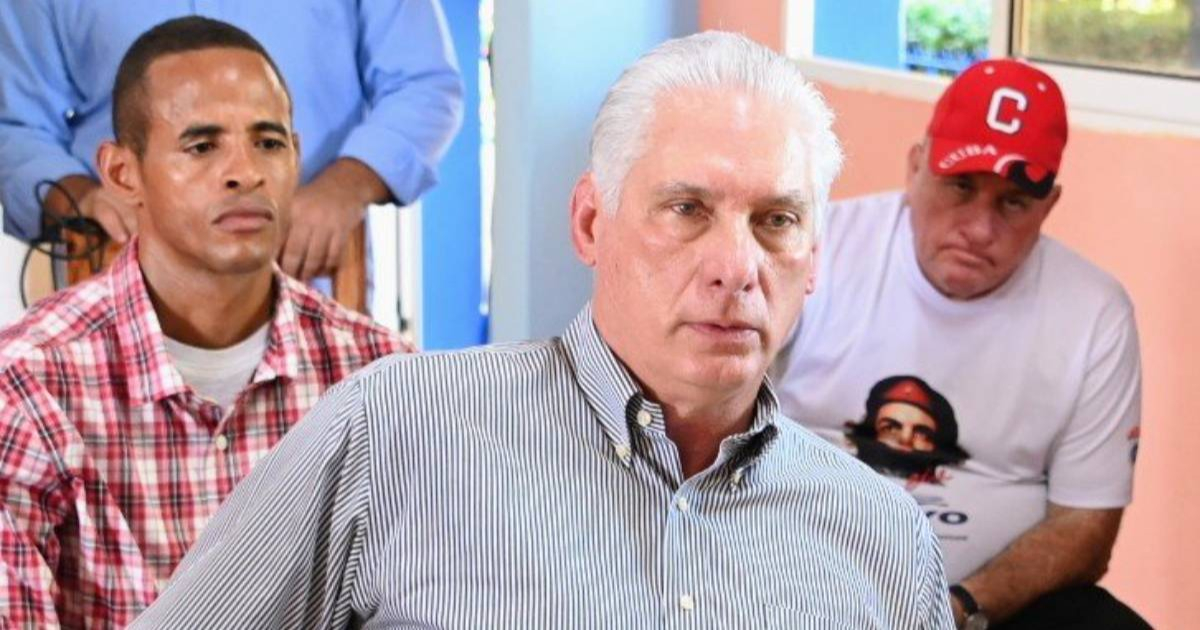
Miguel Díaz-Canel publicly admitted on Wednesday that the Cuban regime lacks the capacity to ensure the minimum electrical stability required for the water pumping systems in Havana.
The Presidency reported the results of a supervisory visit to the Southern Basin System, a field of wells shared between the provinces of Artemisa and Mayabeque that supplies more than 30% of the capital's population.
"The water supply systems are inertial systems that require ten to twelve hours of energy stability to maintain a stable water supply, and today we practically do not have the conditions to sustain those hours, no matter how much we want to prioritize energy for these systems," said Díaz-Canel.
The president attempted to explain the technical difference between an electrical grid and a pumping system: "In an electrical grid, once you connect, the energy is already provided; however, in a water supply system, if you don't have energy for a long time—energy sufficient to fill the pipelines, enable them, and synchronize all the pumping and booster systems—we achieve nothing."
The visit was part of a weekly follow-up to the comprehensive program that the regime recently adopted to address the water crisis in the capital.
The leader acknowledged that the situation "requires reinventing the entire water supply management system for the population," as the power outage is compounded by water shortages, which have direct consequences on the daily lives of families.
The regime has been aware of this problem for years but has not addressed it. Now, Díaz-Canel announced a three-stage strategy: in the short term, support the first 29 selected supply sources in Havana with backup generators, out of almost 70 sites inspected; in a second phase, incorporate distributed generation; and in a third, install solar panels and parks with storage systems.
Díaz-Canel projected that the first visible impacts on two or three main systems of the capital would be seen by the end of September, with consolidation in October and the implementation of the solar variant by the end of the year.
However, he warned that the schedule "can shift over time" due to the "variables of how the aggressive policy of the United States government is handled," attributing the crisis to the embargo rather than to decades of disinvestment and mismanagement.
Related videos:
Filed under: