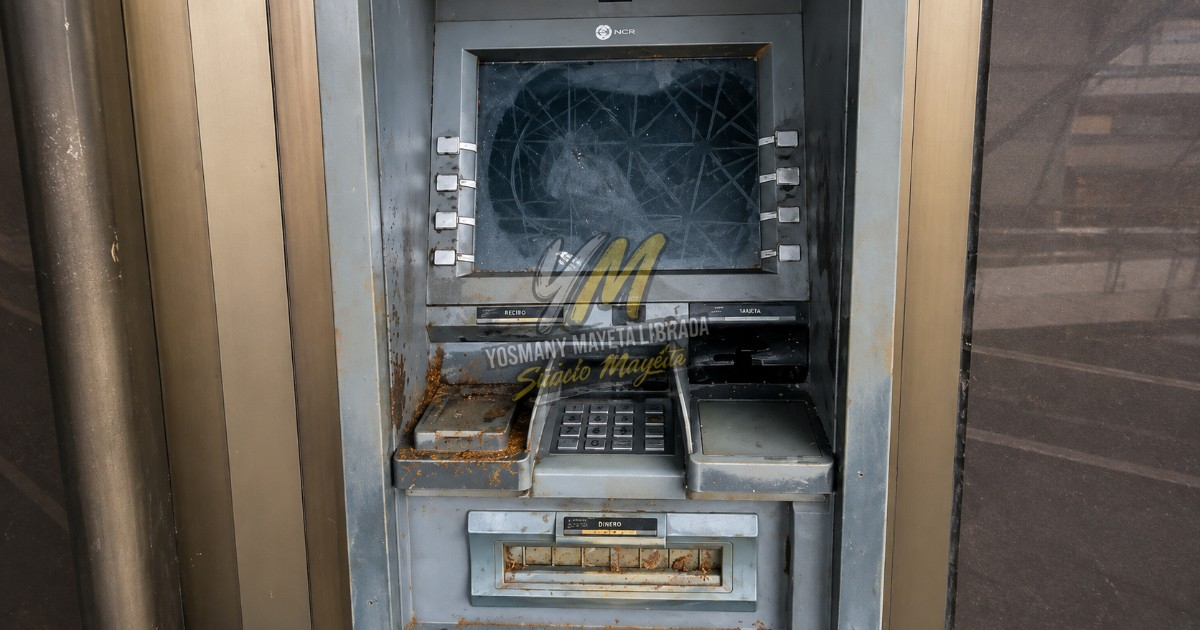
Two ATMs located in the Santiago de Cuba railway area were found covered in feces this Thursday, in an incident that reflects the accumulated desperation of citizens in response to the chronic cash shortage on the island.
The report was published on Facebook by independent journalist Yosmany Mayeta Labrada, who specified that an anonymous source pointed out a woman as the responsible party.
"A source who requested to remain anonymous assured that the incident was reportedly caused by a woman, allegedly upset because the ATMs had no cash available. The photographs sent show the machines, keyboards, screens, and other surfaces visibly smeared," said Mayeta.
The journalist clarified that he could not independently verify who was responsible for the vandalistic act or the exact reasons that prompted it.
The vandalized equipment already showed severe deterioration: extensive rust, corroded keyboards, and exposed internal components, signs of prolonged abandonment and lack of maintenance.
The act is reprehensible and unhealthy. Mayeta framed it within the widespread frustration that the population on the island is experiencing.
"The cash shortage may explain the anger; however, sullying and damaging a service used by hundreds of people does not justify it," the journalist stated.
Among the comments on social media, one summed up the impunity of the situation with irony: "Those ATMs have cameras, but since there's never power or cash... How are they going to catch the coward?"
The shortage of cash, a problem that shows no sign of relenting
Since July 2024, the people of Santiago have been suffering from long lines to access banking services such as withdrawing money from ATMs. Many of them are broken, and those that are operational often do not have any cash.
The problem has worsened throughout the country. In Havana, the shortage of cash has jeopardized the payment of salaries and pensions, while some people took days to access their money.
The Metropolitan Bank was operating with only about 200 of more than 500 active ATMs, and some banks reduced the withdrawal limit to 3,000 pesos.
In response to the collapse, the Central Bank issued emergency measures in July that included the circulation of 2,000 and 5,000 peso notes, as well as the suspension of the 5,000 peso limit for payments between economic actors, through Resolution 74/2026.
Many analysts interpreted the measure as an admission of the failure of the banking policy imposed by the regime. At the same time, a business of intermediaries emerged, exchanging electronic transfers for physical banknotes in return for high commissions.
Citizen frustration over this situation has led to various forms of protest, such as ATM vandalism during blackouts.
Related videos:
Filed under: