For decades, Nicolae Ceaușescu seemed untouchable. He had built one of the most repressive communist dictatorships in Eastern Europe in Romania. The Party controlled the state, propaganda fostered a delusional cult of personality, and the feared Securitate (State Security) monitored a population subjected to fear, deprivation, and a lack of rights and freedoms.
But in December 1989, something occurred that all tyrannies fear greatly: a decisive portion of those who held the weapons was no longer willing to use them against their own people.
The revolution began in Timișoara around the protests against the authorities' attempt to remove Pastor László Tőkés. What initially appeared to be a localized protest grew into a rebellion against the communist regime.
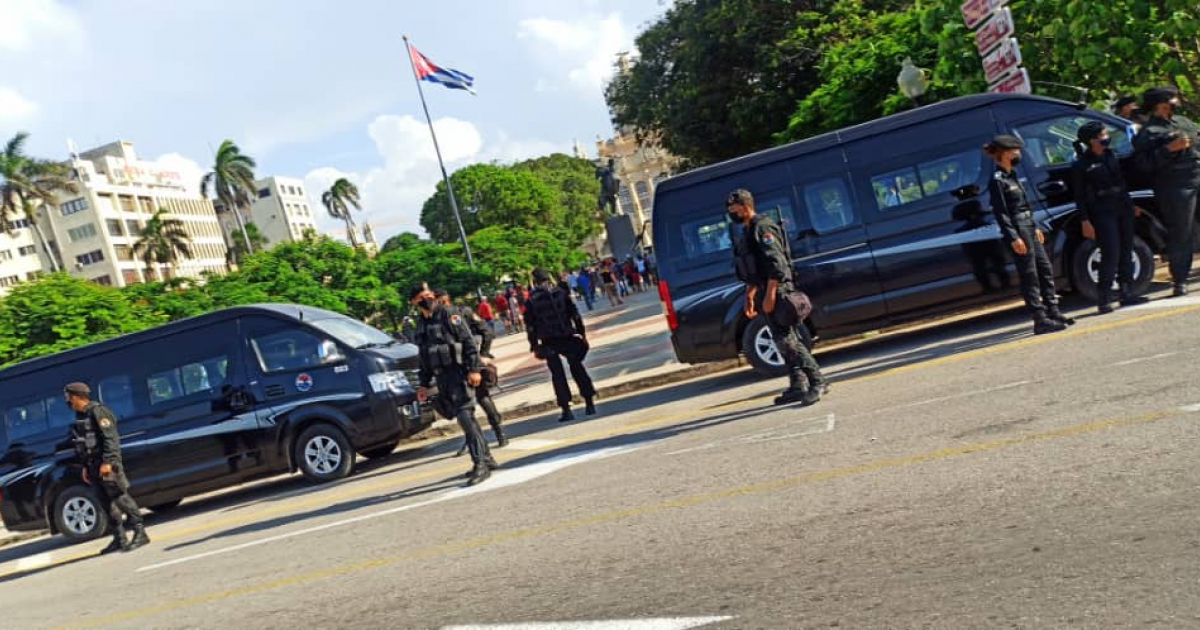
Ceaușescu reacted as dictators do when they lose the ability to control the populace: by ordering repression. Just as the Castro-communist regime did in July 2021 and continues to do every time outraged citizens take to the streets to protest.
On December 17, security forces opened fire on protesters. Dozens of people died. Hospitals were filled with the injured, and authorities attempted to conceal part of the massacre. Ceaușescu even personally demanded that live ammunition be used against the protesters. The dictator Miguel Díaz-Canel declared on July 11: "The combat order has been given. Revolutionaries to the streets!" And they fired upon the people. There was one death and several injuries.
But the blood did not stop the rebellion. It spread it. On December 19, a general strike began in Timișoara. The following day, huge crowds flooded the streets again as military units began to withdraw. The protest spread throughout the country.
Ceaușescu then made one of his fatal mistakes. On December 21, he called for a massive gathering in Bucharest to show the world that he still controlled Romania. The state television was broadcasting the event live. But the crowd began to protest. In Cuba, the tyranny is making mistakes as grave as those of the Romanian dictator, and the people are on the verge of reacting as happened in the capital of the Carpathian nation.
For the first time, millions of Romanians saw a bewildered Ceaușescu, unable to control those in front of him. The shouts against the dictator grew louder. A television image captured the beginning of the end. Fear was changing sides.
That night there were new confrontations and new victims. The following morning, the decisive event took place. The Army began to break away from Ceaușescu.
The death of Defense Minister General Vasile Milea accelerated the disintegration of the state apparatus. For years, there has been debate over whether Milea committed suicide or was murdered, but various testimonies consistently highlight his significant reluctance to follow orders to continue firing on the population. There has been talk of "mysterious" deaths of Cuban military personnel critical of the repression in July 2021.
On December 22, soldiers and tanks began to fraternize with the protesters. The dictatorship was over. Ceaușescu and his wife Elena fled Bucharest by helicopter. They were later captured and, after a summary military trial, were executed on December 25. Those in the Cuban tyranny can avoid a tragic outcome by relinquishing power in time. If they continue to cling to it, the consequences could be worse for everyone.
Romania paid a terrible price. More than 1,100 people died during those events, and a considerable portion of the victims occurred even after Ceaușescu's flight, amidst confusion, rumors about alleged "terrorists," crossfire, and confrontations whose responsibility remains a subject of historical investigation.
Cuba is currently experiencing a crisis far more severe than Romania's in 1989. The people continue to express their discontent, while the regime intensifies repression, imprisoning women, men, and even minors. Hundreds of Cuban political prisoners are surviving in terrible conditions.
Every Cuban police officer who receives orders today to detain a mother protesting for a blackout, for water, or for lacking food for her children should ask themselves what they are defending.
Every member of the special forces sent against peaceful citizens should ask themselves who these people really are. It could be their mother, their sister, their father, their aunt, their cousin, their neighbor.
Those police and other repressive agents also suffer from the serious crisis imposed by the regime they serve. Power outages, extreme misery, and shortages of every kind also affect them and their families.
When their parents, mothers, or grandparents need a CT scan, an ultrasound, X-rays, medications, or surgery, they are not taken to the clinics where high-ranking officials are treated. When they finish their shift and return to their neighborhoods, they are surrounded by a bleak reality of hunger, needs, insufficient salaries, a crumbling transportation system, deteriorating hospitals, inflation, scarcity, and despair.
The small benefits one might receive from being part of the repressive apparatus, aside from being immoral, do not change that painful reality. A bag of food or a few extra pesos do not justify the harm done to their own people by keeping those responsible for so much misery and suffering in power.
A minor privilege does not turn the poor into the powerful. While the ruling class lives in completely different conditions, thousands of police officers, military personnel, judges, and prosecutors survive virtually under the same conditions as those they monitor, intimidate, repress, beat, and imprison.
The crucial question is simple: how long must a Cuban raise their hand against another Cuban to protect those who enjoy a good life and have driven the nation to ruin?
Romanian history shows that uniformed individuals also make moral decisions. They may obey an unjust order, but they can also refuse to strike a defenseless woman, condemn a teenager, or suppress an elderly person.
They can arbitrarily detain a young person, but they can also uphold their right to peacefully protest. They can act as a protective wall for a dictatorship, but they can also understand that they belong to the very citizens they repress.
Cuba does not need to repeat the bloody tragedy of Romania. On the contrary, it needs to avoid it. And one of the best ways to achieve this would be for police officers, soldiers, and members of the security forces to understand in time that no ruler deserves for a Cuban to repress or shed the blood of another Cuban to maintain their power.
The uniform may one day be lost, positions may end, tyrannies may fall, but the guilt remains in the conscience, and one must answer to true justice for all the crimes and abuses committed.
And there remains a question that history always poses to those who received unjust orders: When your people needed you to choose between protecting them or suppressing them, which side were you on?
Related videos:
Filed under:
Opinion article: Las declaraciones y opiniones expresadas en este artículo son de exclusiva responsabilidad de su autor y no representan necesariamente el punto de vista de CiberCuba.