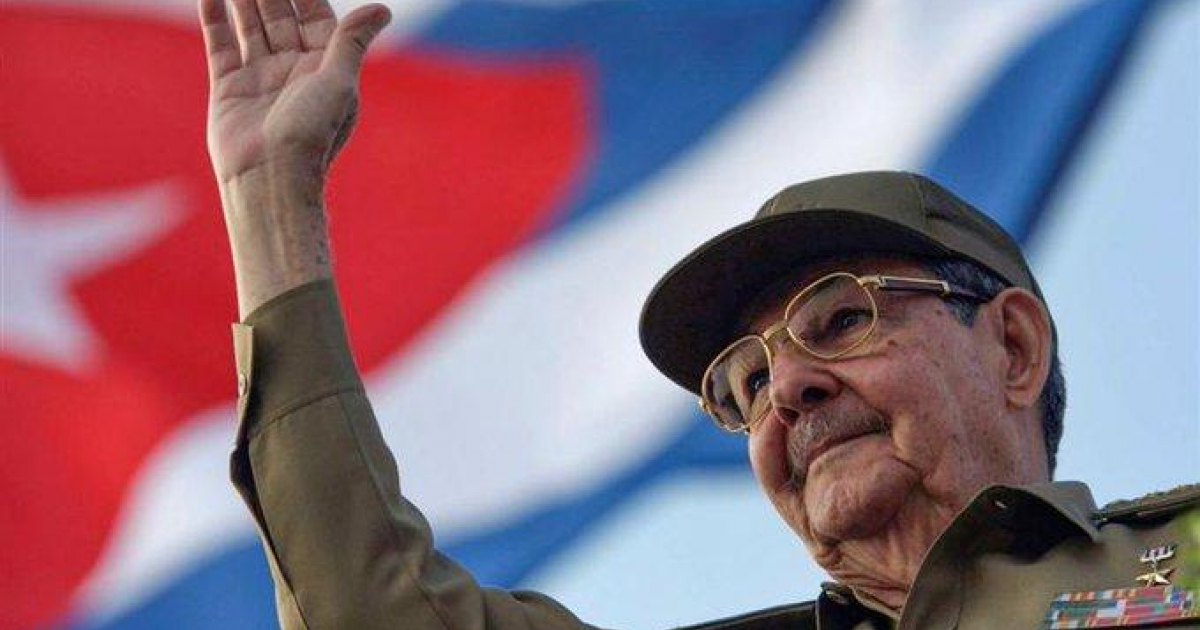
There are questions that History cannot answer in advance, but that it has the obligation to ask. One of them is this: What will happen in Cuba after Raúl Castro?
Raúl is not just another leader of the regime. He is the last direct representative of the generation that seized power in 1959 and that, for decades, upheld the system based on personal authority and the memory of the 'revolution.' With his departure, a historic cycle would come to a definitive close.
And then a question of great significance would arise: who will fill the space left by Raúl Castro?
Díaz-Canel institutionally represents continuity, but he does not carry the historical weight of Fidel Castro nor the connection to the old revolutionary structure that Raúl still maintained. The historical generation has practically vanished. The issue, therefore, will not only be who occupies a position, but rather who will have the real capacity to wield power when their last historical reference disappears.
Here begins the realm of possibilities. It would not be serious to assert that the military will inevitably take control. However, it would also be unreasonable to ignore that the Armed Forces represent one of the most organized structures with the greatest capacity to intervene in a potential power crisis.
Could a nationalist movement arise within them that understands that Cuba's survival demands abandoning the economic and political course that has led the country to disaster? This is a possibility worth examining, not as a prediction, but as one of the scenarios that could unfold.
A military sector might come to consider that preserving Cuba is more important than indefinitely maintaining an exhausted model. In that scenario, an economic opening, a reduction of state control, a different relationship with the outside world, and certain political reforms could be presented not as a revolutionary break, but as a national solution to the impending collapse.
But there is another possibility: that, with Raúl gone, an internal struggle could arise among different sectors of power to control the vacuum. The party, the state apparatus, and economic and military structures might have differing interests. And while these forces dispute the future from within, a weary and impoverished society could begin to finally demand a role of its own.
That’s why the question should not be solely about what will happen after Raúl Castro. The real question is much deeper: will the system be able to survive once Raúl Castro is gone?
Perhaps that will be the moment when Cuba stops looking back and is compelled, for the first time in many decades, to look forward. We do not know who will fill the power vacuum. But we do know one thing: after the last Castro, nothing will hold exactly the same meaning.
Related videos:
Filed under:
Opinion article: Las declaraciones y opiniones expresadas en este artículo son de exclusiva responsabilidad de su autor y no representan necesariamente el punto de vista de CiberCuba.