The Board of Immigration Appeals (BIA) of the United States revoked on Friday the asylum granted to a Venezuelan citizen opposing Chávez's regime, in a ruling with binding precedent.
The BIA determined that the capture and removal from power of Nicolás Maduro on January 3, 2026, represents a change in the conditions in Venezuela that must be considered when evaluating asylum requests based on political persecution.
The case originated when the Department of Homeland Security appealed the decision of an immigration judge who, on April 22, 2026, had granted asylum to the applicant after acknowledging that she had a well-founded fear of future persecution due to her opposition activism.
The woman arrived in the U.S. in July 2014 with a student visa and stated that she and her husband participated in pro-democracy groups in Venezuela, where they were threatened and intimidated by supporters of the regime and by an official from the University of Carabobo.
According to the ruling, "the applicant's claim is based on her political opposition to the Maduro government" and acknowledges that her husband was physically assaulted. Furthermore, in October 2025, Venezuelan authorities revoked her passport while she was already in U.S. territory.
The three-judge panel of the BIA overturned the initial decision and returned the case for a new analysis, arguing that the original judge did not sufficiently assess the impact of the political change on the applicant's particular risk.
The ruling acknowledges that a change in national leadership does not automatically eliminate the legitimate fear of persecution, but it states that "the departure of the head of a national government is a very significant event and not just another occurrence against a static political backdrop."
This point is central to the legal debate: although Maduro is imprisoned in the U.S., chavismo did not disappear.
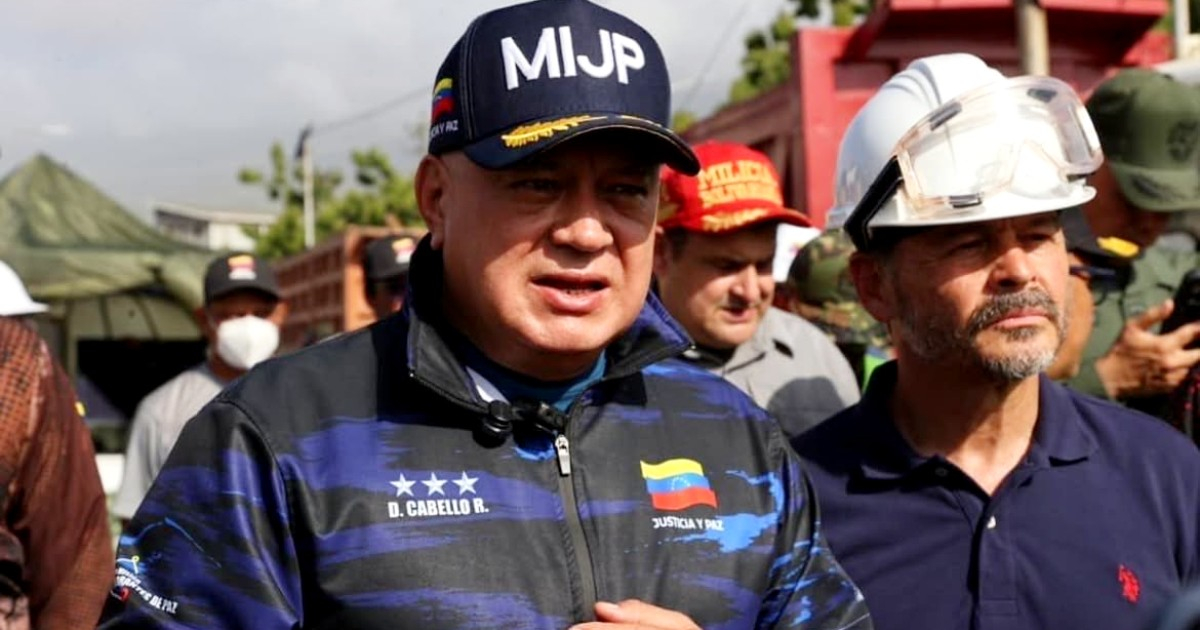
Delcy Rodríguez governs Venezuela as acting president since January 5, 2026, her brother Jorge Rodríguez presides over the National Assembly, and Diosdado Cabello —Minister of the Interior— controls the state's security and intelligence apparatus.
The UN Mission noted that Cabello “leads the center of the State's repressive apparatus” in Venezuela and continues to publicly threaten opposition members, which bolsters the argument of those who claim that the risk of persecution remains.
The applicant's attorney, Rosa M. Medina, argued precisely that «the structural apparatus of persecution and torture of the Venezuelan state remains intact» and that the military, intelligence, and paramilitary networks remain under the control of those loyal to Chavismo.
The first-instance judge had concluded that "the essence of Maduro's government remains" and that "the Maduro regime has not disappeared," but the BIA deemed those statements as conclusive and lacking sufficient factual analysis regarding the concrete risk faced by the applicant in the new political scenario.
The BIA also cited as evidence of changing conditions the reopening of the U.S. Embassy in Caracas on March 30, 2026, the historic oil agreement announced on August 31, and the discussions between the Venezuelan government and the 2015 National Assembly — the last democratically elected — toward an electoral transition.
The ruling also instructs the trial judge to determine whether the asylum application was submitted within the one-year deadline mandated by law, an issue that the original judge did not address.
The precedent could affect tens of thousands of Venezuelans with pending asylum requests in the US based on political persecution under the Chavista regime, at a time when the Trump administration is maintaining a policy of maximum pressure on immigration and has resumed the review of previously granted political asylums.
Related videos:
Filed under: