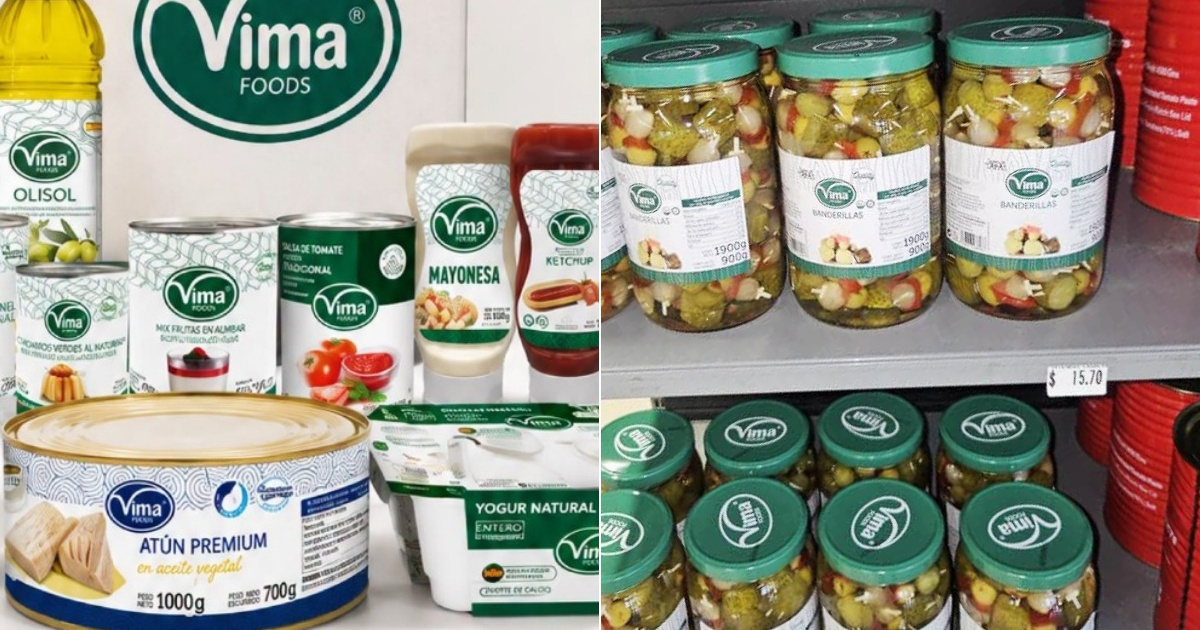
The lobbying firm Continental Strategy LLC ended its contract with Vima World S.L., a Spanish company exporting food to Cuba, on September 1, just seven weeks after it was signed.
The official termination document of the contract, submitted to the U.S. Congress the following day, certifies the end of a relationship for which the Galician company paid $37,742 before its termination.
Vima had hired Continental Strategy at the end of July to manage matters related to trade, food industry, and foreign relations.
The assignment was summarized in a single line in the official forms: the search for "project opportunities in Latin America."
Cuba, the market that accounts for almost half of the group's revenue, is not mentioned in any section of the contract.
A firm with direct access to the Trump-Rubio environment
The choice of Continental Strategy was not coincidental.
Its founder, Carlos Trujillo, was the United States ambassador to the Organization of American States during Donald Trump's first presidential term.
Among the partners of the consulting firm are Alberto Martínez, former chief of staff for Secretary of State Marco Rubio and his advisor for over a decade, and Katie Wiles, daughter of Susie Wiles, chief of staff at the White House.
This constellation of contacts made Continental an especially appealing gateway for a foreign company in need of communication in Washington.
The paradox is that the firm maintains close ties with figures from the political environment of the Administration that is promoting measures against the businesses of Cuban military personnel.
The lobbyist who took action: a Habanero trained in Cuba
Although the contract initially registered three lobbyists —Trujillo, Eric Farnsworth, and Francisco Petrirena— the termination report identifies Petrirena as the only one who effectively acted on the account, with the State Department as the contacted federal agency.
Petrirena, Vice President of Continental Strategy in Miami, was born in Havana and graduated in Accounting and Finance from the University of Havana.
He worked at the Embassy of the Holy See in Cuba—where he participated in the preparations for Pope Francis's visit in 2015—and moved to Miami in 2017.
The breakup occurs amid the sanctions against GAESA
Continental Strategy did not explain the reasons for the break in the document.
The specialized portal Legis1, which reported the end of the contract on September 3, directly linked the decision to the tightening of U.S. sanctions against GAESA, the business conglomerate of the Cuban Armed Forces.
Vima maintains business ties that expose it to Washington's sanctions policy in two ways.
Opera in Cuba through Vima Caribe S.A., whose local partner is Tiendas Caribe —an entity linked to the military— and exports agricultural products from the United States to the island through Vima USA Ltd., with offices in New York and Miami.
The Coruña-based subsidiary of the group reported nearly 106 million euros in 2024, with approximately 49 million coming from operations with Cuba, according to data from the Department of State.
Trump signed Executive Order 14404 on May 1, 2026, introducing secondary sanctions for foreign companies that engage with blocked entities of the Cuban regime.
On May 7, GAESA was designated along with its CEO.
On June 5, the deadline given to foreign companies to sever ties with the conglomerate expired, and on August 6, Tecnoimport and Tecnotex, two subsidiaries of GAESA, were sanctioned, just one day before the registration of Vima with Continental Strategy was made public.
Direct warning from the Department of State
The Under Secretary of State for the Western Hemisphere, Juan Pablo Segura, had been explicit in August:
“Foreign companies wishing to invest in Cuba must partner with a Cuban state enterprise, which makes them complicit in the dictatorship's corruption scheme. For this reason, the Trump Administration has imposed secondary sanctions on all companies that maintain commercial relations with GAESA.”
This is not the first time that Vima's Cuban connections have caused problems for those working for it.
In 2016, the firm Mossack Fonseca —in whose records Vima World Ltd. appeared among the companies in the British Virgin Islands— severed ties with companies linked to the group's founder, Víctor Moro Suárez, concluding that its operations in Cuba could expose it to U.S. sanctions.
Vima has significant interests in Cuba, including the agreement signed in May 2024 to manage 20 stores on the island together with Tiendas Caribe, and has not announced any changes to its operations.
According to Legis1, the case "illustrates how the United States' sanctions policy can quickly reshape the lobbying landscape" and the financial and reputational risks that firms face when representing clients with ties to sanctioned entities.
Related videos:
Filed under: