Amid a deep food crisis and after years of state inability to ensure food production and supply in Cuba, the regime is now looking to shift greater responsibility to municipalities, companies, and producers to generate the food the population needs.
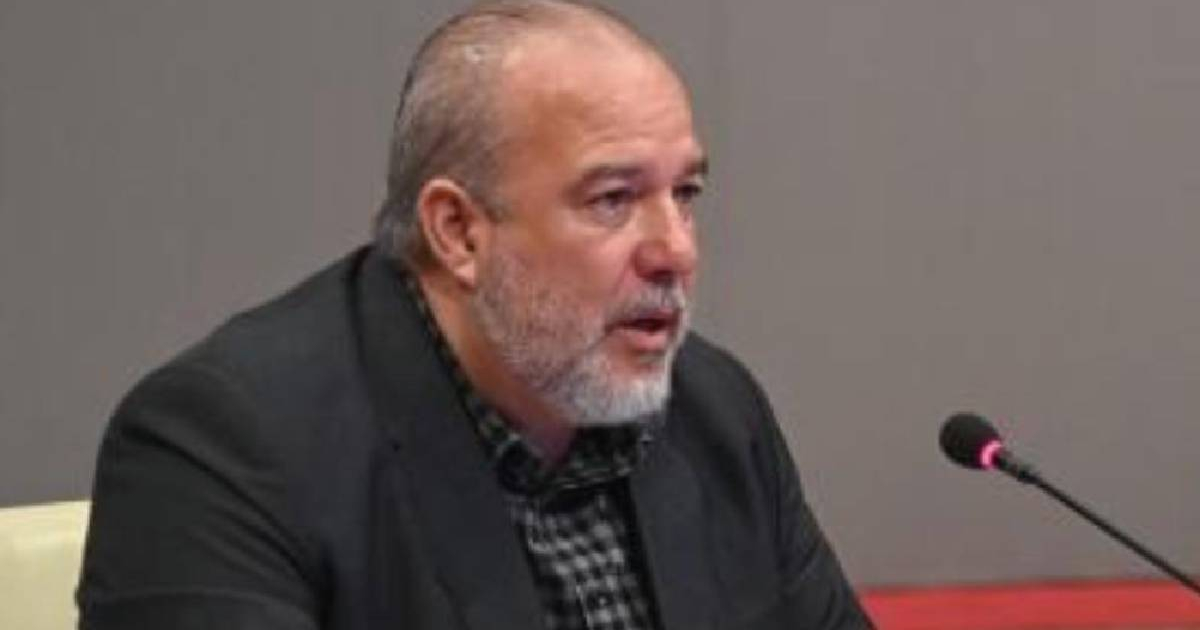
The Prime Minister Manuel Marrero Cruz led a national seminar on Thursday to train State officials, territorial governments, and business groups on the implementation of the economic transformations approved by the regime, with a focus on agricultural production, domestic trade, and municipal autonomy.
The "training" is part of the 176 economic and social transformations announced in June.
The meeting was attended by Esteban Lazo Hernández, president of the National Assembly, and Salvador Valdés Mesa, vice president of the Republic, both members of the Political Bureau.
The meeting is part of the implementation process of the 176 economic and social transformations that the regime presented in June 2026 in response to the economic and food crisis facing the island.
The central theme of the seminar was food production. The Deputy Minister of Agriculture, Tels Abdel González Morera, highlighted the approval of the new Agricultural and Forest Land Law (Law 185/2026), which opens the usufruct of idle state lands to micro, small, and medium enterprises—state, private, or mixed—regardless of their social purpose, and eliminates the requirement for prior direct work.
The regulation also allows contracts without limitations on area or duration, which can be extended for the same period.
"The provision of land in usufruct without limits, corresponding to what the person requesting it can demonstrate with the project they submit when applying for the land," explained González Morera.
The official also emphasized the need for the measures to reach grassroots producers: "We must continue training every single producer because these transformations reach the producers. If these measures do not reach the producers, who are the fundamental link in this task, the agricultural producers."
The official gazette No. 75 came into effect yesterday, which contains 19 regulations from the agricultural sector, including Decree 161/2026 regarding the marketing of agricultural and forestry products.
In terms of domestic trade, Minister Betsy Díaz Velázquez presented a new policy that consolidates all existing sales modalities in the country into a single legal provision.
"It is a modern policy that, for once, encompasses everything related to commerce in a single legal provision. It defines what wholesale and retail trade are," he stated. The regulation also defines electronic commerce for the first time as a mode of sale.
Marrero Cruz was clear that the opening to private actors does not imply a withdrawal of the State: "All the decision-making that we are implementing as part of the transformations, in which there is greater participation from all non-state actors, let’s call them private, in no way means that the State, the government is stepping back. All these measures that liberalize, that expand non-state activity are conducted with oversight."
The underlying logic is revealing: the regime, unable to guarantee food for the population after decades of absolute state control over the land, now transfers production responsibility to private entities and cooperatives, but without relinquishing ownership of the land or political control of the process.
The extent of the crisis that drives these measures is evident from the data: a 2025 survey revealed that 33.9% of Cuban households reported that at least one member went to bed hungry in the previous 30 days, and that 94.9% of respondents lost some degree of access to purchasing food. Cuba relies on imports for between 70% and 80% of the food it consumes.
At the end of the seminar, the regime announced that 155 out of 176 transformations already have legal norms for their implementation, and that another 17 must be ready before the end of September.
Related videos:
Filed under: