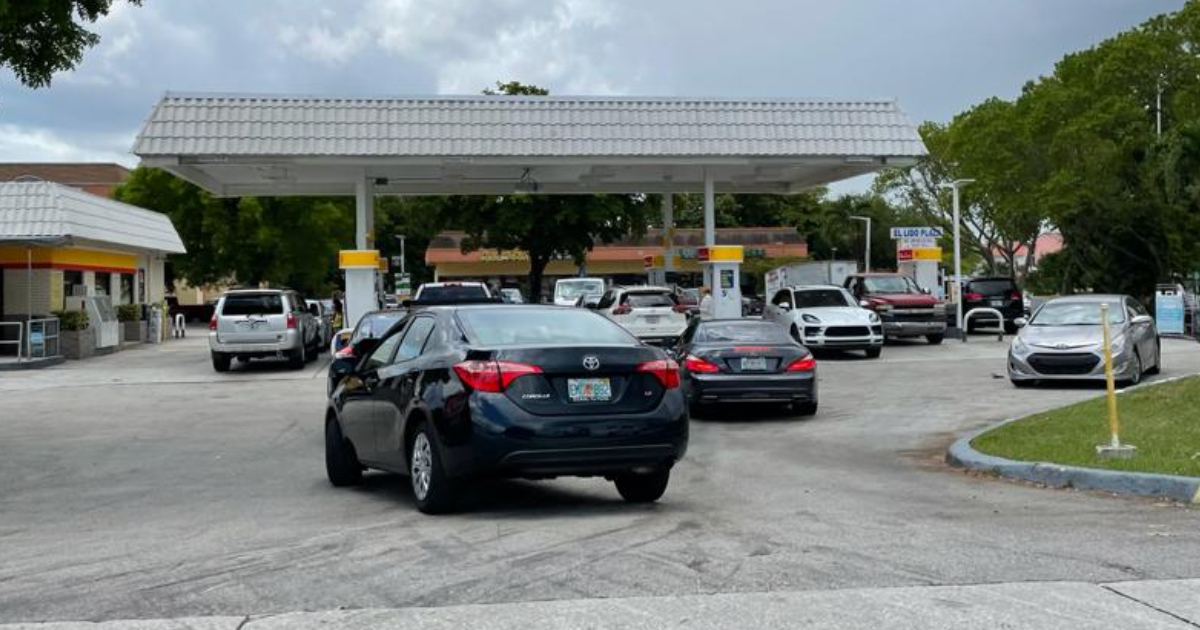
The average price of diesel reached a historic high in the United States this Monday, a surge that could ultimately affect the cost of food, goods, and services due to the significance of this fuel in transportation and various productive activities.
The national average reached $6.23 per gallon, according to data from the American Automobile Association (AAA) cited by Noticias Telemundo and NBC News.
The new record comes amid another shake-up in the international energy market.
Diesel doesn't only affect those who buy it directly at gas stations.
Trucks, agricultural machinery, and numerous industrial equipment rely on this fuel, so its rising cost increases production and distribution expenses that can eventually be passed on to consumers.
"The price of diesel is filtering into almost everything else," explained Diane Swonk, chief economist at KPMG, to NBC News.
The expert noted that the impact can extend from the cost of producing food to the price of transporting practically any goods within the economy.
The new escalation occurred following an attack on a major oil pipeline in Saudi Arabia.
The infrastructure, which runs across the country from east to west, had gained even more significance as an alternative route due to the drastic reduction of oil traffic through the Strait of Hormuz.
Saudi Arabia has interrupted the flow while assessing and repairing the damage.
The Strait of Hormuz remains at the center of the crisis. Iran closed this strategic maritime route in retaliation for the bombings launched by the United States and Israel in February.
Before the conflict, about 20% of the oil traded worldwide passed through there, so the restrictions have reduced the availability of crude oil and kept pressure on prices.
This Monday, Brent crude, the international benchmark, surpassed 109 dollars per barrel.
At the same time, the national average for gasoline reached $4.31 per gallon, more than 45% above the level recorded when the conflict with Iran began, according to AAA.
The United States Secretary of Energy, Chris Wright, acknowledged that there is still no precise timeline for the Saudi pipeline to resume operations, though he stated that he expected greater clarity "very soon" once the damage assessment is complete.
The uncertainty is further heightened by the stagnation of talks between Washington and Tehran regarding a possible reopening of Hormuz.
On Sunday, September 13, only 14 vessels crossed the strait, a number significantly lower than the usual traffic before the war, according to MarineTraffic data cited by NBC News.
The diesel record is the latest chapter in a surge that has been impacting the wallets of Americans for months.
In July, gasoline once again averaged four dollars per gallon in the United States following a new escalation of the conflict with Iran, nearly 90 cents higher than its price a year earlier.
The energy pressure had already made its mark on inflation.
In April, the year-on-year inflation rate in the United States reached 3.3%, its highest level in two years, while gasoline prices experienced significant increases related to the disruptions in the oil market caused by the war.
A month later, the rising cost of living was already forcing some American families to cut back on expenses.
In April, consumer prices had risen by 3.8% year-on-year, and gasoline had experienced an increase of 44%.
Related videos:
Filed under: