Donald Trump announced this Monday that Ukraine and Russia had reached an agreement to mutually suspend attacks on energy infrastructures.
The U.S. president made the announcement on his Truth Social account amid a surge in fuel prices that threatens his political standing ahead of the legislative elections in November.
Ukraine has agreed not to attack Russian energy targets. Russia has agreed to do the same, wrote Trump, who took the opportunity to add that "the rise in diesel prices worldwide is primarily due to the war between Russia and Ukraine, not Iran."
The announcement came a day after Trump, during his visit to Ireland over the weekend, publicly urged Ukrainian President Volodymyr Zelensky to halt attacks on Russian diesel facilities.
“Zelensky has to do one thing. He must stop sabotaging diesel in Russia,” Trump declared to reporters. “He should target other objectives, but not the diesel, because it is causing a diesel shortage,” he added.
However, Zelensky immediately clarified the scope of the announcement. In a post on his X account, the Ukrainian leader clarified that there is no officially confirmed agreement and that Kiev has only "proposed that its partners reach an agreement with Russia to end the destruction of critical infrastructure."
Zelenski conditioned any cessation of Ukrainian attacks on concrete guarantees from Western allies. "If our partners are willing to guarantee that Russia will genuinely refrain from attacking our electrical system, other energy facilities, critical infrastructure, and food supply routes, then, of course, we are prepared to ensure the corresponding suspension of our attacks," he wrote.
The Ukrainian president also expressed skepticism about Russia's willingness to fulfill any commitments, warning that the agreement should not "collapse" after the Russian elections, referring to the possibility that Moscow is only seeking a temporary relief from pressure on its fuel prices.
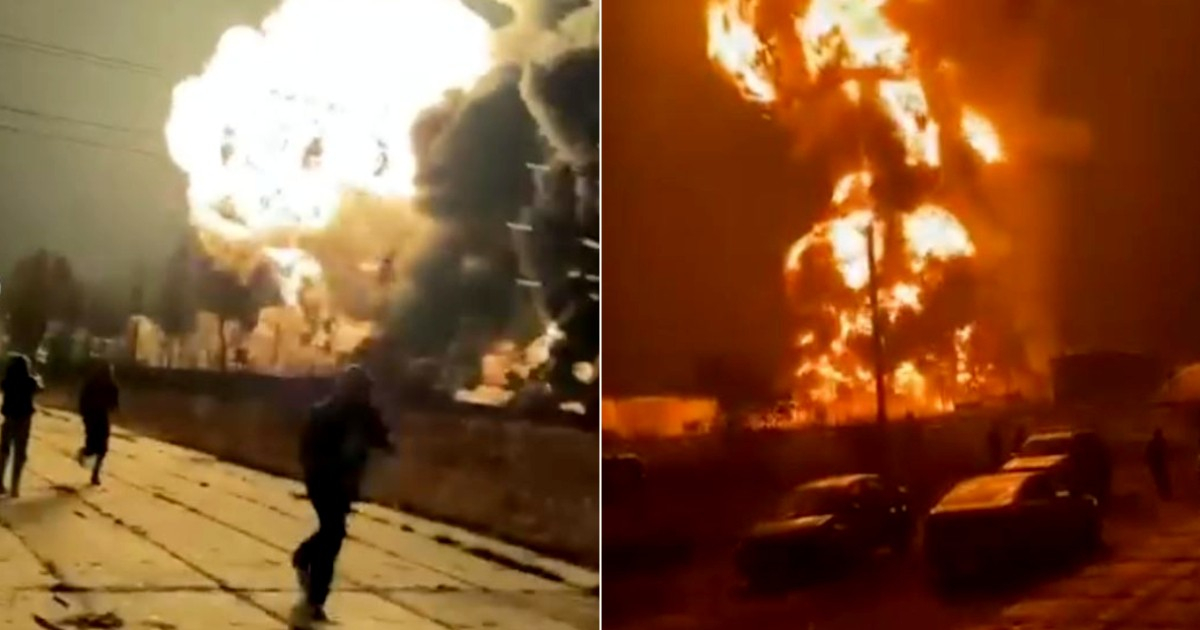
Ukraine has intensified in recent months its attacks against Russian refineries and diesel depots as part of Zelenski's strategy of "long-range sanctions" to wear down the Russian economy.
Russia, for its part, has been systematically attacking Ukraine's electrical and energy infrastructure since the beginning of its large-scale invasion in February 2022, particularly during the winter periods.
This is not the first time a truce of this kind has been attempted: in March 2025, Trump announced a ceasefire in energy infrastructure after speaking with Putin, but Zelenski reported that Russia violated it more than 30 times.
The internal political background is crucial to understanding Trump's announcement. The price of diesel in the United States has exceeded six dollars per gallon for the first time in history —reaching about $6.06 on September 10— which represents enormous pressure for the administration with less than two months to go before the midterm elections.
The Democratic governor of California, Gavin Newsom, responded by attacking the Secretary of Energy, Chris Wright: “Everyone knew that Trump's war in Iran was going to disrupt the Strait of Hormuz and drive up costs,” he wrote on X.
Experts point out that the war in the Middle East —triggered in late February 2026 after the attacks by the United States and Israel on Iran— has had a much greater impact on global energy markets than the conflict in Ukraine.
Iranian forces effectively closed the Strait of Hormuz, through which about a quarter of the world's maritime oil trade passes, causing oil prices to surge to over $126 per barrel at its peak.
Zelensky concluded his statement with a call to action: "The war must come to an end. A step towards détente regarding critical infrastructure could be the first move towards peace. We look forward to concrete proposals from our partners."
Related videos:
Filed under: