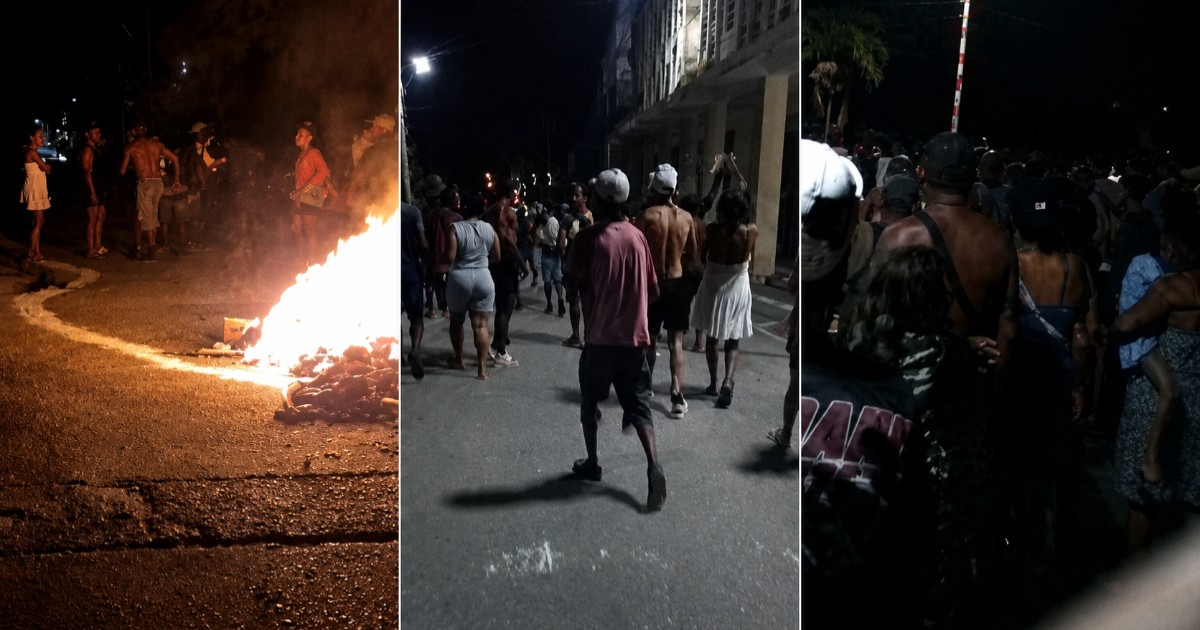
The magazine Foreign Affairs, regarded as the most influential foreign policy publication in the world, published an analysis this Thursday warning that Cuba is heading toward an accelerated collapse of the state and the economy that could make it "virtually impossible" to rebuild the island as a stable, prosperous, and democratic place.
The article, titled "Cuba's Point of No Return," was written by Will Freeman, a researcher in the Latin American Studies program at the Council on Foreign Relations (CFR), and is based on a personal visit to Havana in June 2026.
Freeman opens the text with an image that serves as a metaphor for everything that follows: in the center of Havana, a 166-year-old building — the Instituto Superior de Diseño Industrial — collapsed in February after two partial collapses in 2025, with the State sending no one to repair it, burying several illegal occupants.
When the author visited the site, thin men were climbing the rubble to pull out bricks to build makeshift homes.
"If nothing changes soon, a transitional government could one day find itself in the same impossible position as the men among the ruins of the institute: trying to build something safe, livable, and lasting from rubble," writes Freeman.
The researcher describes the Cuban situation with a phrase attributed to a European diplomat in Havana: "authoritarian anarchy," a state that can still suppress political expression but is incapable of providing public services or preventing social disorder. "Repression is the only thing the Cuban State still does well," Freeman states.
As evidence of the decline, the article notes that infant mortality in Cuba— which in 2018 was 4.0 per 1,000 live births, one of the lowest in Latin America— more than doubled to 9.9 per 1,000 by 2025. Hospitals lack essential supplies, and patients must purchase everything from antibiotics to amputation saws on the black market.
The analysis also reconstructs the diplomatic context of 2026. According to the Miami Herald, secret negotiations between Washington and Havana collapsed at the end of May due to the opposition of Florida Republicans and the Cuban rejection of the U.S. offer: investment and oil in exchange for the ousting of President Miguel Díaz-Canel and the privatization of the state oil company CUPET.
In June, the regime announced 176 economic reforms grouped into 23 axes to expand the private sector, but Washington deemed them insufficient and imposed new sanctions against state-owned enterprises and officials of the regime.
In August, Secretary of State Marco Rubio told Axios that the policy required "patience and persistence" and that the regime could survive until 2028 or beyond, which Freeman interprets as a sign that the Trump administration has put Cuba on "autopilot": allowing enough fuel and food to flow through private distributors to prevent complete social collapse, but without a new plan.
Freeman presents three possible interpretations of this stance: that the U.S. is bluffing to revive stalled negotiations; that Cuba has been downgraded as a priority due to the conflicts in Iran and Venezuela; or that Washington is hoping for the implosion of the one-party system from within.
The greatest danger identified by the analysis is not the immediate collapse of the regime, but rather that the deterioration becomes entrenched as a baseline condition for any future transition. "The longer the impasse lasts, the more these trends will calcify as starting conditions for any future transition, reducing the chances that Cuba will ever become a well-governed country," warns Freeman.
The publication of the article coincides with projections that place Cuba as the economy with the worst GDP decline in Latin America in 2026, with an estimated contraction of between 6.5% and 7.2% according to ECLAC and the Economic Intelligence Unit, and a cumulative decline close to 23% since 2019.
Related videos:
Filed under: