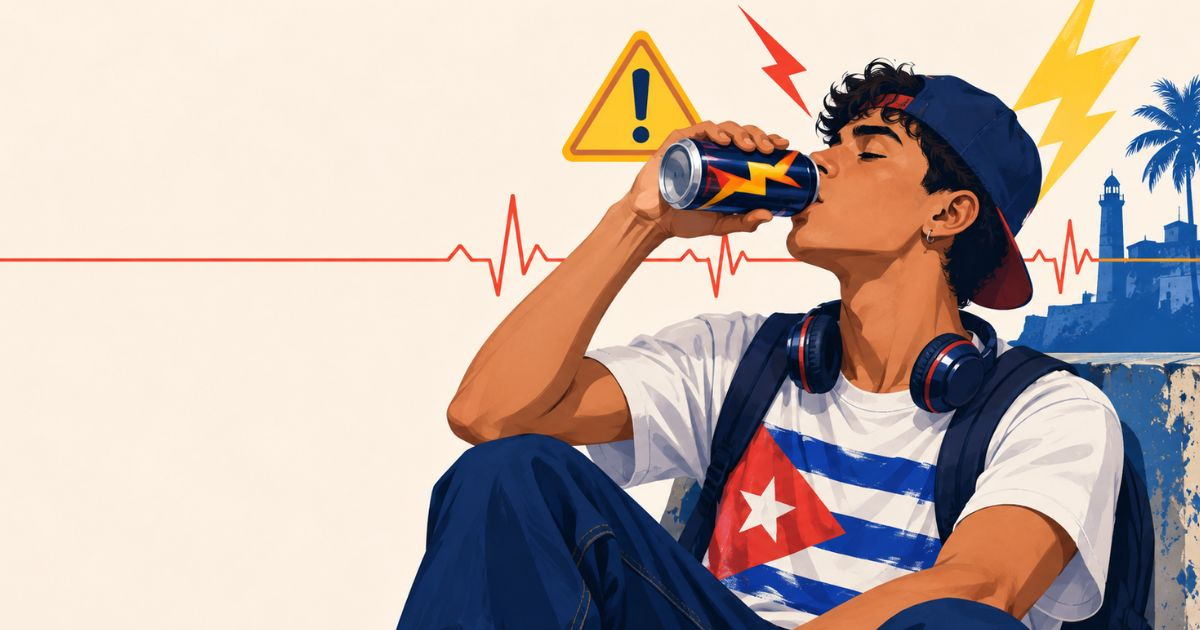
A Cuban specialist in Toxicology warned about the risks associated with the consumption of Shaka, a beverage that contains 18% alcohol and combines this component with caffeine and other stimulants, a mix that can make individuals unable to clearly perceive the degree of intoxication and continue drinking.
The alert was published this Friday by the official Periódico 26, which interviewed Alejandro Mestre Barroso, a specialist in Toxicology and coordinator of the Provincial Drug Observatory of Las Tunas, an entity that, according to the outlet, issued the first warning about Shaka at the national level.
Mestre Barroso specifically questioned the fact that the product is presented as an energy drink when, due to its composition and alcohol content, it should be considered an alcoholic beverage.
El Shaka is an alcoholic beverage with an alcohol content of 18 percent. To put it into perspective: Cristal beer has an alcohol content between 4.1 and 4.5 percent. A single can of Shaka can contain the equivalent alcohol of three or four beers, he explained.
According to the specialist, the beverage that is primarily sold in Cuba has vodka as its base, although there are variations made with whisky, and it also includes caffeine, purines, and other stimulating components.
There lies the trap, he stated.
The toxicologist explained that alcohol acts as a central nervous system depressant, while stimulants produce the opposite effect.
She pointed out that this combination can make the consumer feel more alert and not accurately identify their level of alcohol intoxication.
"When mixed, the stimulant masks the state of intoxication. Teenagers, in particular, experience such a heightened excitement that they don't realize they are drunk. So they take one, they take two, they take three," he noted.
Mestre warned that when the effect of alcohol finally prevails, the blood concentration may have reached levels capable of causing severe intoxication.
"When alcohol finally takes hold, it already reaches 150 milligrams per deciliter in the blood and can lead to alcoholic coma," he stated.
The specialist assured that this pattern was present in most of the cases that arrived at the Provincial Drug Observatory of Las Tunas and that some patients required intensive care.
Among the complications observed, he mentioned hypertensive spikes, tachycardia, and neurological issues associated with depression caused by alcohol.
In the most severe scenarios, he warned, stroke, acute coronary events, and even sudden death can occur.
The concern is greater in the case of adolescents and young people, due to both toxicological effects and neuropsychological and behavioral factors that may encourage the rapid consumption of multiple cans.
"The clinical picture is much more serious from an alcohol perspective," noted Mestre, who listed tachycardia, hypertension, hypoglycemia, severe intoxication, and alcohol coma among possible complications, in addition to cardiovascular and neurological events that, while less frequent, can occur.
The specialist acknowledged that the phenomenon has been exaggerated in some social media publications, but insisted that the actual risks of the product do not need exaggeration.
"If consumed in excess, it can lead to a very serious clinical condition. It's like drinking an entire bottle of Chanceler straight: you could end up in Intensive Care with alcohol poisoning. The same happens with Shaka," he explained.
For this reason, he insisted on changing the way the product is understood and marketed: "It is not an energy drink. It is an alcoholic beverage with caffeine and purines. That is what needs to be conceptually changed."
The official report concluded the warning with a particularly forceful statement: "Let no one be deceived by the word 'energetic.' The Shaka does not provide energy. It can take lives."
Warnings about Shaka began to multiply in Cuba during August.
First, health authorities warned about its growing popularity among adolescents and young people and indicated that the combination of alcohol and caffeine could make a person feel more alert than they actually were, leading to increased consumption without fully perceiving its effects.
Concerns escalated weeks later, when five young people aged between 18 and 22 were treated at the Provincial Hospital Camilo Cienfuegos in Sancti Spíritus, for intoxications associated with the consumption of Shaka.
Four exhibited symptoms such as headache, vomiting, sweating, and tachycardia, while a young woman arrived in a coma and required mechanical ventilation for 24 hours.
Later, another Cuban doctor warned that the combination of alcohol and stimulants could "mask alcohol intoxication" and create a false sense of control that might lead to greater consumption. The specialist claimed that some young people were "playing Russian roulette with their hearts."
Related videos:
Filed under: