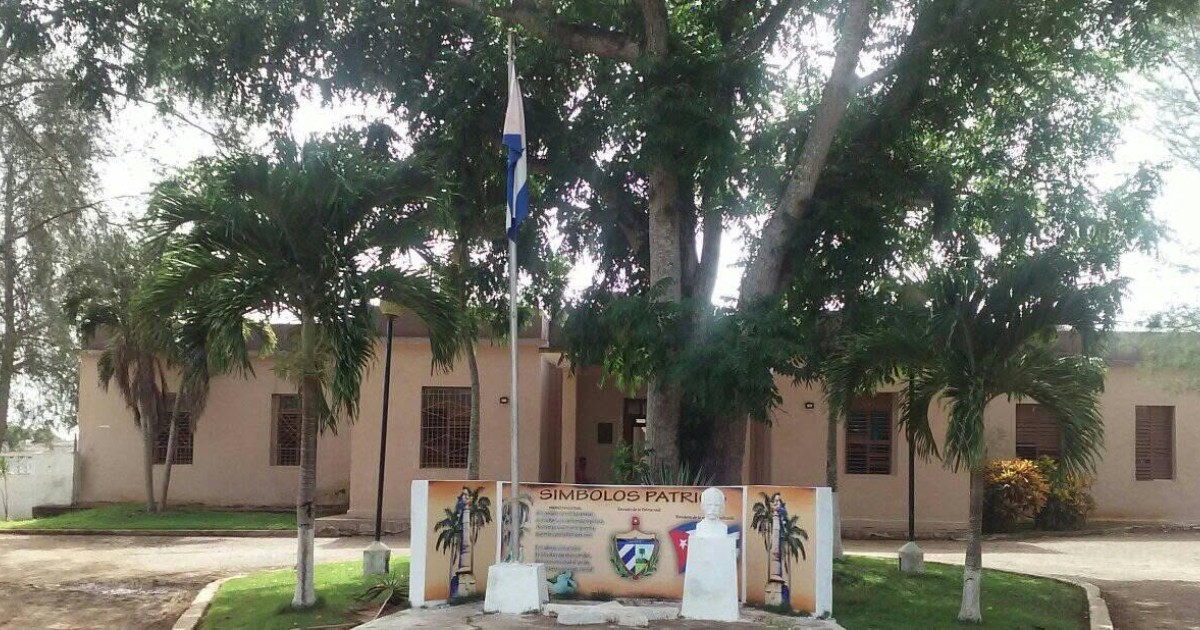
A man was caught red-handed while disassembling the metal pipes of the perimeter fence of the Antonio Guiteras Holmes Provincial Teaching Psychiatric Hospital in the Guanábana Council, Matanzas, as reported by the official profile “Con Todos La Victoria” on Facebook.
It was workers from the very center who discovered the individual in the act and proceeded to capture him on site.
Ariel Reyes Vásquez, identified as the alleged perpetrator of the incident, faces formal charges and remains in detention at the authorities' headquarters.
The news was spread through one of the profiles that the Cuban regime uses to publicize arrests and send deterrent messages in light of the rising crime rate.
The theft of metal materials from public facilities has become a recurring phenomenon in Cuba, exacerbated by the deep economic crisis the country is facing, with an accumulated contraction of 15% of GDP since 2020.
In August, two individuals were caught attempting to steal aluminum pipes from the railing of the Matanzas Viaduct, in the La Playa area, a case also reported by "Con Todos La Victoria."
Cuban healthcare centers have been the scene of a surge in thefts throughout 2026.
A nurse from the General Hospital of Cienfuegos reported the theft of her belongings during a 24-hour shift, while three young people were arrested in Las Tunas as suspected perpetrators of a robbery in which a security guard died.
In Santiago de Cuba, more than 11 phones were stolen from hospitals in less than two weeks, according to documented reports from August.
The regime's response to this type of crime has been the imposition of severe penalties.
The Opinion 475 of the People's Supreme Court, in effect since May 2025, allows for the classification of theft of public infrastructure as sabotage, with penalties ranging from seven to 30 years in prison, life imprisonment, or even the death penalty in aggravated cases.
A recent example: a 19-year-old young man was sentenced to eight years in prison for sabotage after stealing dielectric oil with his uncle, causing over 4,000 customers in Holguín to lose electricity.
The Cuban authorities admitted to more than 460 criminal investigations for offenses against the electrical system just in August, a figure that reflects the magnitude of the problem without providing structural solutions to the crisis that fuels it.
Related videos:
Filed under: