The Cuban regime rejected on Monday the accusations from the State Department that link Havana to a Russian intelligence network being investigated by the FBI for alleged plans of crime and sabotage in the United States and Europe.
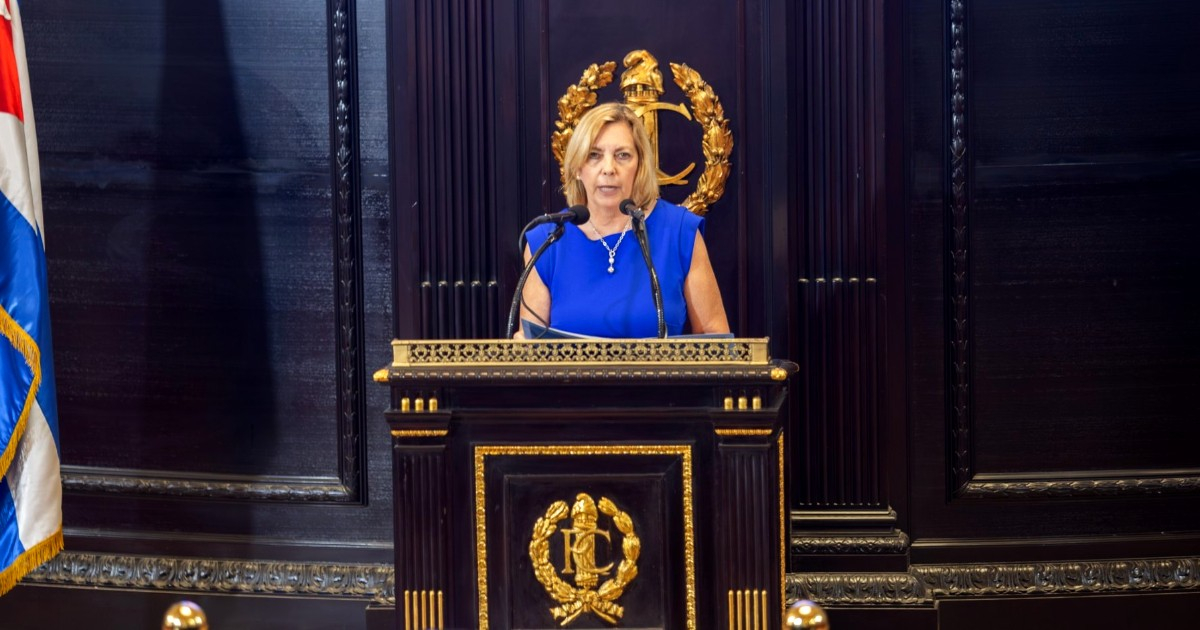
The reaction, led by the Deputy Minister of Foreign Affairs, Josefina Vidal Ferreiro, follows the script of systematic denials in the face of each new piece of evidence of her involvement in international illicit activities.
In a post on social media, the diplomat asserted that the State Department had made “one more veiled accusation, lacking evidence against Cuba,” related to two Cuban citizens involved in the case.
Attempting to link Cuba to crimes that have no relation to the country is a common practice of those seeking to find an excuse to justify the crime of collective punishment against the Cuban people, he added in a second message.
The reaction came days after the Department of Justice filed formal charges in a federal court in the Southern District of New York against five individuals for being part of the so-called RIS Network (an abbreviation in English for Russian Intelligence Services).
Among the accused are two Cubans: Oemis Romagoza Durruthy and Yaidel Delgado Suárez, alias "Viking," both 35 years old and currently fugitives.
Romagoza Durruthy, born in Camagüey and residing in Petrozavodsk, Russia, where he directed a Latin dance academy called "Made in Cuba," is identified as one of the highest-ranking coordinators of the network. The accusation alleges that he organized attacks in Prague and Lithuania during 2024, as well as obtained images of the home of a Russian dissident in the U.S. in November 2025. Lithuania included him in an international wanted list.
Delgado Suárez, for his part, is described as a recruiter of individuals in U.S. territory to carry out operations for the organization. Together with the Venezuelan Ángel Eduardo Castro, 22 years old, he allegedly offered between $1,000 and $1,500 for pre-operational surveillance tasks and up to $40,000 to "eliminate" a dissident identified in the indictment as Victim-1. The other two defendants are the Russians Yuri Khrameev, a 63-year-old former intelligence colonel, and his son Kirill, a 27-year-old FSB officer.
According to the Department of Justice, the five members of the RIS Network are reported to have worked since at least 2024 for Russian intelligence services in monitoring dissidents and planning attacks against infrastructure in Ukraine's allied countries. Communications took place through encrypted applications where discussions on contract crimes, surveillance instructions, and payment mechanisms were held.
The Deputy Attorney General for National Security, John A. Eisenberg, was emphatic: "These defendants allegedly operated as part of a global crime network that extended to the United States, attempting to recruit American and foreign citizens to commit crimes at the behest of the Kremlin."
The denial from Havana follows a well-documented pattern. In October 2025, in response to reports about Cuban mercenaries in Ukraine, the MINREX declared that Cuba "is not part of the armed conflict in Ukraine" and that the Cubans involved were acting "on their own" without any connection to the state.
In May 2026, Vidal herself rejected accusations regarding Russian and Chinese intelligence operations from Cuba, stating that the U.S. "has never presented any official evidence."
This case is set within the context of the report "Cuba: The Capital of 21st Century Communism," published by the Department of State on July 20, 2026, which describes the Cuban regime as a "persistent threat" to the national security of the United States and documents decades of espionage, infiltration, and ties to Russia and China.
Last Thursday, the Department of State itself promised to dismantle "once and for all" the Cuban networks operating on U.S. soil.
All the defendants remain at liberty and face up to 20 years in prison for conspiracy to finance terrorism, in addition to an additional three to ten years for conspiracy to commit a crime for hire.
Related videos:
Filed under: