In mansions facing Biscayne Bay, law firms, and private clubs in Miami, a group of affluent Cuban-American businesspeople has been meticulously planning the economic and institutional future of a Cuba that does not yet exist, according to an investigation by The Wall Street Journal published this Monday.
The plans are concrete and ambitious: a stock exchange in Havana, an investment summit in the Cuban capital, the renovation of eight airports for 8 billion dollars, a provisional transitional government, and a law to regulate the transition to democracy.
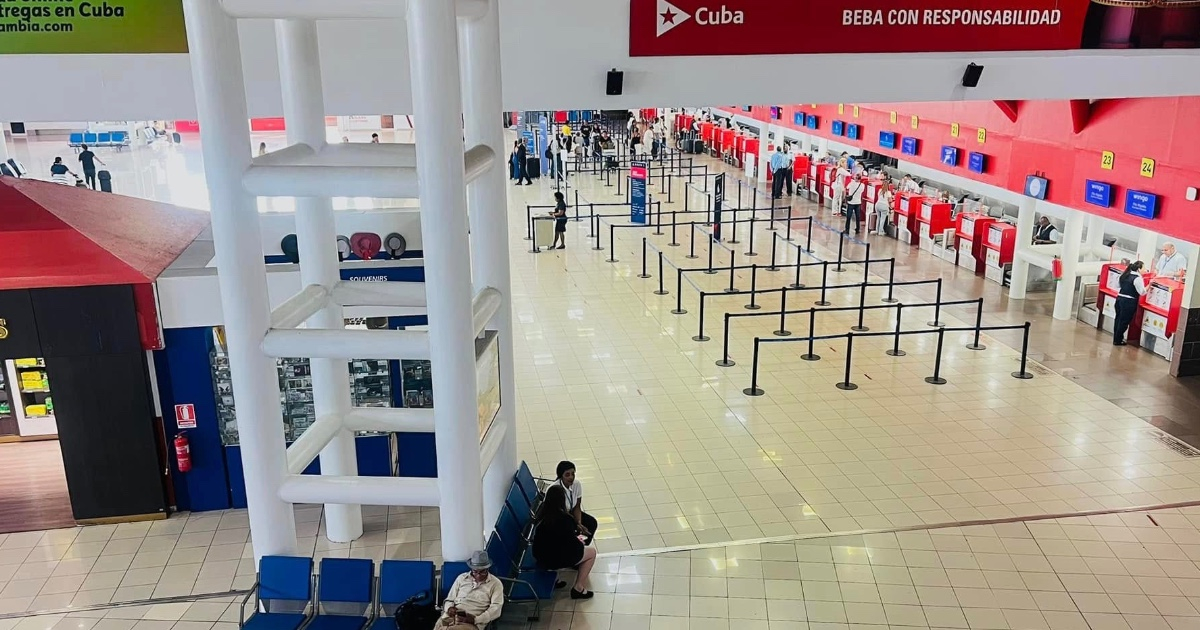
The architect Willy Bermello, 75 years old —who designed the proposal for Trump's presidential library in Miami— holds biweekly video conferences with airline executives, airport managers, and investment funds to refine that plan to renovate eight Cuban airports. "We have our people on speed dial," he stated to the American newspaper.
The airports included are José Martí in Havana, Varadero, Holguín, and Cayo Coco as priorities, along with Manzanillo-Sierra Maestra, Santiago de Cuba, Santa Clara, and Camagüey. Bermello confirms that the project would be financed with its own returns and has already notified the State Department of its intentions.
Jorge Mas Santos, president of the Cuban American National Foundation and co-owner of Inter Miami, is working alongside the Cuban American Bar Association of Miami on a 28-page transition bill that envisions a provisional government with up to two years to organize free elections. Mas told President Trump that gathering the 90 billion dollars he estimates necessary for the first three years of transition would be "a piece of cake" for the exile business community.
A separate group is debating whether the Cuban Constitution of 1940 should be temporarily restored during this period while a new charter is being drafted. Experts who gathered in July at the American Museum of the Cuban Diaspora estimated that rebuilding Cuba would cost between $275 billion and $375 billion and could take between 10 and 15 years, figures that are much higher than those suggested by Mas.
The driving force behind all this activity was the phrase that Trump has repeated since Nicolás Maduro’s capture in January: "Cuba is next." The administration imposed an oil embargo on the island and proposed a "friendly takeover," which sparked preparations among the exile community.
Juan Omar Sixto, 82 years old, former tobacco grower and president of the newly established Cuban-American National Chamber of Commerce, summarized the group's mood in June: "We have waited 67 years. We need to start."
However, the Cuban regime has persisted. With Trump’s attention consumed by the war in Iran, deadlines have stretched. Secretary of State Marco Rubio dismissed any fixed timeline in July: “We are not a miniseries where everything gets resolved in three episodes. These are complex matters that take time,” he told reporters in Manila.
Tony Costa, 86 years old, former owner of one of the largest ornamental plant companies in the world, summarized the frustration of part of the exile community: "They haven't changed the goal, but they have moved the target."
Meanwhile, the situation in Cuba is deteriorating. On September 18, the power grid experienced another collapse—the eighth of the year—with outages lasting over 30 hours in some areas. "The country is completely paralyzed. People walk around like zombies. There's no electricity for days, no sleep, food is spoiling," described Havana economist Omar Everleny Pérez Villanueva, who is working on plans to restructure the island's economy.
The significant absentee from all these debates is the Cuban population itself. More than a million people—mostly young—have left the island since 2021, and within it, there are no legally recognized opposition organizations capable of participating in the design of a transition.
"This is our moment of the Berlin Wall," stated Marcell Felipe, president of the American Museum of the Cuban Diaspora. However, all the architecture designed in Miami—the stock exchange, the airports, the provisional government, the transition law—rests on a condition that none of its promoters can control: a political change in Havana.
Related videos:
Filed under: