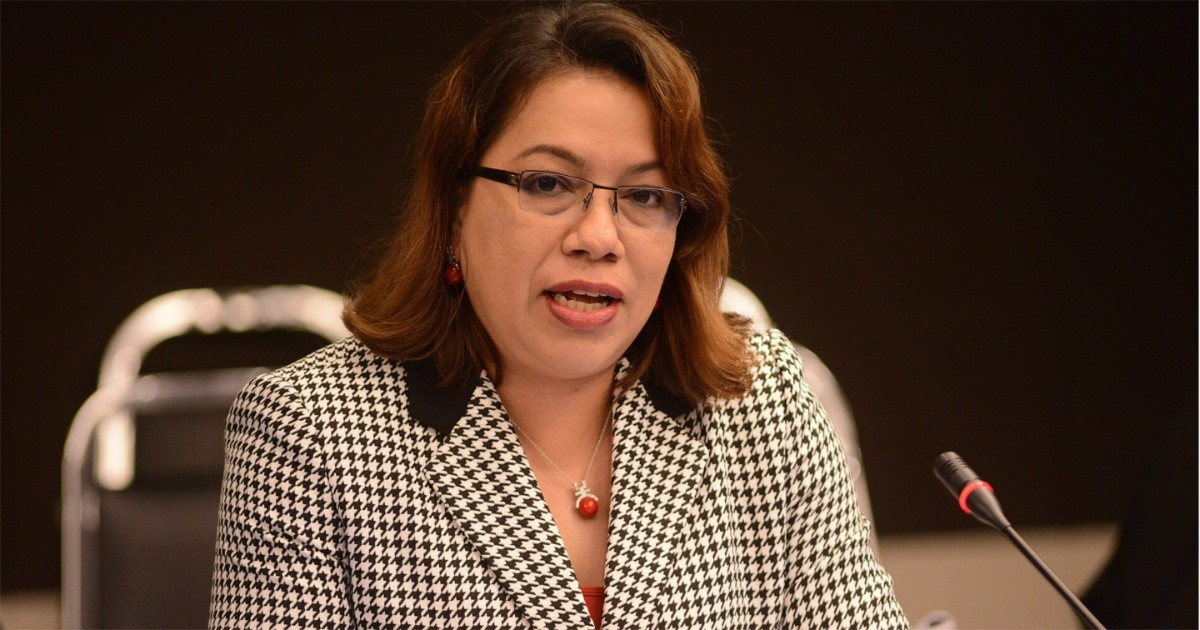
Carolyn Rodrigues-Birkett, permanent representative of Guyana to the United Nations and an outspoken admirer of the Castro brothers, remains among the leading candidates to succeed the Portuguese António Guterres as head of the UN Secretariat, whose term concludes on December 31 of this year.
In the third round of informal polling by the Security Council, held on Friday, Rodrigues-Birkett received eight supportive votes and came in second place, very close to the Costa Rican Rebeca Grynspan, who led the consultation with nine endorsements.
The most criticized aspect of his candidacy is his historical closeness to the Cuban dictatorship, documented in a speech he delivered in January 2013 before the National Assembly of Guyana, when he was serving as the country's foreign minister.
On that occasion, Rodrigues-Birkett introduced a motion to commemorate the 40th anniversary of diplomatic relations between Georgetown and Havana, which was unanimously approved, and also called for an end to the U.S. embargo against Cuba.
His words before the Guyanese Parliament left no room for ambiguity: "To speak of Cuba, its achievements, its resilience, its focus on human development, and the immeasurable assistance it has provided to brother countries cannot be done without paying tribute to the visionary, determined, and revolutionary figure behind all of this, Commander Fidel Castro Ruiz."
In the same speech, he praised the then leader of Cuba: "We must also pay tribute to his brother, President Raúl Castro Ruz, for his leadership of the Cuban people and his continued support for Guyana. We wish both of them a long life and good health."
Rodrigues-Birkett, aged 52, was an elementary school teacher and later a project coordinator for indigenous communities before being appointed Minister of Amerindian Affairs in 2001. She held that position until 2008 and subsequently served as Chancellor until 2015, becoming the first woman and the youngest person to hold that position in Guyana. Her appointment also made her the highest-ranking government official of indigenous descent in Guyana.
Her career also includes several years within the United Nations system. Between 2015 and 2017, she worked for the Food and Agriculture Organization of the United Nations (FAO) in Rome, and from 2018 to 2020, she led the liaison office of that organization in Geneva. Since 2020, she has been the permanent representative of Guyana to the UN and headed her country's delegation during Guyana's term on the Security Council in 2024 and 2025.
If appointed, she would also become the first woman and the first person of Indigenous descent to lead the UN since its founding in 1945.
His candidacy has the formal support of the Caribbean Community (CARICOM) and is competing, among others, with Argentine Rafael Grossi, director of the International Atomic Energy Agency.
Another delicate aspect of her profile is her positions on the war in Gaza: during her time on the Security Council in 2024-2025, she denounced Israel's actions against the Palestinians as "atrocities" and called for compliance with international law.
United States, an ally of Israel and with veto power in the Council, has not publicly disclosed its stance on the Guyanese candidate, leaving a crucial question open in the process.
In recent days, the former Chilean president Michelle Bachelet —another figure with a history of ties to authoritarian regimes in the region— withdrew her candidacy after receiving only one vote in support and eleven against in the third round of consultations.
The next Secretary-General will be appointed by the General Assembly based on the recommendation of the Security Council. For the Council to adopt this recommendation, at least nine favorable votes are required, and none of its five permanent members — the United States, China, Russia, France, and the United Kingdom — may vote against it.
Related videos:
Filed under: