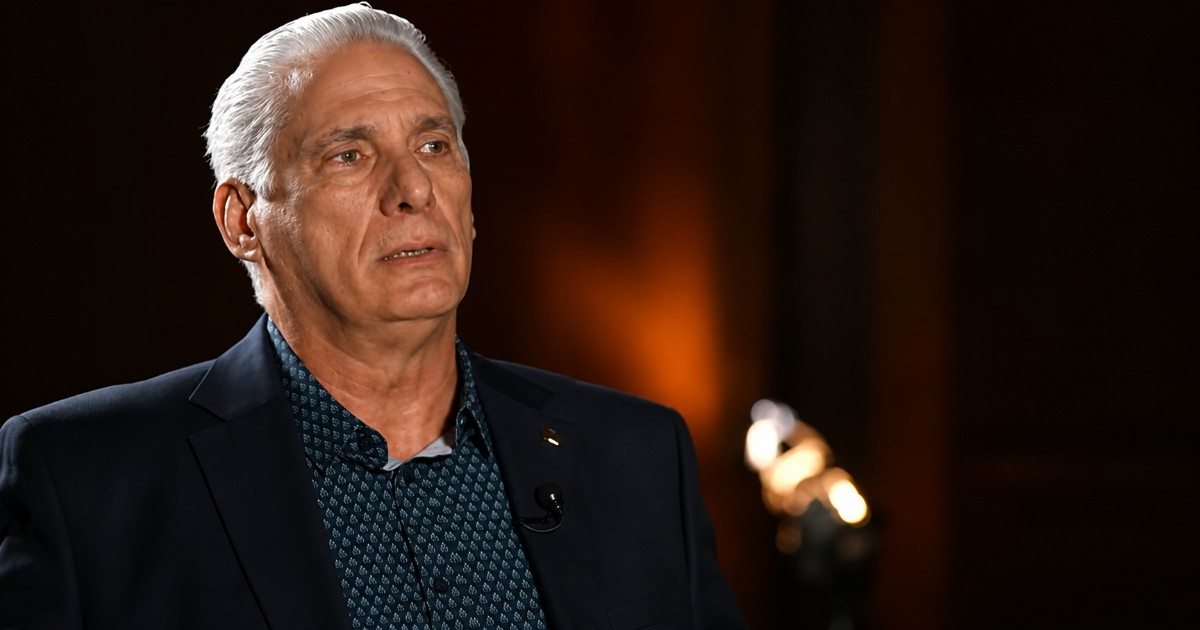
The Special Representative of the United Nations Secretary-General for Disaster Risk Reduction, Kamal Kishore, stated that the UN is "standing shoulder to shoulder with Cuba" in the current crisis context and affirmed that his office supports the annual report of the organization regarding the implications of the U.S. embargo, backing one of the main international arguments used by the Cuban government to explain the impact of the crisis during the meeting.
The statements took place this Wednesday during a meeting with Miguel Díaz-Canel at the Palace of the Revolution, as reported by the Presidency of Cuba.
Kishore, who also heads the United Nations Office for Disaster Risk Reduction (UNDRR), discussed the effects of U.S. sanctions on Cuba during the meeting and outlined his organization's position on the matter.
"Every year, when the Secretary-General of the United Nations presents his report on the implications of the blockade against Cuba, our office also supports this report and explains the effects and repercussions it has," he stated.
The official added that from their office, they are aware of the consequences they attribute to those measures on the island: "We are aware and understand the effects of this blockade and know the pain and difficulties that the Cuban people are experiencing," said Kishore.
His words focus exclusively on the impact attributed to U.S. sanctions, without mentioning in that passage the responsibility of the Cuban authorities in the internal crisis or the allegations of repression and violations of rights against civil society.
It was in this context that he stated that “the United Nations stands shoulder to shoulder with Cuba during this difficult time” and expressed his office's willingness to contribute to the country, which for the UN translates to supporting the regime.
According to the Cuban Presidency, Kishore stated that they will do "everything within our power" to assist the Cuban people and ensure that the results they can achieve are greater.
The official's statements align at this point with the Cuban government's stance on the impact of U.S. sanctions, although Kishore specifically linked them to the position expressed by the United Nations in its reports on the embargo.
During the meeting, Díaz-Canel reiterated his position that "the intensification of the blockade and the energy squeeze" imposed by the United States affects the economic and social life of the country and also limits its ability to reduce disaster risks.
The Cuban leader also stated that even "under the worst conditions of limitations" progress can be made in reducing those risks.
Kishore's visit is primarily related to Cuba's experience in disaster risk reduction, early warning systems, and response to phenomena such as drought and climate change.
The statements from the UN representative arrive, however, at a time when the international organization itself has expressed a growing concern over the humanitarian consequences of the Cuban energy crisis.
A recent report from the UN warned that repeated blackouts are disrupting access to electricity, drinking water, telecommunications, and healthcare services, exacerbating humanitarian needs in Cuba.
The UN particularly highlighted the impact on the healthcare system. According to the organization, power outages are compromising the operation of critical medical equipment, including incubators and ventilators, while interruptions in the cold chain could affect vaccination programs for nearly 70,000 children.
The problem also extends to the water supply. The United Nations Office for the Coordination of Humanitarian Affairs (OCHA) estimates that energy difficulties and a dry summer are affecting the supply for about 3.5 million people, approximately half of whom reside in Havana.
The UN is implementing a plan to provide vital assistance to approximately two million Cubans.
Of the approximately 94 million dollars planned to finance it, by mid-September, 42 million had been received.
"The needs continue to surpass the available resources," warned the organization, which identified funding gaps especially in food security, health, water, sanitation, and hygiene.
The humanitarian initiative was presented in March, when the UN launched an emergency plan of over 94 million dollars that included mechanisms to ensure fuel for essential and humanitarian services.
The implementation of that assistance has not been without difficulties.
In April, the United Nations reported that about 170 containers of humanitarian supplies valued at approximately 6.3 million dollars were not reaching their beneficiaries due to a fuel shortage.
Related videos:
Filed under: