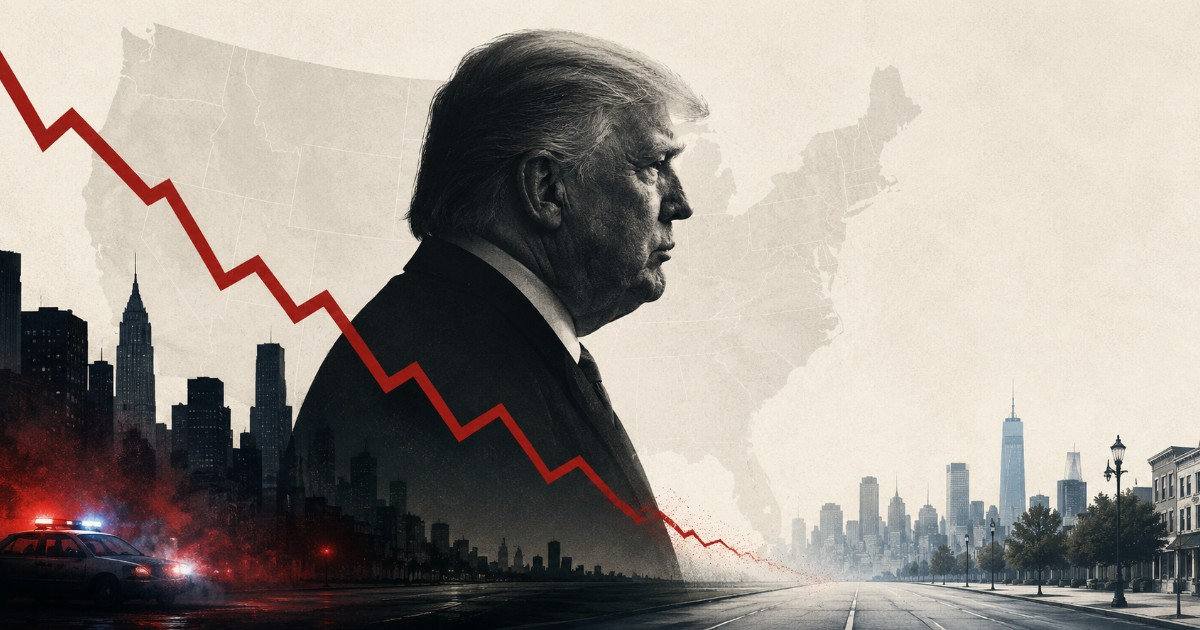
The approval rating of President Donald Trump dropped to 32%, the lowest level recorded by Reuters/Ipsos during his political career, amid growing discontent over the cost of living and just a few weeks before the midterm elections on November 3.
The new survey by Reuters/Ipsos, published this Monday, also shows a significant decline among Republicans themselves: currently, 73% approve of the president's administration, down from 82% recorded just a week earlier.
The decline is also reflected in the overall group of respondents.
In the previous measurement by Reuters/Ipsos, published a week ago, Trump's overall approval was at 35%, three points higher than the result announced this Monday.
The survey also indicated a slight recovery from the 33% recorded at the end of August.
One of the main sources of discontent is the household economy.
Only 17% of those surveyed approve of the way Trump is handling the cost of living, an issue that Americans identify as the most important when deciding their vote in the legislative elections.
Deterioration is even evident among Republican supporters.
For the first time in this Reuters/Ipsos series, among Republicans, more disapprove of Trump's handling of the cost of living than support it: 51% to 44%.
Reuters reports that Republican discontent with inflation has increased since the beginning of the war with Iran in February, a conflict that has significantly raised the prices of gasoline and diesel.
Trump returned to the White House in January 2025, promising to control inflation and end wars abroad.
When he began his second term, a survey by Reuters/Ipsos conducted immediately after his inauguration placed his approval rating at 47%, 15 points higher than the current level.
The new survey was conducted online from September 17 to 20, with the participation of 1,277 adults from across the United States and has a margin of error of approximately three percentage points.
The result adds to other recent polls that have also shown a decline in the president's approval ratings, although the figures are not directly comparable due to differences in methodology and the populations surveyed.
At the beginning of September, a Focaldata survey for the Financial Times placed Trump's approval at 33% among registered voters, three points less than the previous month.
In that survey, nearly two-thirds of voters believed the economy was heading in the wrong direction, and 57% stated they felt worse off financially under Trump's presidency.
The figures also coincide with a time when some Republican lawmakers and candidates have begun to publicly express differences with certain policies of the president, especially on issues such as the war with Iran, immigration, tariffs, and the cost of living, just a few weeks away from the midterm elections.
Related videos:
Filed under: