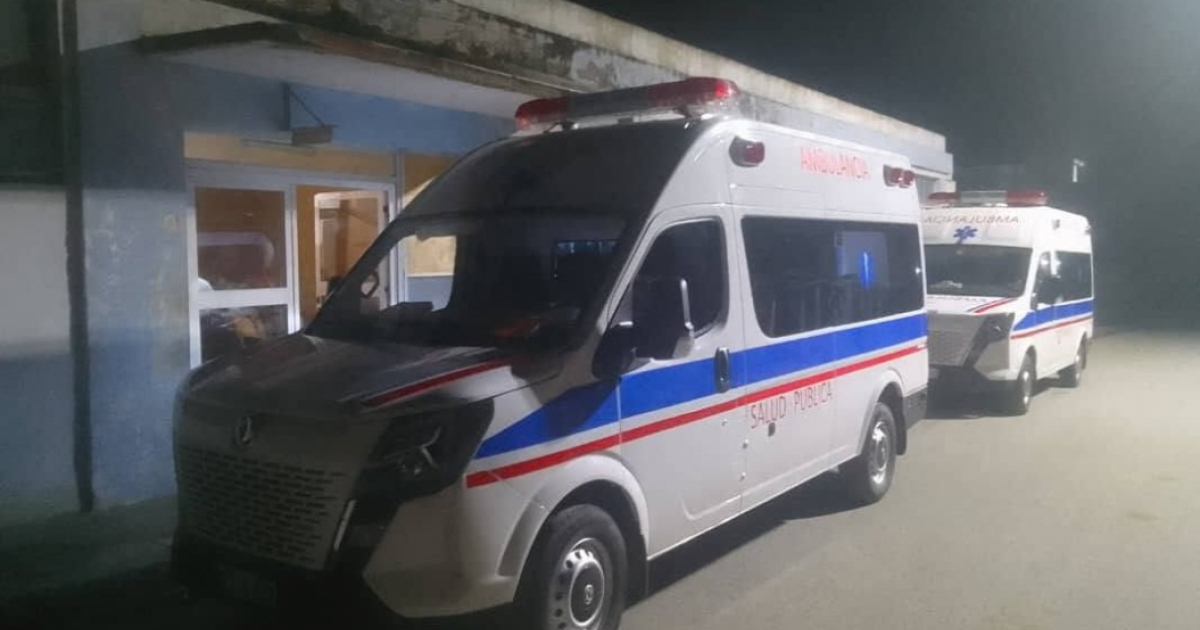
A doctor from Guantánamo named Ylia Vázquez López, mother of a 10-month-old baby who has been experiencing neurological complications since birth, revealed that she has been waiting for an MRI since the baby was three months old, which is only being performed in Villa Clara.
This Thursday, they finally had fuel for their transfer, and all the SIUM arrangements had been made. However, she and other mothers with their children had been waiting since 12:20 am, under the chilly night air, and it was now 4:37 am, and they still had not left.
“The health system is a monopoly because a doctor can refuse to provide service; among colleagues, we can marginalize and belittle each other, we can harm one another. Health is free but comes at a cost; the supposed medical prowess created by our Commander has gone to waste, because a pediatrician can refuse to transfer a patient because they want the patient to be treated in a facility where there are no resources,” she detailed on Facebook.
"What great pain it is to hear about protocols, because due to shortages, various protocols are violated," he added.
The doctor, from the Facebook profile of user Georby Ramírez, shared details of her complaint regarding the Pedro Agustín Pérez Pediatric Hospital in the eastern province.
According to his account, the anesthesiologist identified as Daniel and the director of the center stopped the ambulance, claiming that their child was not being monitored at that hospital and that the protocol prevented them from taking him.
She firmly rejected that argument: she herself had coordinated care in Villa Clara and found it unacceptable for an anesthesiologist to say that a potential seizure could not be managed during transport when the staff was qualified and medical supplies were available.
The mother also questioned the attitude of both officials for their "lack of professional ethics, camaraderie, and proper demeanor and appearance." At the end of that post, she posed a question that encapsulates the indignation of many Cuban families: "Where is the medical expertise? Where is the camaraderie, where is the professional ethics?"
Hours later, Vázquez López reported on Facebook that despite the complications with Anesthesia at the Pediatric Hospital in Guantánamo, by 9:30 AM the ambulance with three patients—her baby and two other children—was on its way to Villa Clara, and she expressed her gratitude to everyone who supported her.
Guantánamo reports this month a child mortality rate of 14 per 1,000 live births, deemed "unfavorable" by the provincial authorities themselves and significantly higher than the national average of 9.9 per 1,000.
At the same time, the province is facing an active dengue outbreak in three municipalities —Imías, Baracoa, and the city of Guantánamo— and a shortage of fuel affecting medical transport.
The municipality of Manuel Tames was declared in state of alarm due to the increase in febrile cases, with 23 cases reported in just one week. Meanwhile, the official press of the province published a report about a maternal home that boasted varied menus and manicure services for pregnant women, a contrast that did not go unnoticed by the population.
The collapse of the transportation system is not exclusive to Guantánamo. The Ministry of Public Health acknowledged that Cuba only had 39.6% of the necessary ambulances to handle emergencies. In April, a man died after waiting more than four hours for an ambulance in Santiago de Cuba.
In June, a mother reported that her son with cerebral palsy was denied transportation due to a lack of fuel.
Related videos:
Filed under: