The government of Uruguay is progressing on a new mechanism for Cuban health professionals to receive their compensation directly, a modification aimed at maintaining the medical cooperation program with Cuba while also addressing the concerns raised by the United States.
The journalist Gabriel Pereyra reported this Thursday in Informativo Sarandí that Foreign Minister Mario Lubetkin informed him that the matter has already been discussed with the governments of the United States and Cuba and that both parties agree to move forward with a direct payment scheme for the professionals.
According to Pereyra's account, the understanding has not yet been formalized and there are still technical aspects related to changing the payment method that need to be resolved.
"Payments are made directly to the doctors and no longer to the Cuban government," the journalist summarized while explaining the new mechanism.
He also noted that Lubetkin informed him that the proposal had been discussed with Havana and would be accepted under those conditions.
The chancellor would have warned, however, that Uruguay cannot control what professionals do later with the money, including the possibility that they may be forced to transfer it to the Cuban government.
That eventual move, Pereyra explained, would fall outside of what was negotiated by Montevideo with Washington and Havana.
The information represents a development compared to what was known on September 17, when the weekly Búsqueda revealed that the Foreign Ministry, the Ministry of Public Health (MSP), ASSE, and the Social Security Bank (BPS) were working on a formula that would allow direct payment to Cuban professionals.
According to that information, the modification would not imply ending or altering the cooperation agreement signed between Cuba and Uruguay, but rather changing the mechanism used to process the payments.
The issue gained prominence after the United States included Uruguay in its 2026 report on forced labor and the trafficking of Cuban medical professionals, according to Búsqueda.
The document, sent by the State Department to the U.S. Congress at the end of August, identified 15 countries whose governments, according to Washington, make payments directly to the Cuban government for the services of these workers.
The Department of State recorded 21 Cuban professionals associated with the program in Uruguay during 2026.
From the United States Embassy, it was explained to the news portal that Uruguay appeared for the first time in this year's report because, according to the American interpretation, "payments go directly to the Cuban embassy and there is no evidence that the doctors themselves receive compensation for their work serving the Uruguayan people".
However, Uruguayan authorities have provided a more detailed explanation of the financial workings of the program.
The president of BPS, Jimena Pardo, recently clarified that the institution allocates about 250,000 dollars annually to the mission, but stated that this money does not correspond to the salary of the Cuban professionals.
"What reinstates Uruguay is called an allowance, it is a reimbursement of expenses," explained Pardo.
According to the official, funds are advanced, and subsequently, the brigade must account for their use. Money is transferred to a brigade account established by the Ministry of Public Health.
The agreement signed in 2011 between the MSP, ASSE, and the BPS allocates an annual amount of up to 250,000 dollars for stipends, travel expenses, transfers, and other costs.
Pardo assured that the Uruguayan state does not pay the salaries of the professionals. "The Uruguayan state does not pay salaries, nor has it done so in the past, as —to my understanding— the agreement between both countries states that remunerations are paid by the Cuban government," he declared to Búsqueda.
"Uruguay does not pay Cuba any money for cooperation, but only guarantees the payment of these stipends," he added.
Therefore, there is a difference between the description provided by Washington— which considers that there are direct payments to the government or to the Cuban representation— and the explanation from the Uruguayan authorities, who differentiate between operational expenses funded by Uruguay and salaries managed by Cuba.
The inclusion in the U.S. report has potential consequences. As explained by the U.S. Embassy to the media, the legislation approved this year states that if a country appears in these reports for two consecutive years, the Secretary of State would not be able to provide certain international assistance to that country.
Uruguay appears for the first time in the 2026 edition, so it would need to be included again in the 2027 report for that provision to take effect.
The United States announced the inclusion of Uruguay in the report on September 4 through a note addressed to the Ministries of Foreign Affairs and Defense.
A source from the Chancellery explained to Búsqueda that it was a non-paper, a diplomatic communication considered unofficial.
That detail explains why Lubetkin had initially stated that Uruguay had not received "any official communication from the United States regarding this specific issue", although he acknowledged that the matter was part of the bilateral discussions.
The government of Yamandú Orsi has emphasized from the outset of the controversy that it does not intend to end the program. The Secretary of the Presidency, Alejandro Sánchez, defended the health cooperation and noted that thousands of Uruguayans have benefited from the work of Cuban specialists.
"The agreement with the Cuban doctors allowed thousands of Uruguayans to see, and we acknowledge and greatly value that," said Sánchez.
Days later, he reiterated that Uruguay would continue working with Cuban professionals. According to statements released on September 21, he stated that the cooperation allowed over 100,000 patients to regain their sight and defended Uruguay's authority to decide on the continuation of the agreement.
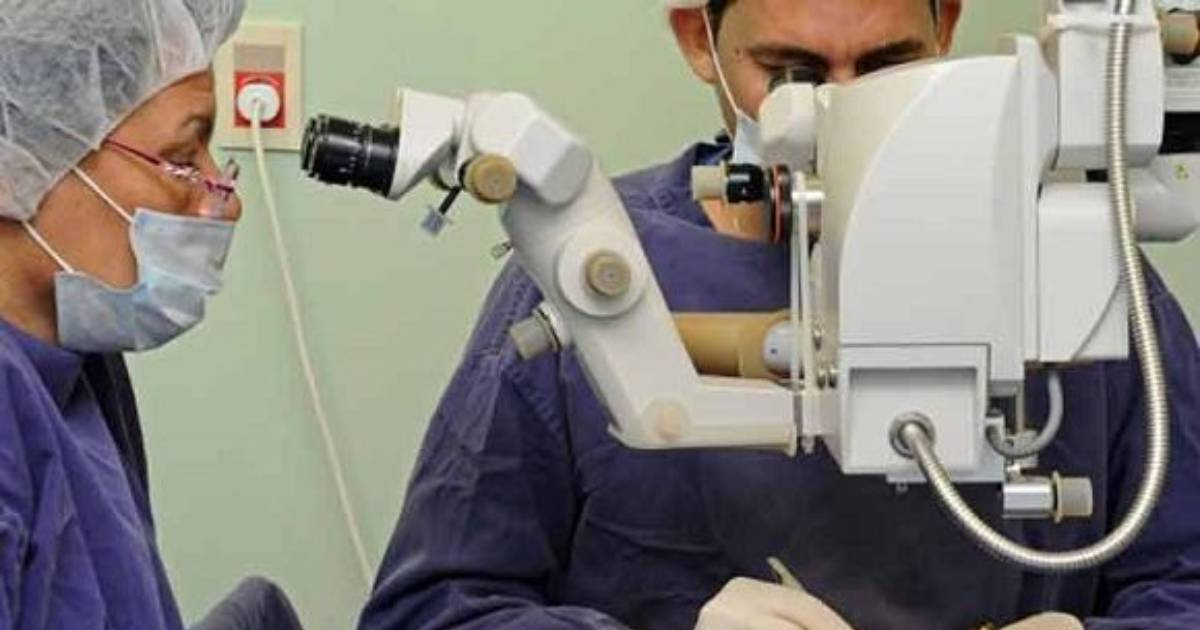
The current ophthalmological cooperation dates back to 2007, when Cuba and Uruguay signed an agreement for Cuban brigades to provide assistance in the country.
According to official figures collected by Búsqueda, by July 2025, the program had accumulated 916,787 ophthalmological consultations, 118,029 eye surgeries, and 217,885 screenings.
Related videos:
Filed under: