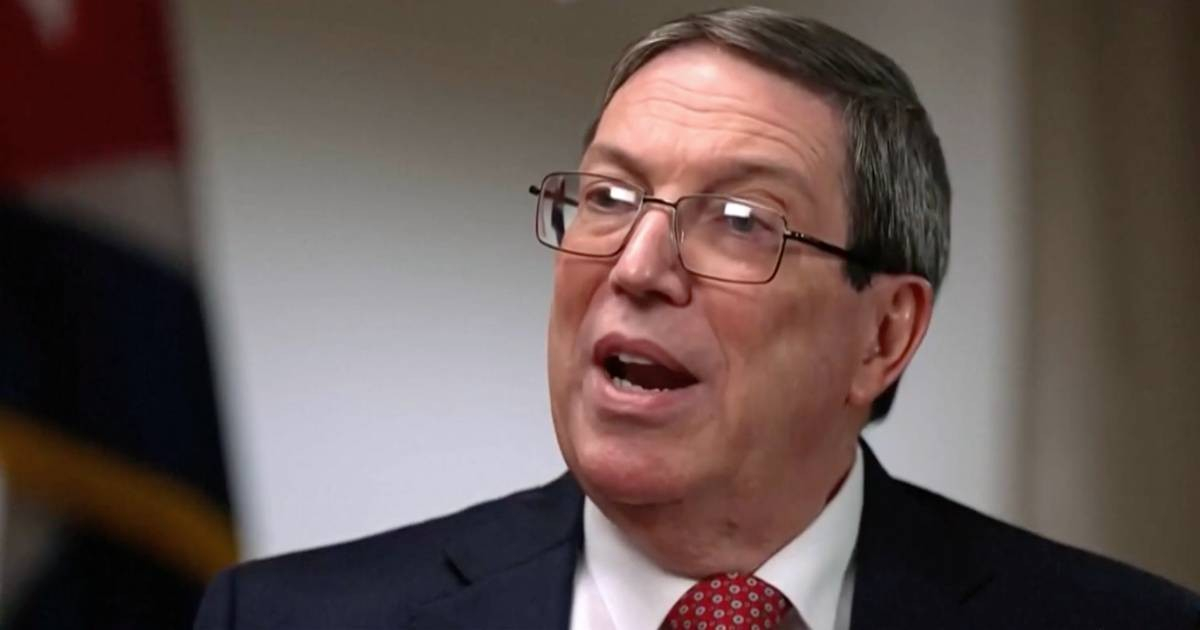
The Cuban Chancellor, Bruno Rodríguez Parrilla, acknowledged that there are contacts with U.S. officials, but criticized Washington by stating that the lack of results is due to the "misunderstanding and restrictive attitude of the U.S. side."
"I shouldn't go into details, but I can confirm that there have been some episodes of conversation and reiterate the willingness to continue them in the future despite the lack of results due to the misunderstanding and restrictive attitude of the U.S. side," the minister said in an exclusive interview with NBC News on the sidelines of the UN General Assembly in New York.
The conversation with the chief foreign affairs correspondent of NBC, Andrea Mitchell, took place on Wednesday, a day after President Donald Trump referred to Cuba as an "absolutely failed state" before the General Assembly and predicted that the regime would "fall," words that led the Cuban delegation to leave the room in protest.
Rodríguez described Trump's speech as "very aggressive, not only against Cuba but also in general regarding the international community," and rejected the characterization of the country as a threat to U.S. security.
When Mitchell directly asked if Raúl Castro's grandson, Raúl Guillermo Rodríguez Castro, is involved in those discussions, Rodríguez declined to answer, although he confirmed that "designated representatives from the Cuban government have had conversations with their American counterparts."
This stance of opacity contrasts with what Trump himself stated before the UN: that Secretary of State Marco Rubio was "deeply involved" in negotiations with Havana.
Rubio, for his part, opened the door to work with certain figures of the regime willing to steer the country towards freedom, but he warned that there are individuals with whom the U.S. "will never be able to work because their hands are stained with blood."
In response to that statement, Rodríguez replied with two words: "Lie, lie again."
The Secretary of State also acknowledged the magnitude of the challenge: "You cannot reverse sixty-some years of mismanagement, corruption, and incompetence in six months," although he assured that Washington is "ready to be helpful" if Havana moves towards real change.
Regarding the crisis facing the Cuban population, Rodríguez attributed the blackouts and shortages to the energy embargo imposed by the Trump administration, describing the situation as "very painful," and labeling it a "true act of collective punishment" and "an act of genocide, as defined by international conventions."
He also stated that infant mortality on the island has doubled, rising from four deaths per 1,000 live births to 9.9, due to a lack of medications and medical equipment.
The regime, however, overlooks in that narrative decades of failed economic management under the one-party system, which far preceded the most recent sanctions.
The backdrop of the interview is one of maximum tension: this Friday, CBS News revealed that the U.S. Army Reserve is evaluating the availability of military units for Southern Command within a timeframe of 90 to 120 days, in a planning that U.S. officials have linked to Cuba, although no confirmed deployment orders have been issued.
Rubio did not rule out the use of force, but he emphasized that Washington's preference is to resolve the situation "through negotiated, political means, without the use of military force."
Related videos:
Filed under: