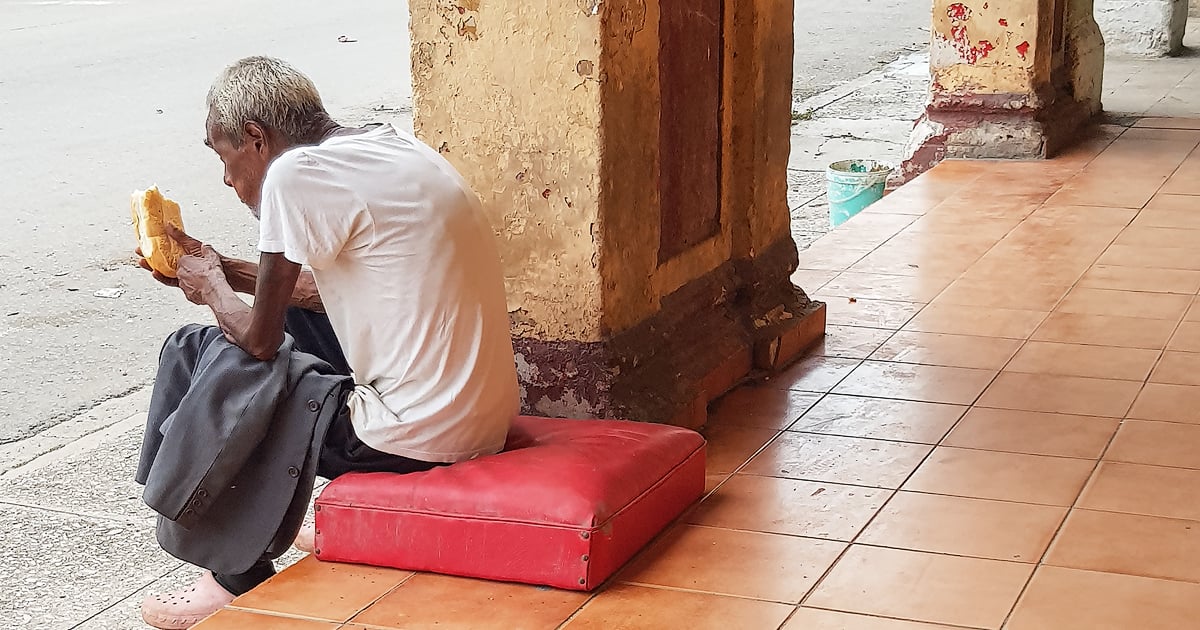
Speaking today about human rights in Cuba means addressing a crisis that affects nearly all dimensions of national life: civil and political rights, economic, social, and cultural rights, the terrible prison situation, access to food, health care, housing, water, electricity, and ultimately, the right of millions of Cubans to live with dignity.
Cuba continues to be a one-party communist state. There are no free and competitive elections among different parties, and the judicial system lacks independence. Freedom House classifies Cuba in 2026 as a "Not Free" country and grants it only 9 points out of a possible 100: zero out of 40 for political rights and 9 out of 60 for civil liberties. The organization itself notes that the state prohibits political pluralism, prevents the existence of truly independent media, and severely restricts fundamental freedoms.
In Cuba, fundamental rights continue to be severely restricted: freedom of expression, press, association, assembly, peaceful protest, and independent political organization. Citizens are arrested, prosecuted, imprisoned, and tortured for participating in protests, expressing criticism, documenting abuses, or posting on social media.
The problem is not only how the political police operate. There is also a whole legislative framework that facilitates the criminalization of dissent. Amnesty International and Human Rights Watch have warned that several articles of the penal code are used against expressions and activities that are peaceful and protected by international law.
The consequences are visible. According to Prisoners Defenders, by the end of August 2026, there were 1,339 political prisoners and prisoners of conscience in Cuba. Among them, 155 were women, and 38 had been detained while still minors. From July 2021 to August 2026, this organization has documented 2,167 individuals who have been part of its lists of political prisoners. Among those currently registered, 463 have serious medical conditions, and 54 suffer from severe mental health disorders.
But the violation of human rights in Cuba is not limited to political rights. The nation is experiencing an extraordinarily deep economic, social, and humanitarian crisis. The ninth study on social rights by the Cuban Observatory of Human Rights, based on 1,318 interviews conducted in 79 municipalities across all provinces between June and July 2026, estimated that 94 percent of the population was living in extreme poverty, according to the methodology used by the organization. Sixty-eight percent of the interviewees reported family incomes below 20,000 pesos per month.
This translates to hunger, accelerated loss of purchasing power, malnutrition among vulnerable sectors, deterioration of public health, shortages of medication, severe transportation issues, housing in critical conditions, deficiencies in aqueducts and sewage systems, and accumulations of garbage that have turned entire areas of numerous cities into hotspots of unsanitary conditions.
The electrical system constitutes one of the most dramatic examples. Cuba has experienced eight national collapses of the power system in 2026 and blackouts that in some areas exceed twenty hours. Many towns go without electricity for up to 3 days. The deterioration of power plants, insufficient investment and maintenance, and fuel shortages are part of the problem.
The Cuban regime blames the United States for the serious crisis facing the largest of the Antilles, but the facts demonstrate the falsity of such accusations. The United States continues to export goods to Cuba. Data shows $674 million in goods exports between January and July 2026. In food and agricultural products alone, sales during the first half of the year amounted to approximately $219 million. Exports of fuel destined for the Cuban private sector have also been authorized. Therefore, the economic relationship between the two countries is much more complex than the assertion that there is absolute commercial isolation.
The neighboring nation sends the largest amount of remittances to the Island from abroad. Washington is also the one providing the most humanitarian aid to the most vulnerable people in Cuba.
The U.S. sanctions are aimed at the repressive regime and are intended to secure the release of political prisoners and facilitate a democratic transition.
In the midst of this dramatic situation, as desperate citizens protest for electricity, water, food, wages, or any other injustice, the repressive dimension of the crisis emerges once again.
Cubalex documented only during August 94 public protests, primarily motivated by prolonged blackouts, and 280 repressive events that included hundreds of harassment incidents. Prisoners Defenders has also documented cases of citizens imprisoned after demanding water and electricity, including minors.
But there is an even more terrible reality: prisons. The exact figures for the Cuban prison population are difficult to verify because the state does not publish transparent information and does not allow independent oversight. Prisoners Defenders uses an approximate figure of 90,000 people deprived of liberty, based on international prison estimates. In April of this year, they also published a study on food in prisons based on photographs and direct testimonies. Their estimate of the documented rations was shocking: barely between 250 and 353 calories per day in the cases analyzed, a fraction of the normal needs of an adult.
The organization warns that these are not laboratory measurements from all prisons, but rather a technical estimate based on documented rations. Personally, I witnessed until October 2025 the terrible tragedy of the penitentiary system of the communist regime and was a direct victim of beatings and physical and psychological torture.
The reports describe hunger, severe malnutrition, scarce and spoiled food, lack of medication, shortage of drinking water, overcrowding, isolation, violence, beatings, contagious diseases such as tuberculosis and scabies, infestations of bedbugs and other insects, rodents, and a lack of adequate medical care.
Cubalex has reported even more concerning figures. Between February 2024 and June 2026, it documented 115 deaths linked to penitentiary establishments. In approximately 80 cases—nearly 70 percent—it identified negligence or denial of medical care. Within this data, it recorded at least 21 deaths related to severe malnutrition or starvation and 12 linked to tuberculosis. Seven individuals were released or granted extrapenal licenses when their condition was already irreversible, and they died hours or days later. However, the numbers are even higher. There are always many more cases than can be documented. It is very difficult to obtain timely information from all the prisons.
There are stories that explain statistics better. Cubalex reported on the case of a 34-year-old prisoner in Las Tunas who, according to the information received by the organization, was approximately 1.78 meters tall and weighed only 32 kilograms when his condition had already become critical. It is a brutal image of how far prison malnutrition can go. We have seen and there are political prisoners in a state of severe malnutrition.
Since 2021, a dozen political prisoners have died in prison or shortly after being released in critical condition.
I have repeatedly reported another serious issue: prison corruption. Prisons end up functioning as fiefdoms where illegal markets, privileges, extortion, and abuses abound. When there is a lack of transparency, effective judicial oversight, and independent access to prisons, the opportunities for abuse and corruption multiply. Corrupt officials become dangerous instruments of repression. The political police have them in their control.
The families of the inmates, mainly residing abroad, largely finance the prison system of the Cuban regime. They provide food for the prisoners, pay for lights, paint, and even the materials used to repair the bars in the jails. The guards sell all kinds of benefits to those who can afford to buy them.
The result is that prison not only punishes those who are incarcerated. It also terrorizes those on the outside. When the population is aware of the hunger, disease, violence, and vulnerability that exist behind the walls and rooftops, the possibility of ending up there becomes a powerful mechanism of social intimidation.
However, the protests continue. They continue because fear has its limits when a family is without electricity for endless hours, when they can't find medication, when an elderly person cannot get adequate nutrition, when water doesn't come, or when the salary barely covers anything.
All of this is compounded by the growing social concern over crime, drugs, violent thefts, murders, and public insecurity. In a country experiencing such a deep economic crisis, the safety of individuals should be an essential priority for the state. No government can justify dedicating enormous resources to repression for political reasons while citizens are demanding greater protection against violence and crime.
The conclusion is simple and deeply concerning. The Cuban crisis is not just economic; it is a comprehensive crisis of human rights, fundamental freedoms, food, health, housing, water, and electricity. It is also a terrible prison crisis.
We Cubans need and desire for all universally recognized rights to be genuinely exercised: freedom of expression, freedom of the press, freedom of association, freedom of union, freedom of assembly and protest, political pluralism, due process, judicial independence, and authentically free elections.
And we need something immediate and urgent: the release of all individuals arbitrarily imprisoned for peacefully exercising those fundamental rights.
Because the first right of a people is to be able to speak without fear, to organize without fear, to demand without fear, and to freely decide their own future. To overcome the serious crisis that Cuba is experiencing, to reclaim so many violated rights, we need the growing solidarity of Germany, the European Union, and all of the free and civilized world.
Related videos:
Filed under:
Opinion piece: Las declaraciones y opiniones expresadas en este artículo son de exclusiva responsabilidad de su autor y no representan necesariamente el punto de vista de CiberCuba.