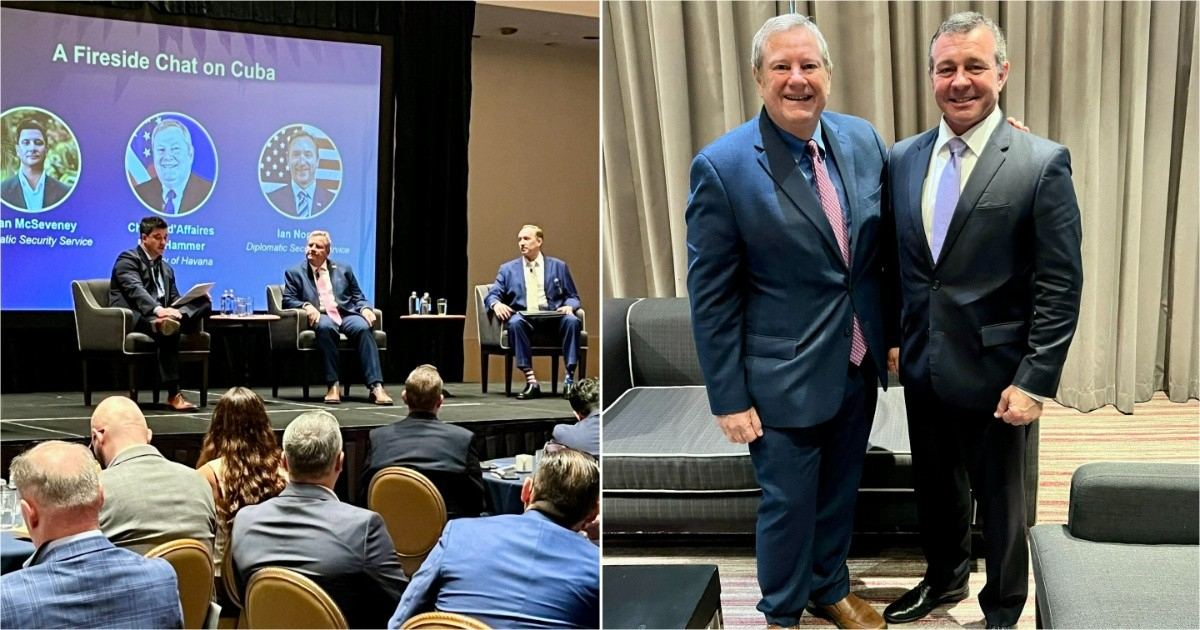
The head of mission at the United States Embassy in Cuba, Mike Hammer, traveled to Mexico City to participate in the OSAC Americas Conference, a State Department forum on regional security and investment, and returned with a clear message: the interest in change in Cuba is growing beyond the island's borders.
The U.S. diplomatic mission in Havana reported on X this Monday that Hammer "found considerable interest in the situation in Cuba and expectations for change" during his stay in the Mexican capital.
In addition to participating in the conference, Hammer met with Todd Wilcox, Under Secretary for Diplomatic Security at the State Department, and the U.S. Ambassador to Mexico, Ron Johnson. As part of the event, the diplomat took part in a panel titled "A Fireside Chat on Cuba," alongside representatives from the Diplomatic Security Service, highlighting that the island occupies a prominent place on Washington's regional security agenda.
The trip takes place during a time of intense diplomatic activity by Hammer on Cuban territory. Just two days before his departure to Mexico, the official met in Santa Clara with citizens and activists dedicated to a different future for the island.
During September, Hammer also oversaw the distribution of humanitarian aid to vulnerable households in Villa Clara and met with Cáritas Cuba. Mid-month, he met with the dissident Guillermo "Coco" Fariñas in Santa Clara, one of the most recognized figures in the Cuban opposition.
This proximity diplomacy has irritated the regime, which organized a campaign against Hammer during his visits to Villa Clara.
The regional context adds weight to the expectations generated in Mexico. The Mexican President Claudia Sheinbaum offered her country as a mediator between Washington and Havana at the beginning of the year, although pressure from the Trump administration has reduced Mexico City's leeway, which has cut its oil shipments to Cuba to just 900 barrels per day in the first quarter of 2026.
In the analytical realm, the magazine Foreign Affairs published in September the study “Cuba's Point of No Return”, by researcher Will Freeman from the Council on Foreign Relations, which warns about the risk of an irreversible state and economic collapse on the island.
In May, Hammer had already participated in a key meeting with Marco Rubio and the Southern Command to address the situation in Cuba, and in June the opposition confirmed in Madrid a democratic transition plan in four phases: Liberation, Stabilization, Reconstruction, and Democratization.
Related videos:
Filed under: