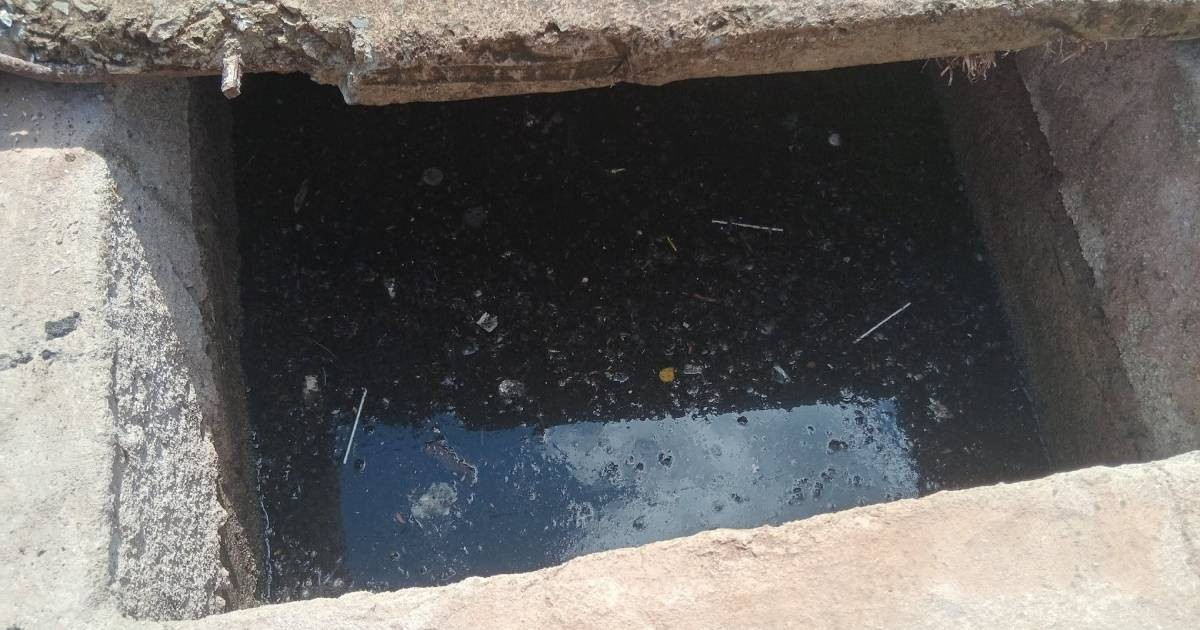
A neighbor from Aguada de Pasajeros, Cienfuegos, reported the existence of an open pit, unprotected and with stagnant water and numerous larvae in the Community Block 16, a situation that, she claimed, has been reported several times without a definitive solution being provided.
Yari Castro publicly shared the complaint in the Facebook group «Revolico Aguada de Pasajeros», where she posted two photos showing the open pit without a cover, with deteriorated concrete edges and dark water collected inside.
The main concern of the neighbor is that a child might fall into the pit.
Castro warned that if a child falls into the pit, those responsible will have to answer for it, emphasizing that workers have previously visited the site, but the problem persists.
According to their testimony, the pit is uncovered during certain tasks and subsequently remains open despite residents' complaints.
"We tell him to cover it up and he replies that he is going to work, but he does nothing and leaves it open," he reported.
Castro also highlighted the number of larvae present in the standing water, especially during times when the rains promote the proliferation of mosquitoes.
The report comes amid a complex epidemiological scenario in Cuba. The Ministry of Public Health acknowledged the simultaneous circulation of dengue, chikungunya, Covid-19, influenza, hepatitis, and acute diarrheal infections.
Stagnant water provides a conducive environment for mosquito breeding, which is why health authorities regularly recommend eliminating potential breeding sites as part of the preventive measures against vector-borne diseases.
The danger of open structures in public spaces has already had fatal consequences in Cuba. In February 2025, Jonathan Oliva, a 13-year-old teenager, died in Havana after being pulled into a storm drain during heavy flooding.
Aguada de Pasajeros has also reported other complaints this year related to the deterioration of basic services. In June, residents of Real Campiña reported having gone 27 days without drinking water, in addition to prolonged power outages.
Castro closed his publication holding the authorities responsible for any accidents that may occur and stated that if something happens, he will demand answers for what he considers negligence.
Related videos:
Filed under: