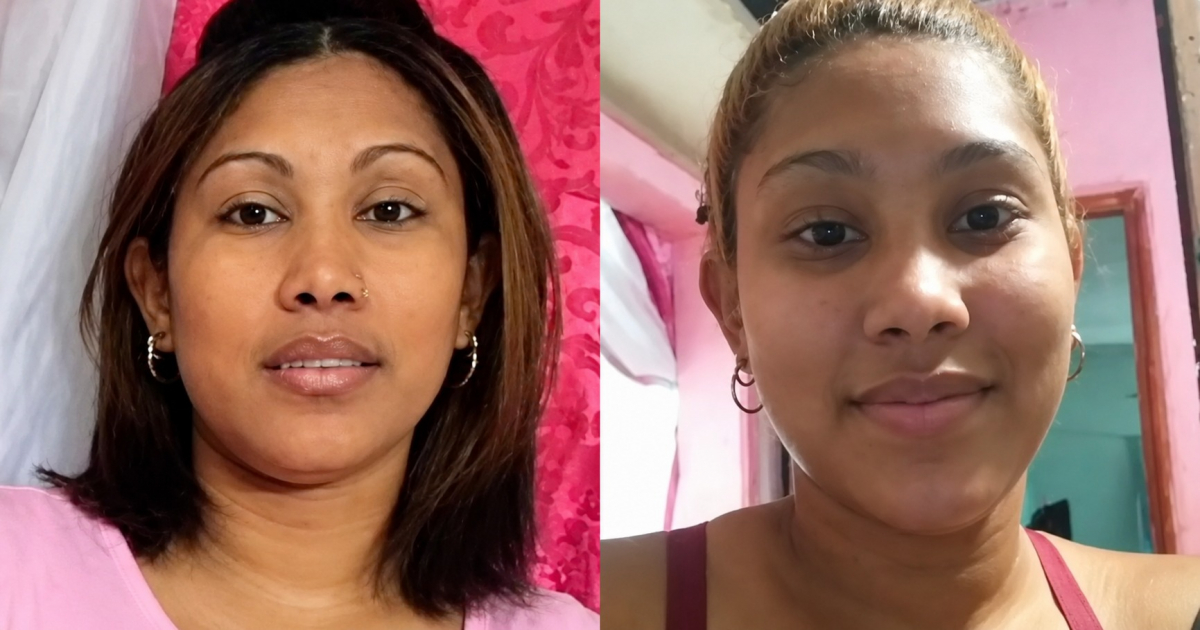
The death of Aniari Barrientos Vázquez, a young mother of just 26 years, once again highlights the deep crisis facing the Cuban healthcare system.
Aniari was admitted on September 23, 2026, to the Dr. Juan Bruno Zayas Alfonso General Surgical Clinical Hospital in Santiago de Cuba. According to her family, the next day she was moved to a room where they would induce labor. They began administering IV fluids, and subsequently, her health deteriorated.
The family reports that for approximately two days they received insufficient and contradictory information, without being able to see him. On the afternoon of Sunday, September 27, they were informed that he had passed away and were given the body.
The family's harrowing claim that they found worms in the deceased's hair is deeply alarming. This accusation demands a thorough investigation. The hospital's director, Dr. Tamara Hodelín, instead of apologizing for the inadequate care and the death of Aniari, labels the family as ungrateful for not acknowledging the "efforts" she claims the hospital made to save the young woman.
Aniari has four children: three aged 9, 7, and 5 years, and a newborn girl who, fortunately, survived. Her relatives are demanding to know the exact circumstances of her death, the treatments she received, and the reasons for the lack of clear and timely information.
It is not appropriate to assign medical responsibilities yet without knowing the medical history, the treatment, and the autopsy results. However, the family has the right to know the entire truth.
This tragedy occurs amidst a national health crisis that has taken on extraordinarily concerning dimensions throughout 2026.
The shortage of medications, the deterioration of facilities, malfunctioning equipment, power outages, and the emigration of professionals have severely weakened hospital services.
In March, a Reuters investigation described the difficult working conditions of healthcare personnel and gathered testimonies from doctors whose salaries amounted to approximately 14 or 16 dollars a month. It also reported that more than 96,000 patients were waiting for surgical interventions, including about 11,000 children.
In July, another journalistic investigation revealed that more than half of the technological capacity used in the national cancer care program was compromised. The difficulties also affected specialties such as cardiology, nephrology, and neonatology.
The shortage of antibiotics, pain relievers, medications for chronic illnesses and surgical materials often forces patients to find the necessary resources on their own to receive care.
Numerous reports circulated on social media describe hospitals with hygiene issues, deteriorating restrooms, lack of water, unused equipment, and inadequate food.
In September, the Guillermo Domínguez López General Teaching Hospital in Puerto Padre reported a resurgence of a bedbug infestation in its Psychiatry department.
Power outages considerably worsen this situation. Although many hospitals have generators, they require fuel, maintenance, and spare parts. Energy interruptions complicate diagnoses, the preservation of medications, sterilization, and the operation of essential equipment.
Another problem is the loss of healthcare professionals. For decades, Cuba has trained numerous doctors, nurses, and specialists. However, many have emigrated abroad or left public institutions to work in private enterprises, where they can earn higher salaries.
A Cuban doctor may receive a salary that doesn't adequately cover the cost of family food. Added to this are transportation difficulties, exhausting shifts, and the distress of caring for patients without sufficient resources.
One cannot hold accountable those who seek better conditions for their families. The primary responsibility for ensuring fair wages and adequate working conditions lies with the authorities.
The Pan American Health Organization itself has acknowledged that the shortage of supplies, the energy emergency, and the emigration of healthcare personnel severely impact the response capacity of the Cuban system.
It is also necessary to examine the historical evolution of its infrastructure. In 1958, Cuba had, according to certain historical statistics, 87 public hospitals, 250 private and mutualist hospitals: a total of 347 institutions across both categories.
After 1959, a few hospitals were built and services were expanded to rural areas. However, the private and mutualist system disappeared, while healthcare became increasingly centralized under state administration, which grew more inefficient.
The 2023 Health Statistical Yearbook recorded 149 hospitals and 451 polyclinics. These figures do not allow for determining how many hospitals were built over the last 67 years, as they include facilities established before 1959 and establishments that have been reorganized since then.
What matters is how many hospitals are functioning properly, how many beds are available, and what resources they have to save lives. Cuba needs safe hospitals, accessible medications, hygienic facilities, and capable professionals who are fairly compensated.
The tragedy of Aniari Barrientos demands answers. Her family deserves to know the truth about what happened. Meanwhile, millions of Cubans watch with growing concern the deterioration of a healthcare system that should protect them.
Behind the statistics are children waiting for surgeries, elderly people without medications, pregnant women in need of care, and families fearing that a hospital admission could end in tragedy.
The Cuban health crisis cannot continue to worsen in the face of an increasingly impoverished and vulnerable population. The health of Cubans cannot keep waiting, but we will only have quality medical care when we democratize our homeland.
Related videos:
Filed under:
Opinion article: Las declaraciones y opiniones expresadas en este artículo son de exclusiva responsabilidad de su autor y no representan necesariamente el punto de vista de CiberCuba.