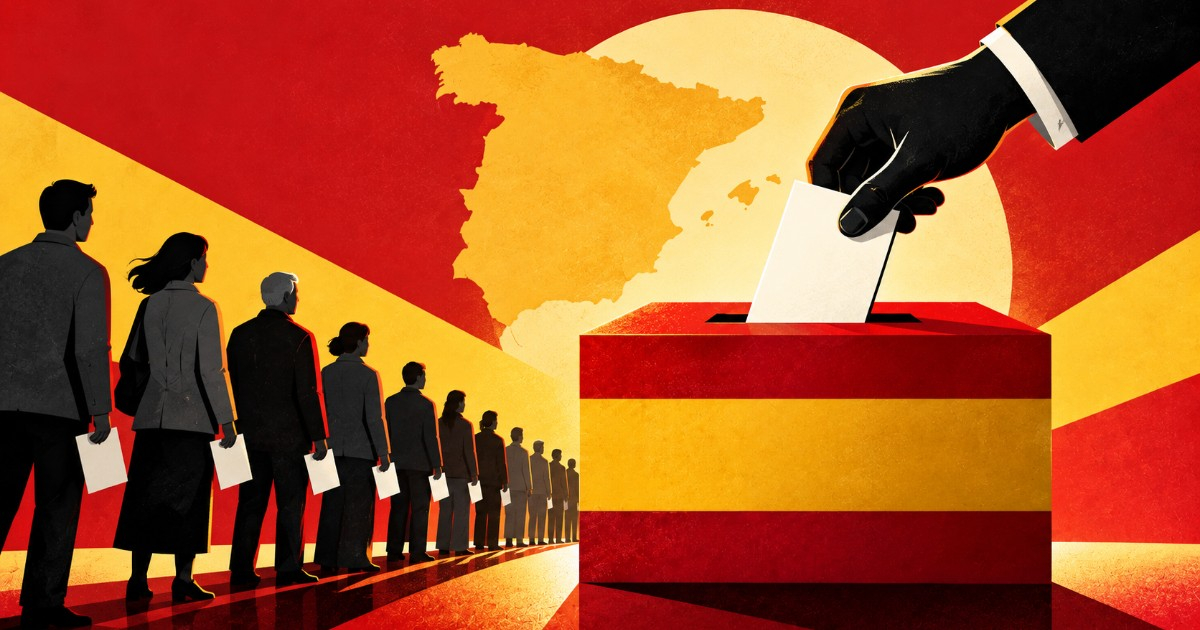
Spain may be heading towards early general elections after the Prime Minister, Pedro Sánchez, has initiated a period of reflection to decide whether to advance the elections following the rejection of two legislative decrees on housing in Congress.
Sources from the Executive explained this Friday to EFE that, after the plenary did not validate both regulations, Sánchez will analyze the different available options.
Among them is the call for elections, although officials from Moncloa emphasize that, for the time being, the Government is not "on that screen."
The decision comes after PP, Vox, and Junts voted against the two housing decrees proposed by the Government.
The break of Junts with the majority that enabled Sánchez's investiture highlights once again the difficulty faced by the coalition government in gathering enough parliamentary support for key votes.
According to sources consulted by EFE, the president plans to hold conversations with members of the Government and leaders of the PSOE before making a final decision. There is currently no electoral call nor has a specific deadline been set for its announcement.
If Sánchez chooses to hold the elections on the nearest Sunday allowed by the legal deadlines, he would have to announce the call on Monday, October 5.
The decree for the dissolution of the Cortes would be published the next day in the Official State Gazette, and the elections could take place on November 29, 54 days later.
That deadline is established in the Organic Law of the General Electoral Regime, which states that, in the event of early dissolution, the convocation decree must set the elections for the fifty-fourth day following its publication.
The hypothesis of an early election represents a significant shift from the position held by Sánchez just a few months ago. In June, the president stated that his intention was to present the budgets in 2026 and that the general elections would be held in 2027, although he did acknowledge at that time that "reality is very dynamic."
However, the government insists that the parliamentary defeat does not necessarily mean the end of the legislative session. Sources from Moncloa believe that there is still room to continue governing and passing initiatives with the majority available in Congress, though each vote requires the Executive to negotiate support among various groups.
Sumar, a minority partner in the coalition, also acknowledges that the possibility of elections is being evaluated.
Sources from that formation admitted to EFE that there is fatigue within the Government and that they are analyzing when might be the best time to convene them, although they believe that a hasty decision should not be made.
For its part, the People's Party has indicated that it is ready to participate in early elections and has repeatedly called for the end of the legislature.
The call, however, corresponds to the president of the Government within the mechanisms established by the Constitution and the electoral legislation.
A potential call would also come amid a recent controversy regarding the electoral roll of Spaniards residing abroad.
In September, the Supreme Court provisionally suspended certain registrations in the Electoral Roll of Absentee Residents linked to the so-called "grandchildren's law," while the consulates verify compliance with the required criteria.
The decision directly affects many descendants of Spaniards living abroad, including Cubans who obtained Spanish nationality through that legislation.
The Supreme Court provisionally suspended those additions to the census in response to the appeals filed against the procedure.
The debate about overseas voting had already gained momentum months prior, particularly regarding naturalized Spaniards who have never lived in Spain and their participation in the general elections.
The issue is of particular interest to the Cuban community because thousands of citizens from the island have obtained Spanish nationality through the Law of Democratic Memory.
The legal dispute regarding registrations in the overseas census remains ongoing, and the measures taken by the Supreme Court are precautionary.
For Cuba, early elections in Spain could also become significant due to the differences between the main parties regarding their policies toward Havana.
An eventual change in government could modify certain aspects of the political relationship with the Cuban regime, although for now, there is not even a confirmed electoral call.
Related videos:
Filed under: