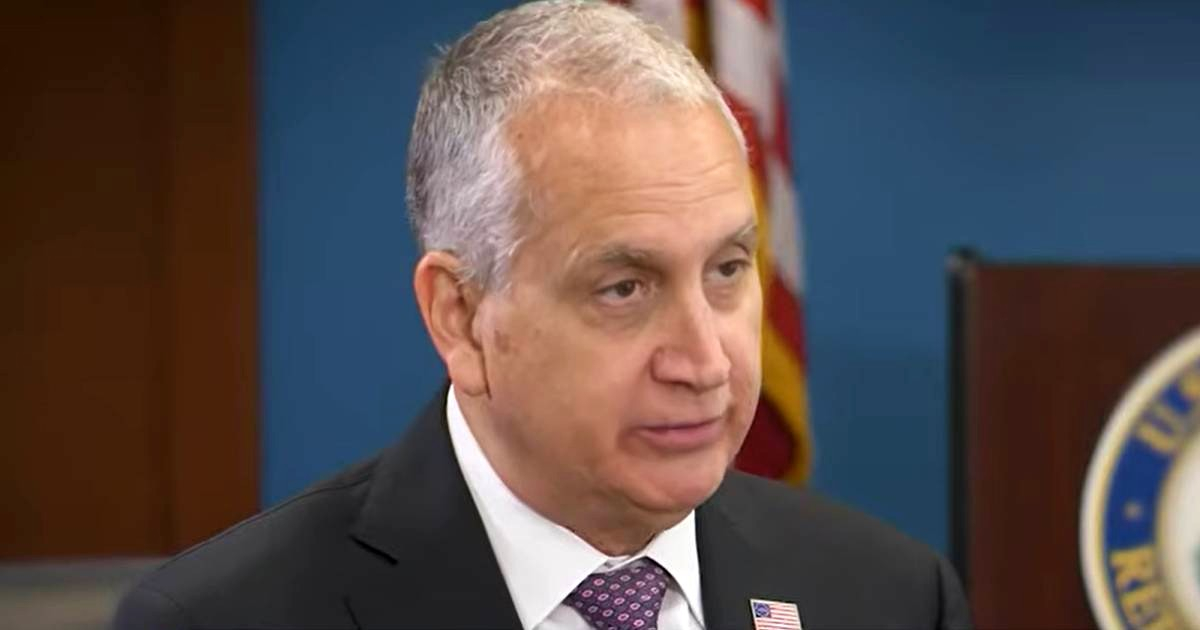
The Cuban-American Congressman Mario Díaz-Balart once again predicted a political change in Cuba during Donald Trump's presidency and delivered a direct message to the leadership in Havana: to start looking for a place to live outside the island.
In a virtual interview with Telemundo 51, published this Thursday, Díaz-Balart asserted that a shift towards democracy in Cuba would, in his opinion, be "easier" than in Venezuela, due to the fact that the power structure on the island is concentrated in a smaller group.
"In the case of Cuba, it is a more limited, smaller group, and therefore, I would say even easier," the Republican legislator stated.
Díaz-Balart went even further by referring to the immediate future of the Cuban regime and the stance he attributes to the U.S. administration.
“I am convinced that this president will not leave the White House with that regime in Havana still in power,” he declared.
When asked what message he would send to those in the ruling elite of the island, he stated that ideally, they should pay attention to the signals coming from Washington and prepare an exit strategy.
"Let them find a comfortable place to live," Díaz-Balart stated after describing them during the interview as "thugs, murderers, corrupt."
The congressman added that if that exit does not happen voluntarily, he believes the outcome could occur "by force."
The journalist Gloria Ordaz directly asked him if the use of force could be ruled out in Cuba. Díaz-Balart simply replied: “No”.
He later explained his position, stating that, in his opinion, "every option must be on the table for the president of the United States." At the same time, he said he would prefer a scenario in which U.S. military action would not be necessary.
The congressman's words contrast in tone with the statements made days earlier by Trump.
The American president recently stated that he did not believe it was necessary to resort to military action against Cuba and expressed hope of reaching some form of agreement with Havana.
"Cuba and we will reach an agreement. I don't believe we need to resort to military action," Trump stated at that time, after news reports revealed that Army Reserve units were assessing their availability to support Southern Command. The document referenced in those reports did not order a deployment nor directly mention Cuba.
Díaz-Balart also stated during the interview that there are conversations between the U.S. administration and people close to Raúl Castro, although he insisted that these would not be formal negotiations. When asked for specific names, he avoided providing details.
Regarding Venezuela, the congressman said he maintains frequent contact with María Corina Machado and expressed his hope that she will return to the country and eventually become president. He presented this possibility as his personal forecast and emphasized that any candidacy must be decided by the Venezuelans.
The Trump administration has combined those diplomatic signals with increased economic pressure.
At the end of September, the Office of Foreign Assets Control (OFAC) announced new banking, financial, and travel restrictions related to Cuba, while the State Department asserted that it will continue to use "all available sanctions authorities" against the regime.
Díaz-Balart has been publicly expressing a similar expectation about the future of the Cuban system for months.
In April, he stated that he was convinced the regime would not survive Trump's current term and also advised its leaders to find "a comfortable place" for exile.
In January, he had already stated that Trump was not willing to accept a dictatorship 90 miles from the United States and emphasized the presence of U.S. military forces in the Caribbean at that time.
The debate about how far Washington is willing to go has also intensified after a series of political, economic, and military signals that have fueled speculation regarding the extent of the U.S. strategy towards Cuba.
Related videos:
Filed under: