
Related videos:
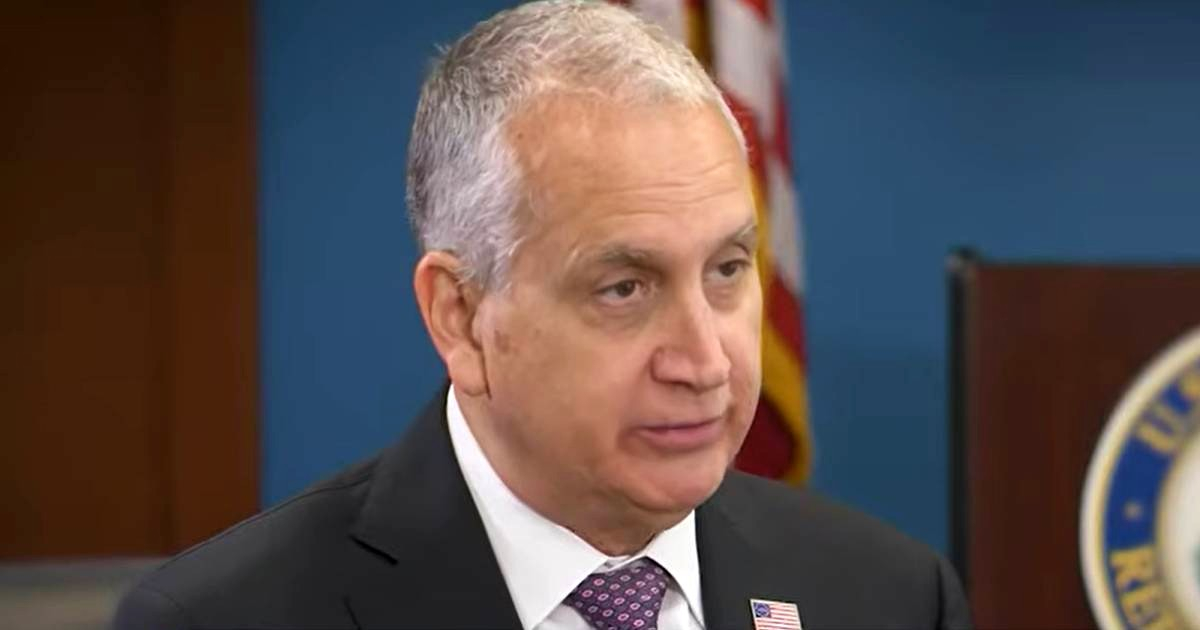
Republican Congressman Mario Díaz-Balart issued one of the most striking statements in recent months regarding Cuba's political future, asserting that the dictatorship will not withstand the current term of President Donald Trump.
"I am convinced that this dictatorship will not survive the term of President Trump," he stated during an interview on Telemundo 51, amid rising tensions between Washington and Havana.
His words come at a time marked by new accusations against the Cuban regime, allegedly involved in multimillion-dollar frauds against the U.S. healthcare system, and by a hardening of political rhetoric from the United States.
Díaz-Balart went further and claimed that the end of the system in the island is just a matter of time. In his view, neither the recent maneuvers of the Cuban government—such as the acceptance of dollars or the timely arrival of oil—will be enough to sustain it.
"The regime continues with the same tactics as it did almost 70 years ago, but they will not gain concessions or legitimacy. On the contrary, the pressure will increase," he warned.
For the congressman, the change in stance in Washington marks a key difference compared to previous administrations, which he believes leaves the regime with no room to maneuver.
In a direct tone, Díaz-Balart even sent a message to those in power in Cuba: "If I were a member of that dictatorship, I would be looking for a comfortable place to exile myself," he stated.
The legislator insisted that true power does not lie with Miguel Díaz-Canel, whom he called a "temporary bureaucrat," but rather within the historical structure of the regime.
Intervention in Cuba?
Although he avoided openly discussing a possible military action, he made his stance on the core issue clear, considering the end of the Cuban regime to be a matter of national security for the United States.
"The elimination of that dictatorship is essential, and it would also infinitely help the people of Cuba," he pointed out.
In January 2026, President Donald Trump signed Executive Order 14380, declaring Cuba an extraordinary threat to national security.
This pressure is compounded by the capture of Nicolás Maduro on January 3, 2026, which eliminated between 80% and 90% of Venezuela's oil supply to the island, exacerbating an energy crisis characterized by blackouts lasting up to 30 hours a day and an economy that has seen a 23% decline since 2019.
Trump himself stated, "Cuba is next" on March 27 during a speech in Miami, and White House spokesperson Karoline Leavitt insisted on Wednesday that Cuba is in a very weak economic and financial position and that the regime "is destined to fall."
In the interview with Telemundo, Díaz-Balart also criticized the visit of Democratic Congress members Pramila Jayapal and Jonathan Jackson to Cuba from April 1 to 6, during which they met with Miguel Díaz-Canel, stating that the current Democratic leadership has strayed from the positions that defined the party two decades ago.
The congressman has been unequivocal, at other times, regarding any negotiated exit. " There is no negotiation or immunity for the Castros or for Díaz-Canel," he stated.
Her statements align with those of her colleague María Elvira Salazar, who also stated this Thursday that the tide is changing throughout the Western Hemisphere, and Cuba is next.
Filed under: